Consoles
Most smaller organbuilders bought complete consoles from a supply house. Or they could buy an unfinished console shell, pedalboard and bench, and finish it themselves. The console would be assembled with purchased keyboards, drawknobs, swell pedals and other parts.
But in my shop we made everything. We made the console shell, rolltop, bench and pedalboard of solid oak, all finished to suit the church furniture. The interior stop jambs, piston rails, couplerboard, music rack and other trim was solid walnut. We also made the keyboards and control wiring and did the final assembly.
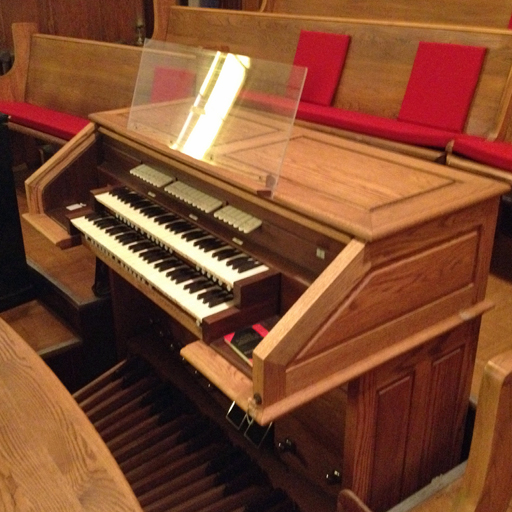
Stoptab Console 2 Manual
We built the bench and casework of solid oak, frame and panel, mortise and tenon construction no plywood). Console interior is walnut. We made manual keyboards of basswood with bone naturals and ebony sharps, the pedalboard has an oak frame and maple keys.
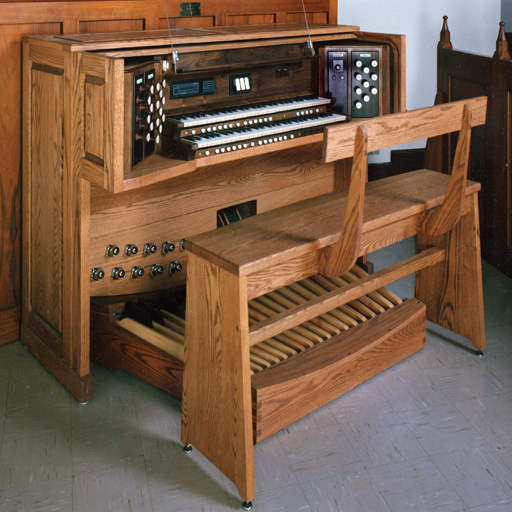
Drawknob Console 2 manual
We built the bench and casework of solid oak, frame and panel, mortise and tenon construction no plywood). Console interior is walnut with ebony panels and rosewood drawknobs. We made the tracker-touch manual keyboards of basswood with bone naturals and ebony sharps, the pedalboard has an oak frame and maple keys.
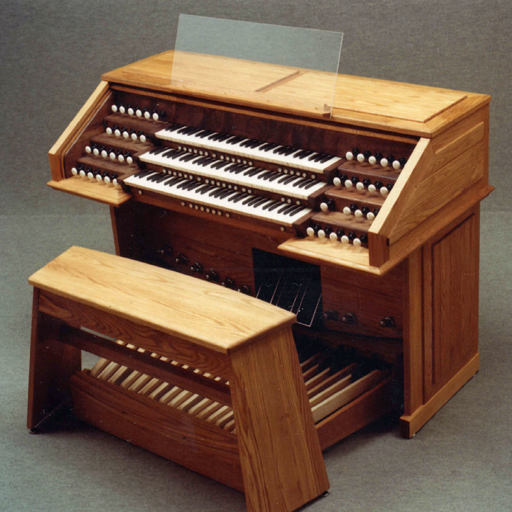
French Terraced 3 manual
We built the bench and casework of solid oak, frame and panel, mortise and tenon construction no plywood). Console interior is walnut. We made manual keyboards of basswood with bone naturals and ebony sharps, the pedalboard has an oak frame and maple keys.
I believe in doing continious, incrimental improvements. My earlier benches had square straight legs. But we refined later benches, as shown here, to have legs that angled and sloped to fit the pedalboard. This was a much more elegant solution, if much more complicated joinery.
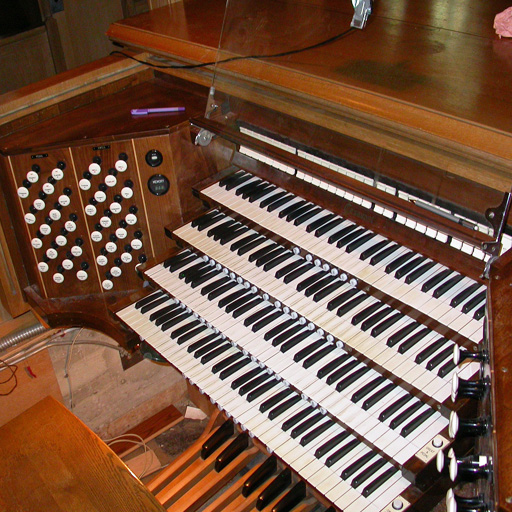
Consoles rebuilt
Like this fine, 4 manual, 1951 Casavant console, many churches have a beautiful console with solid cabinetwork that matches the church furniture. Unfortunately after 50 years the electrics and mechanism inside is worn out and not reliable. I have rebuilt many consoles making them like-new.
Of course, all the electrical componants, switching and control circuits were replaced, often with computerized systems and multiple piston memories and MIDI. The woodwork was cleaned and high-wear locations, like benchtops, were refinished. Worn pedals were replaced and refinished. If necessary, damaged wooden parts were replace and the entire console could be refinished. Toe studs and Swell pedals were rechromed. Keyboards were cleaned and regulated; they could be recovered and rebushed if necessary.