Photo Album, my snaps...
...it's under construction.
As I find photos that I think may be of interest, I'll put them here. If you click on the photo, you'll get a bigger version of it. Or, clicking may bring you a webpage with more info about that photo. If you click on a selection in the Index, you'll jump to that topic.
I have thousands of photos of pipe organs. As time permits, I will add them here, sorted by instrument or perhaps by organbuilding topic.
Index: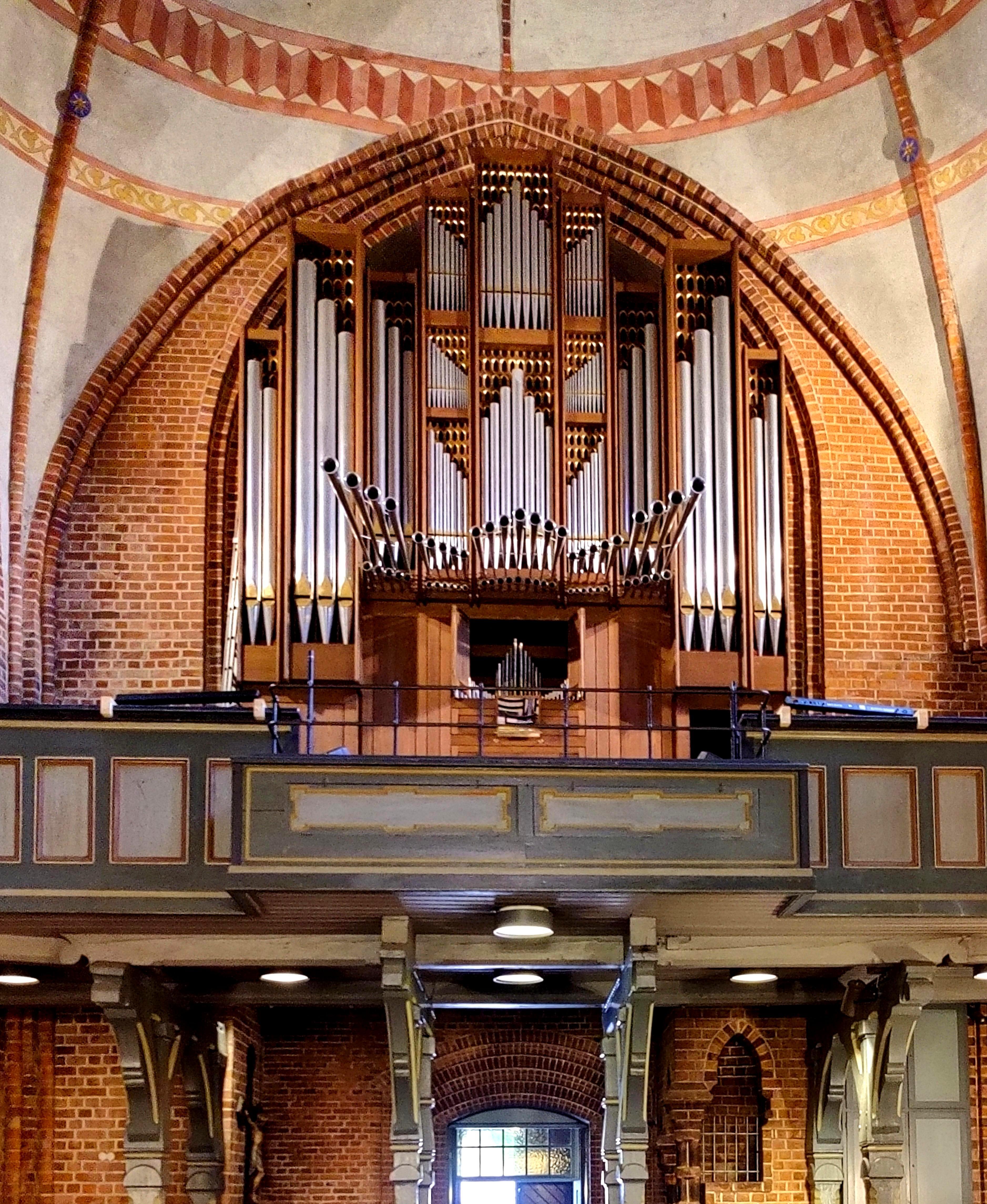
Marcussen Organ, St Johannis, Meldorf
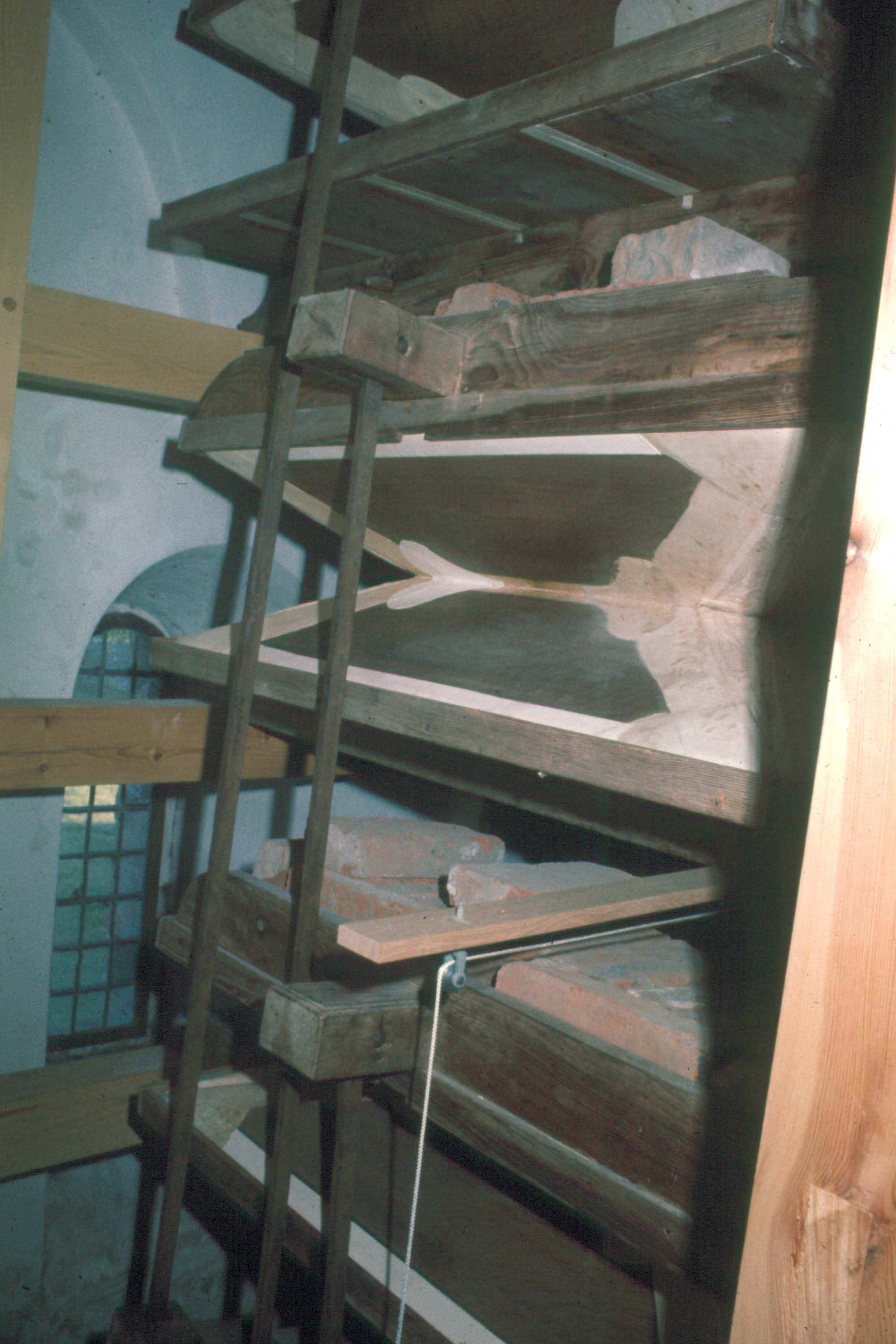
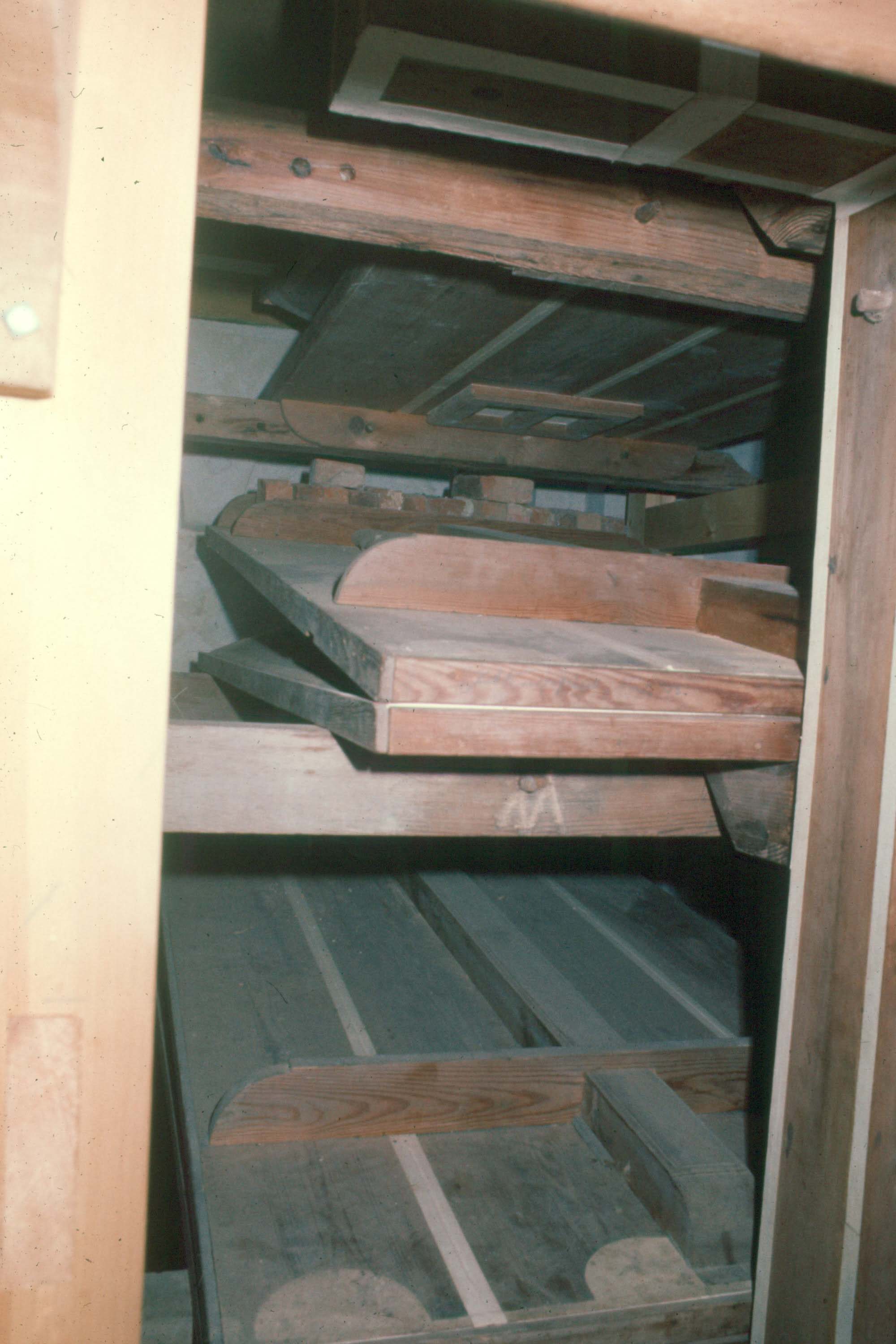
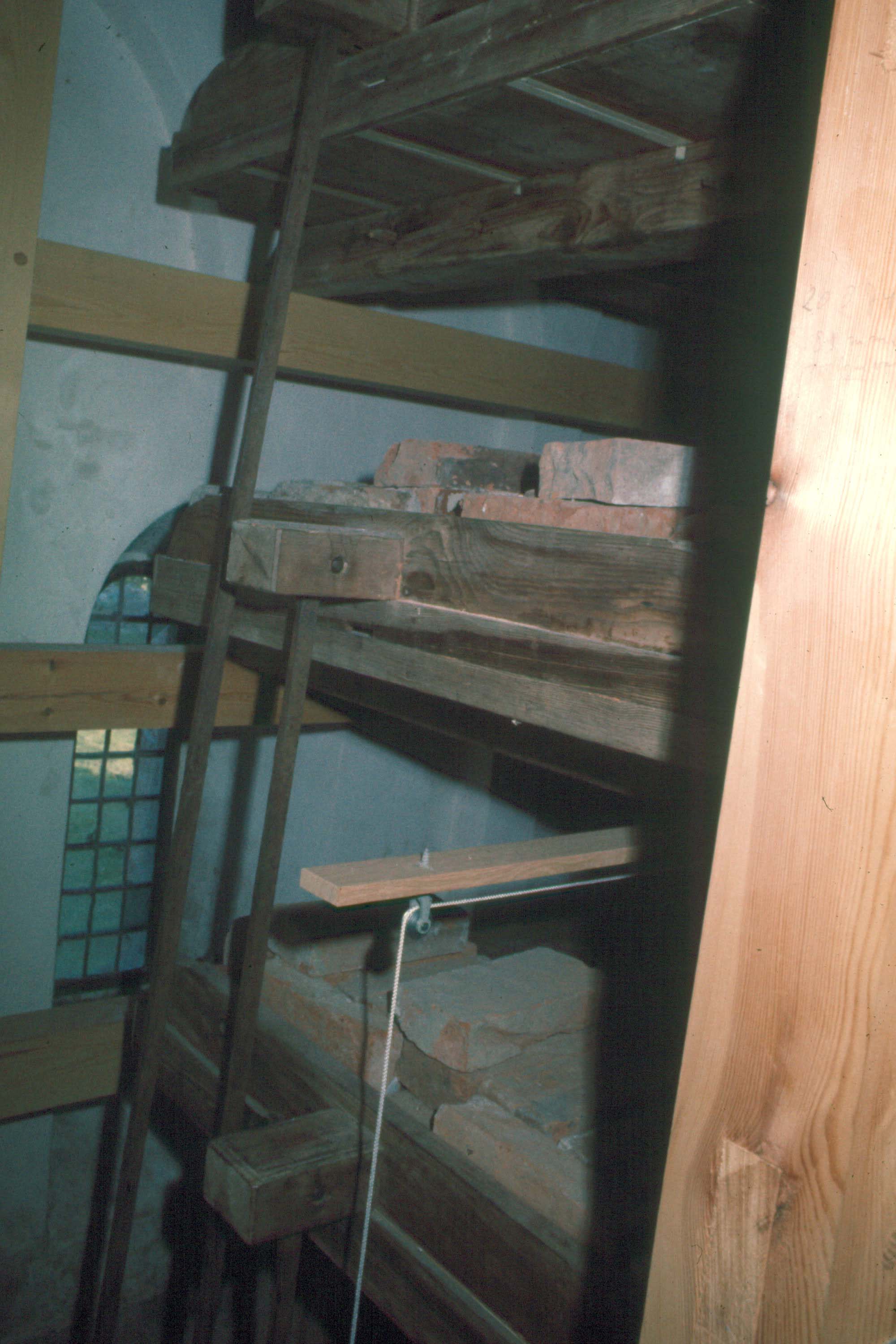
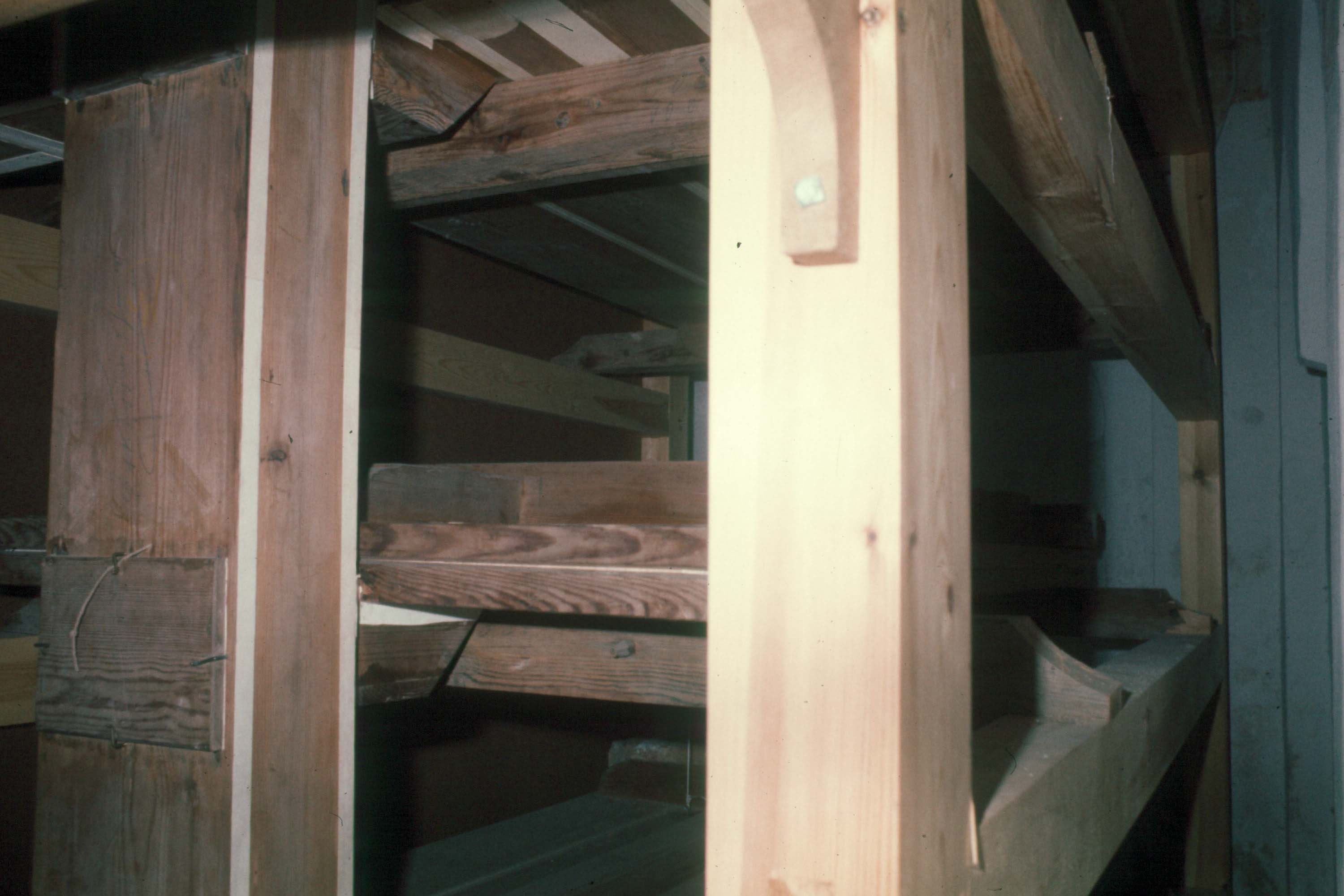
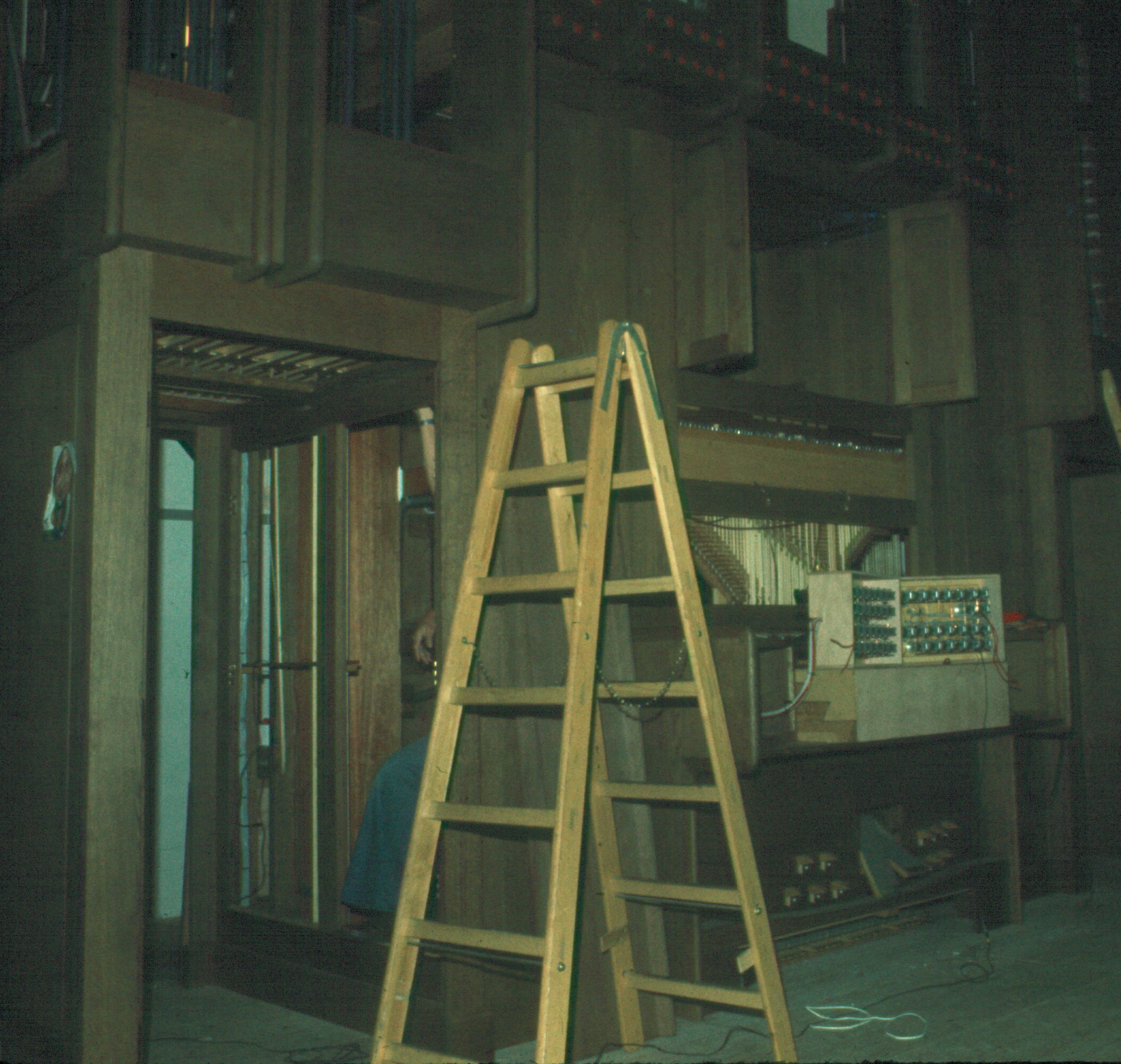
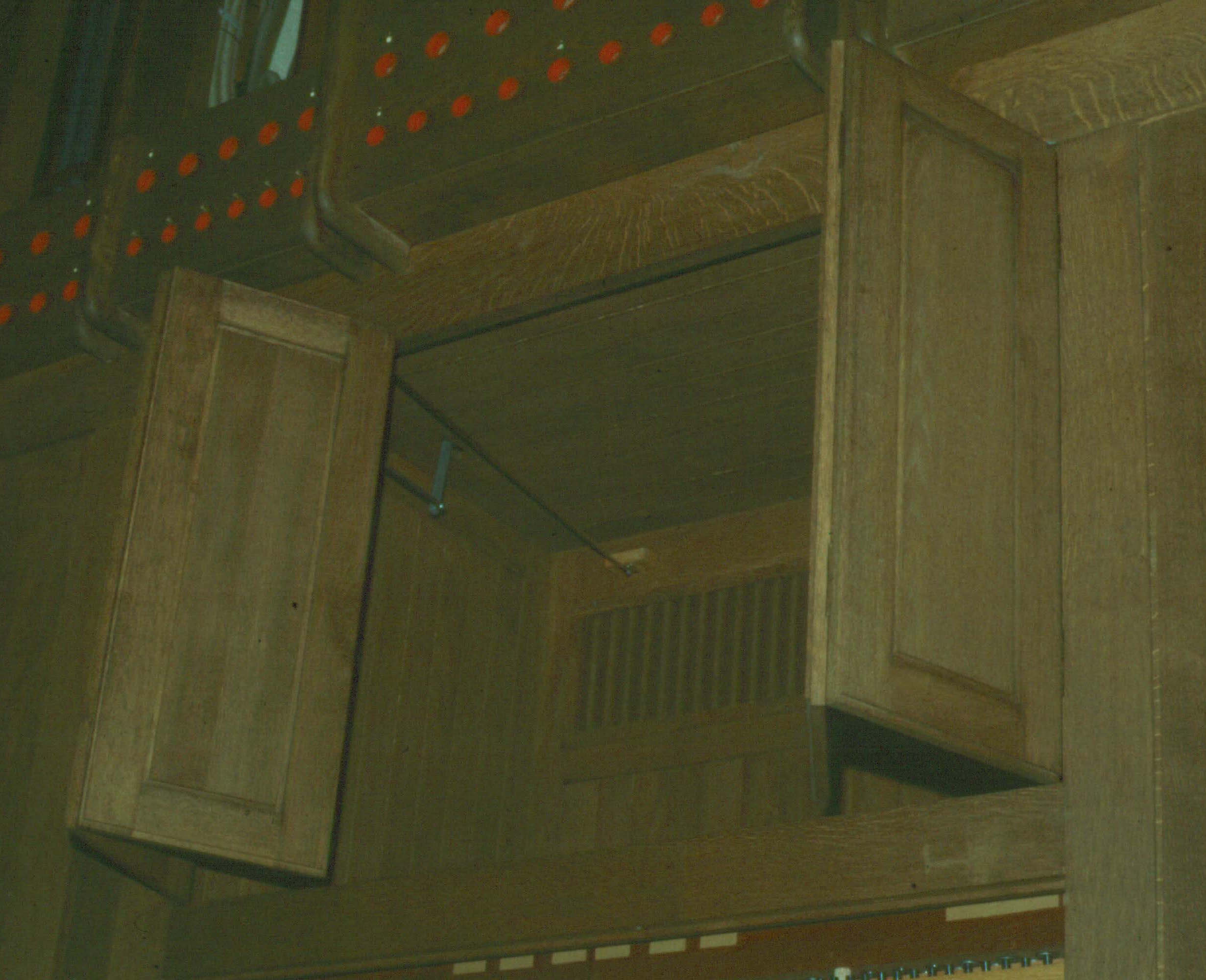
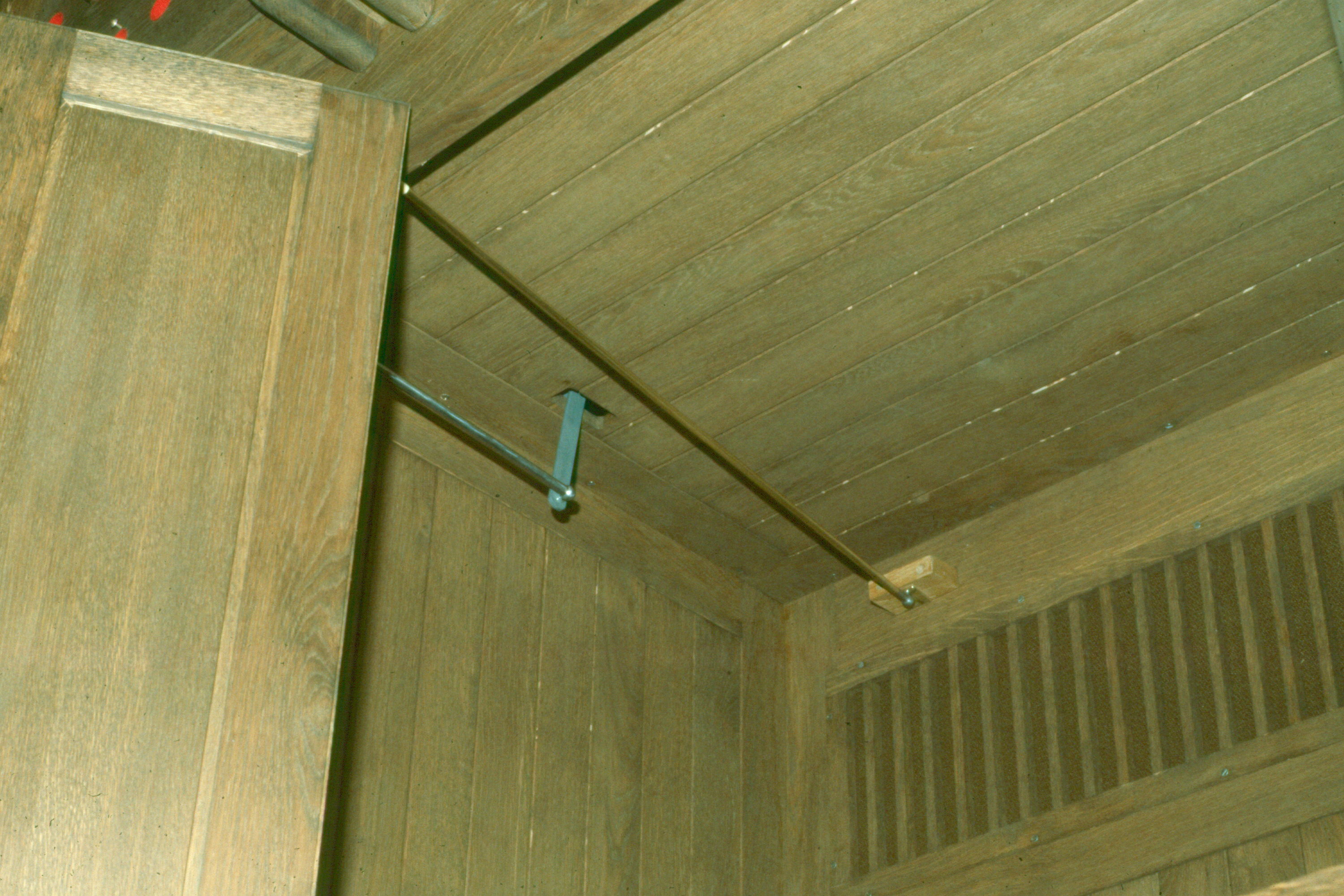
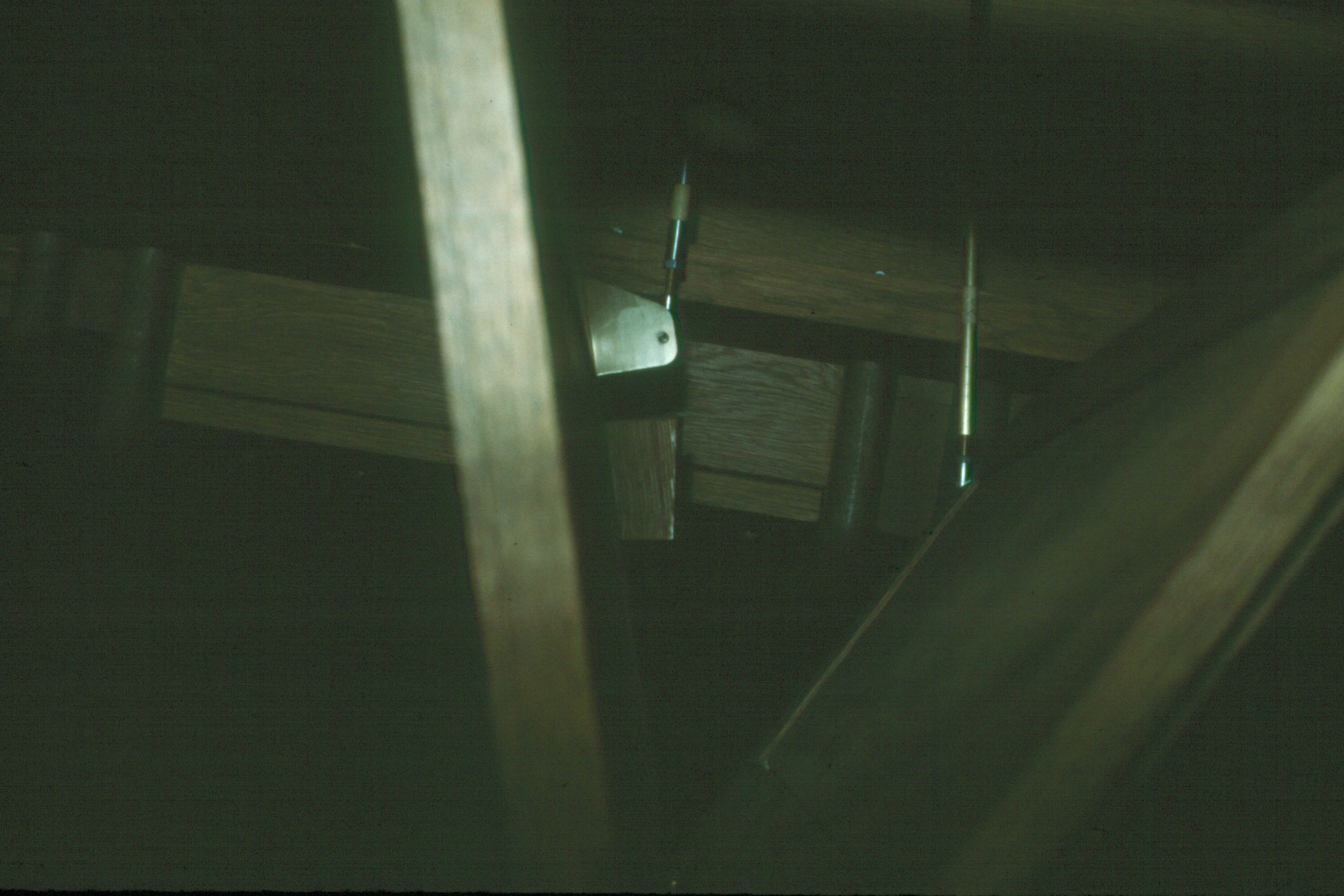
In 1977, I was doing an organ crawl of Northern Europe. I stopped to visit Marcussen, whom I consider to be one of the finest organbuilders. After the stop tour, I asked if he would open any doors for me to see some Marcussen Organs. He said I should visit the organ in Meldorf, Germany, which was currently being installed, so was open and accessible.
He gave me an letter of introduction, otherwise I wouldn't even be allowed in the building by his crew. After his staff read the letter, they treated me like a Korean Chaebol.
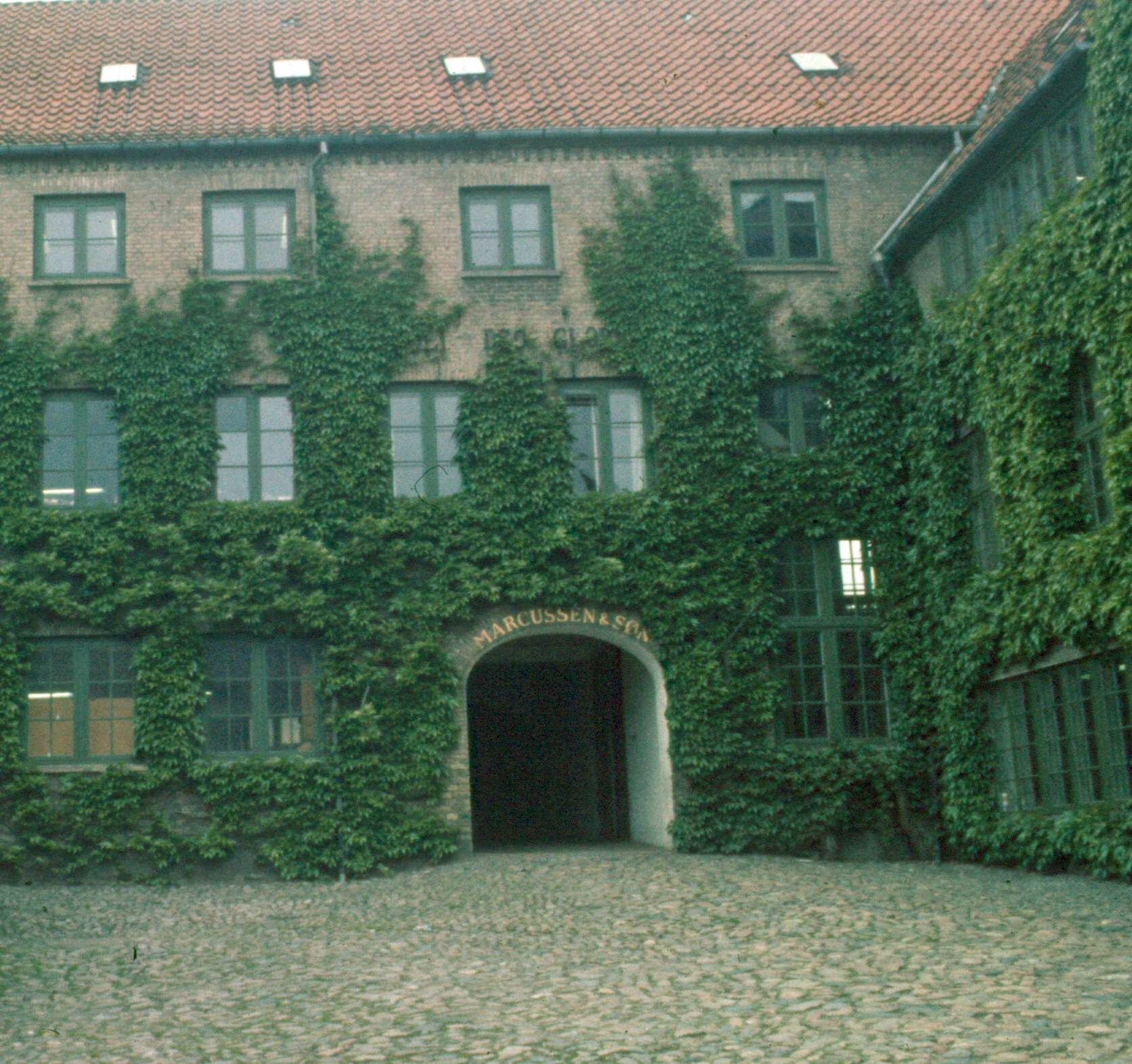
I took advantage of that, and charged throught the organ snooping and snapping pictures of everything. The staff was obviously very uncomfortable about my spying, but I had to exploit the opportunity. They were glad to see me go. Photo below-right is the Marcussen factory.
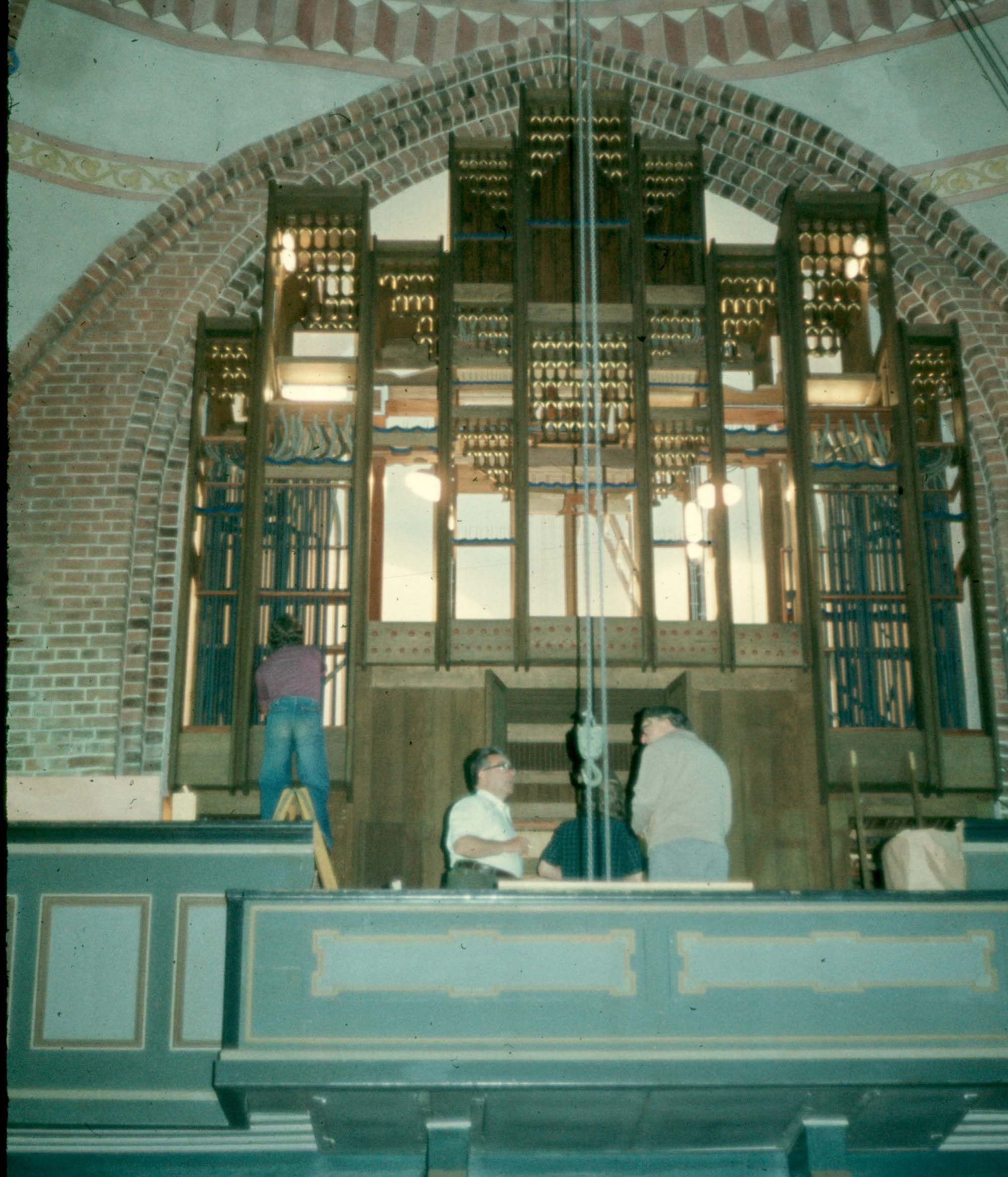
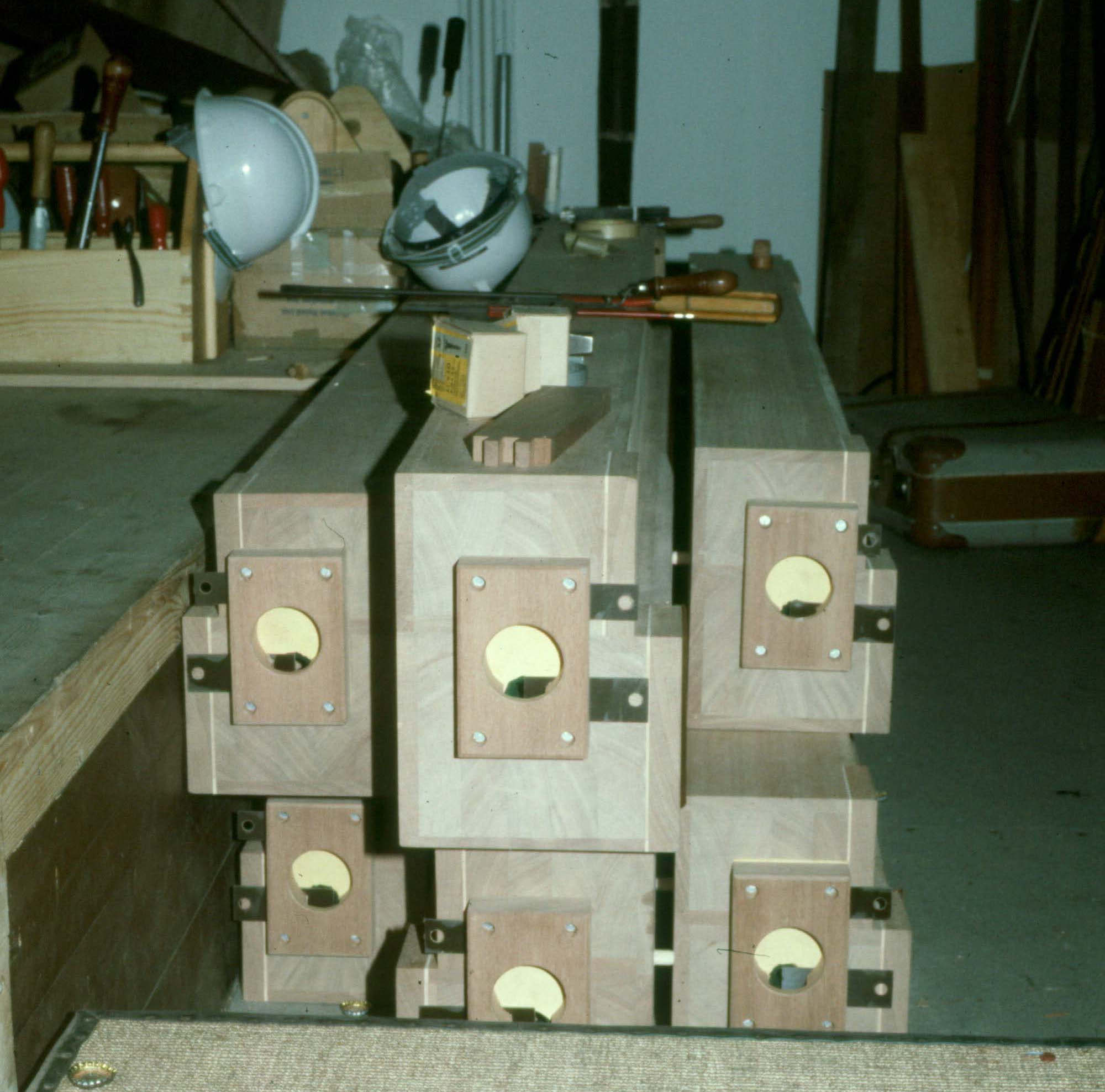
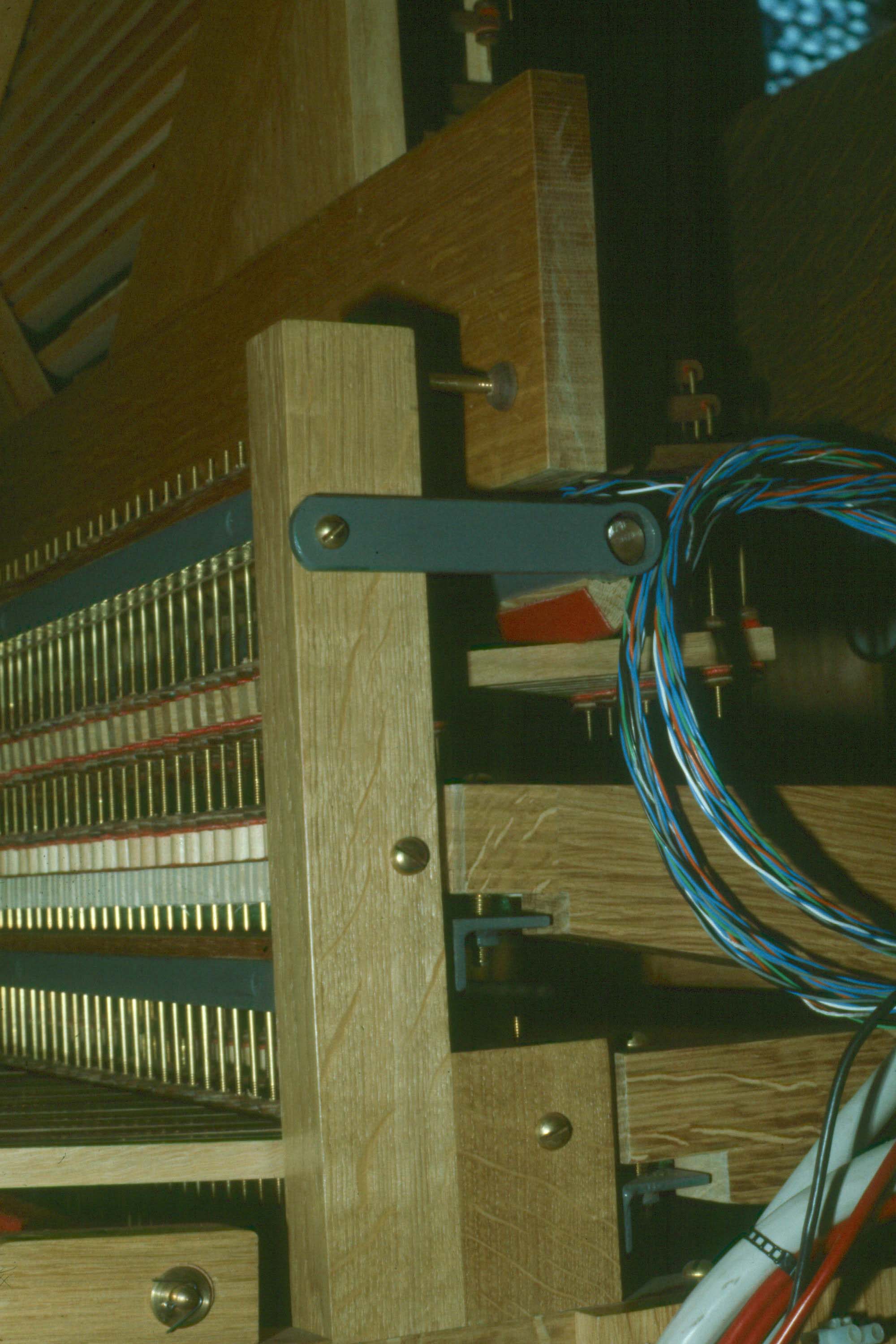
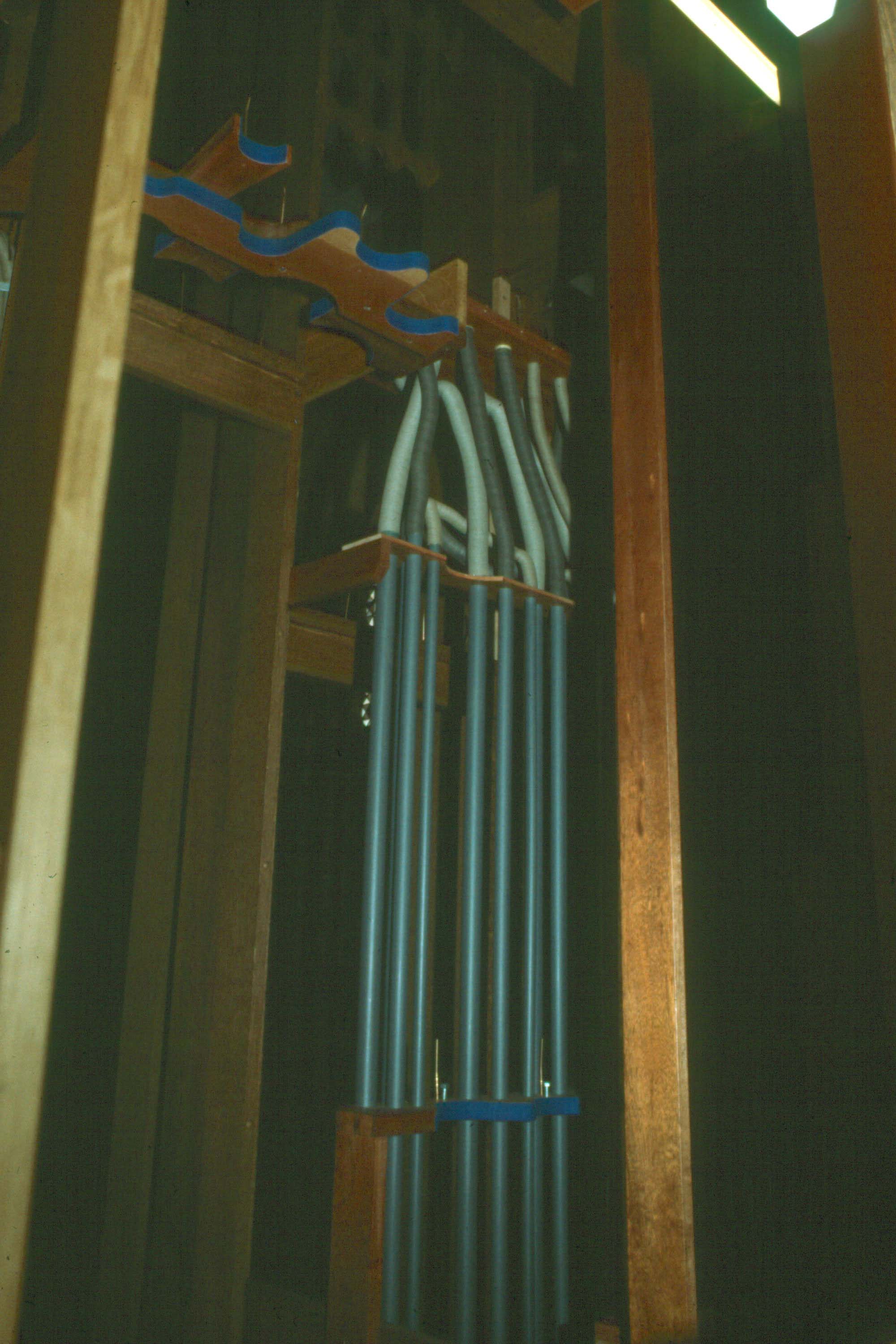
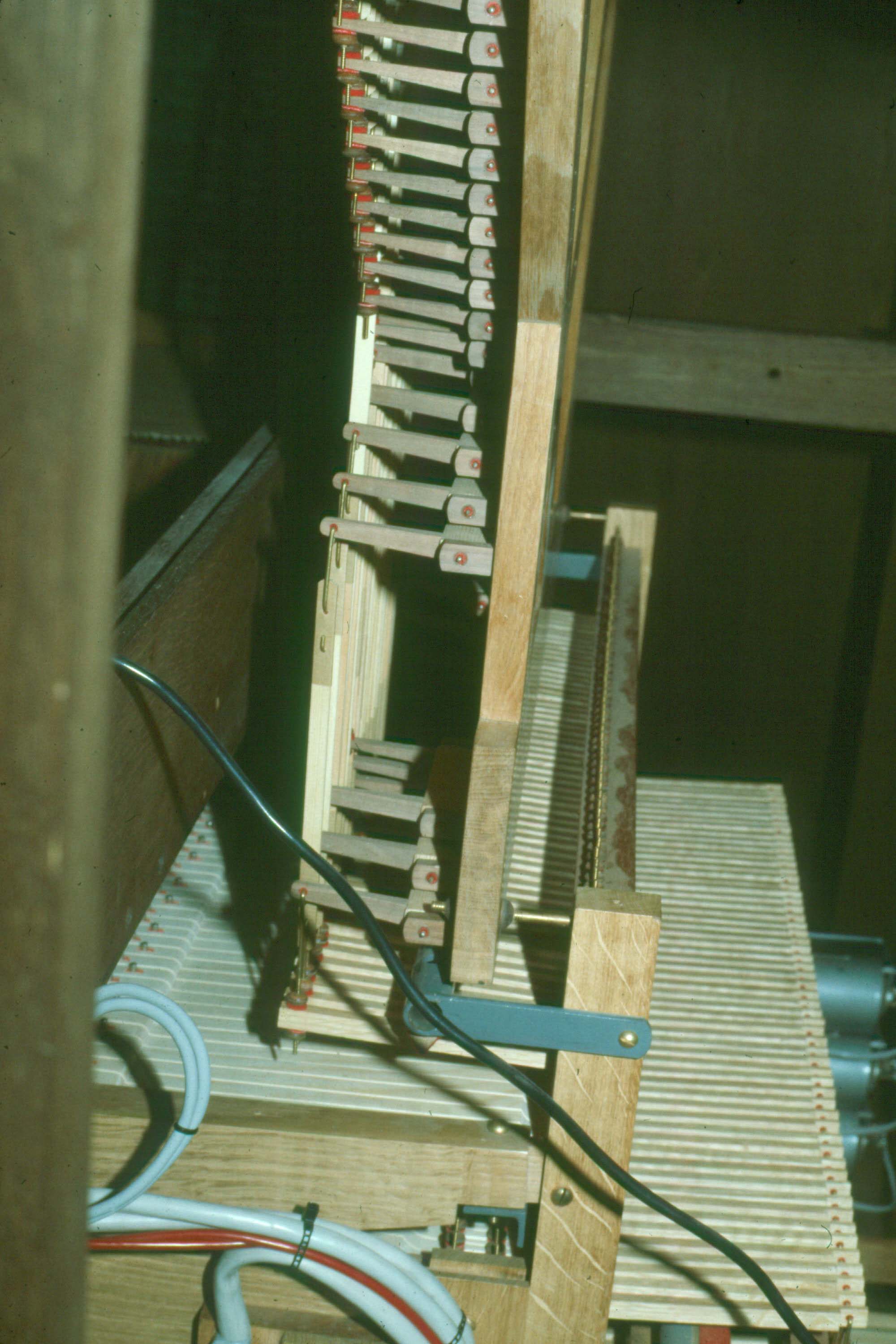
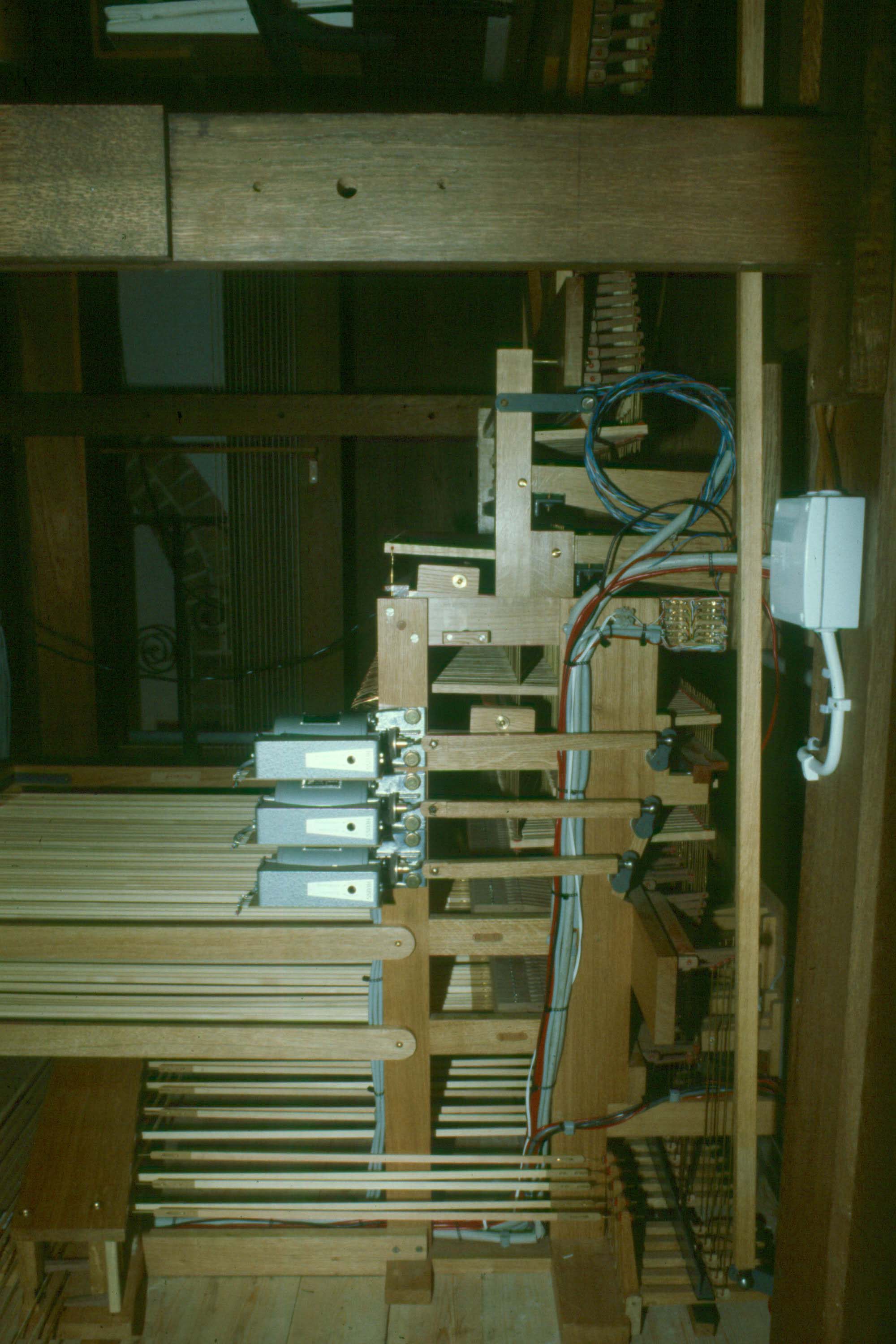
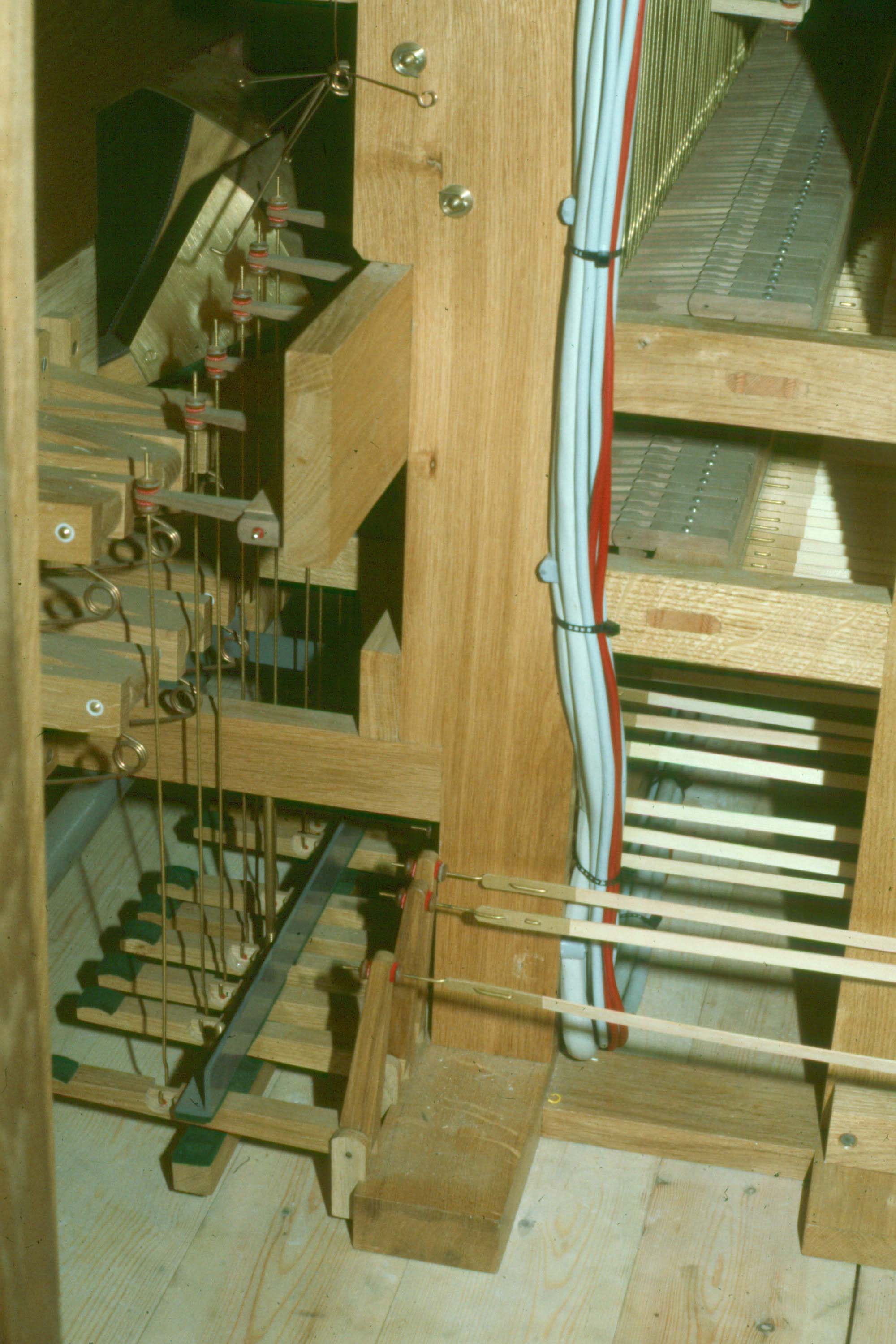
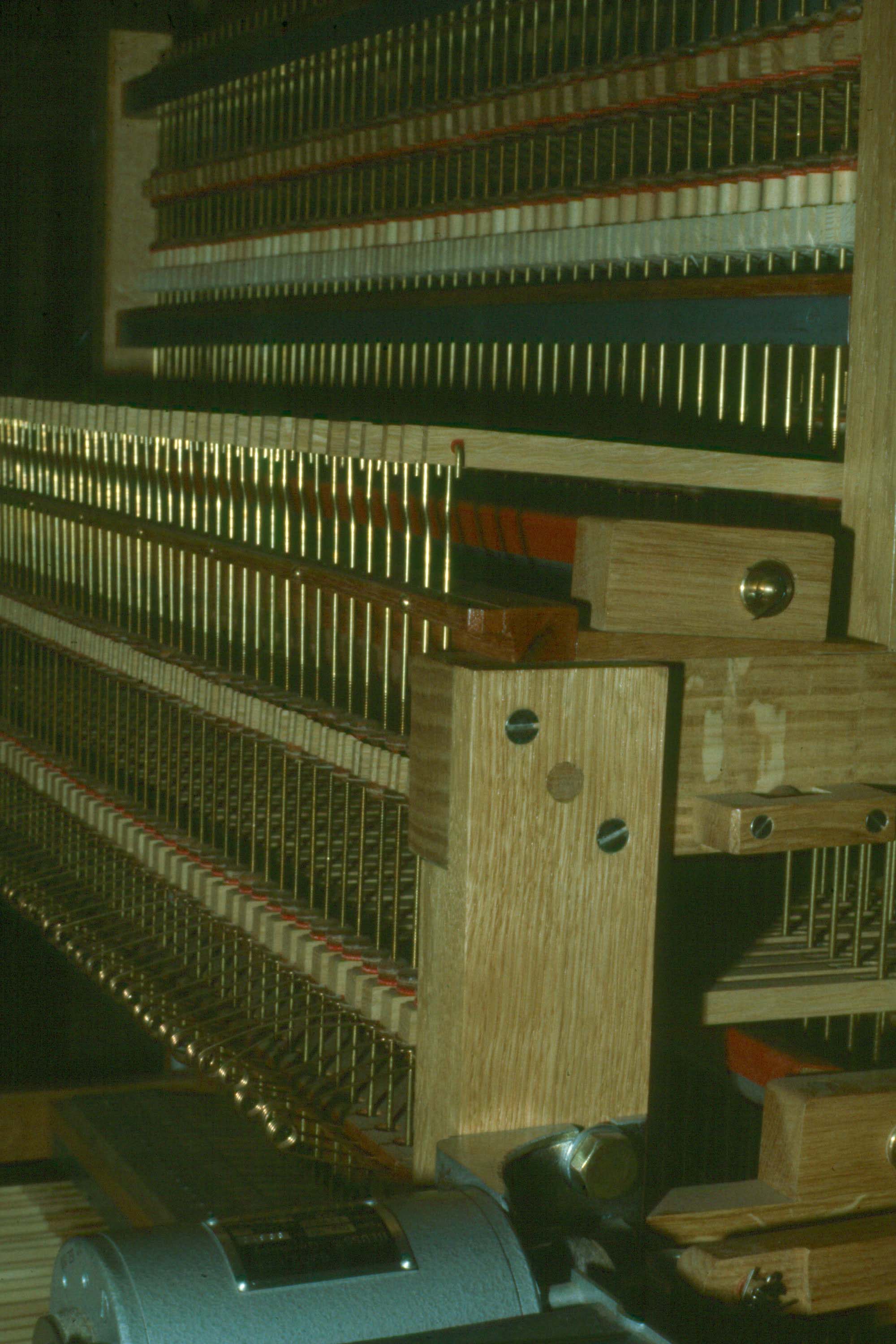
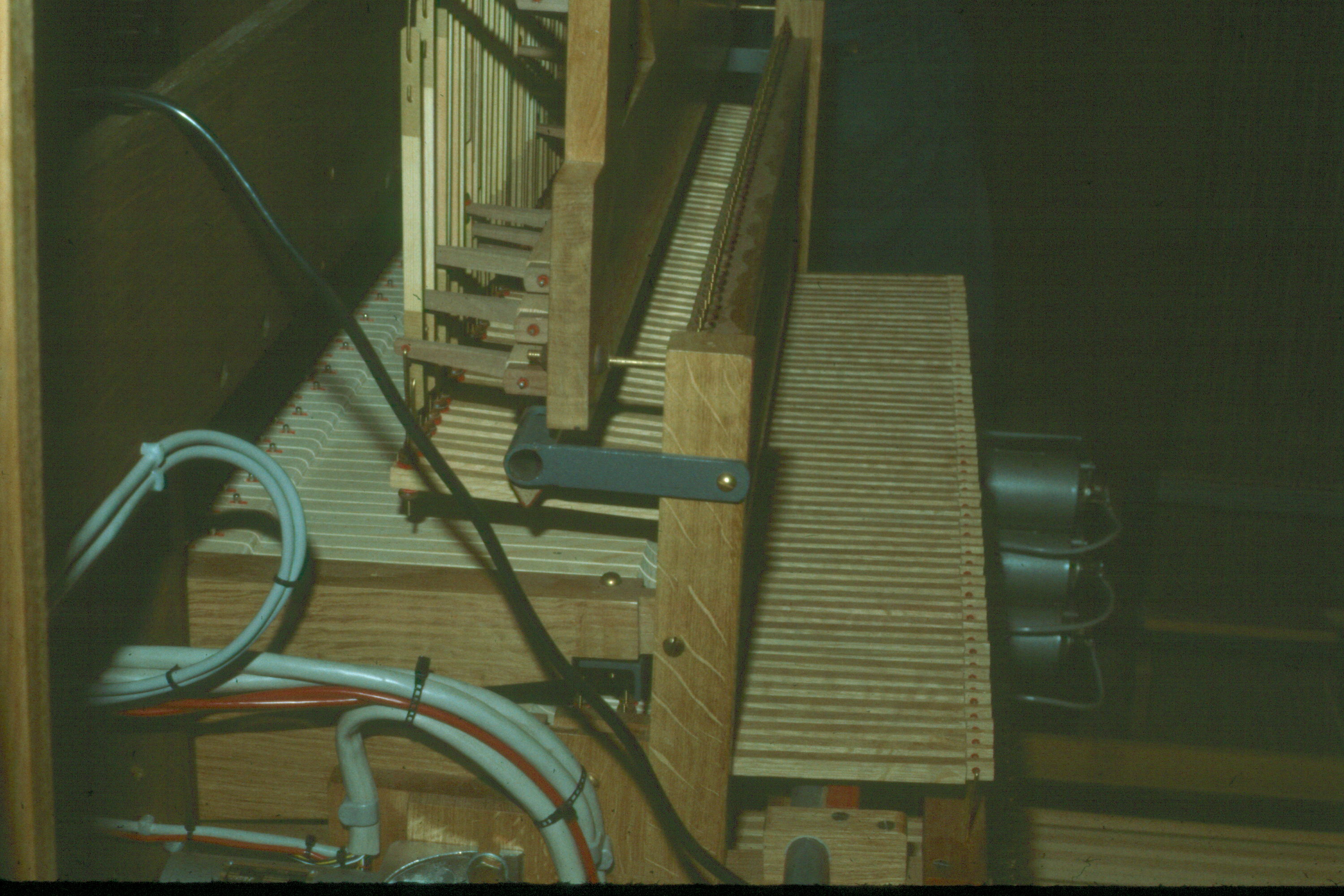
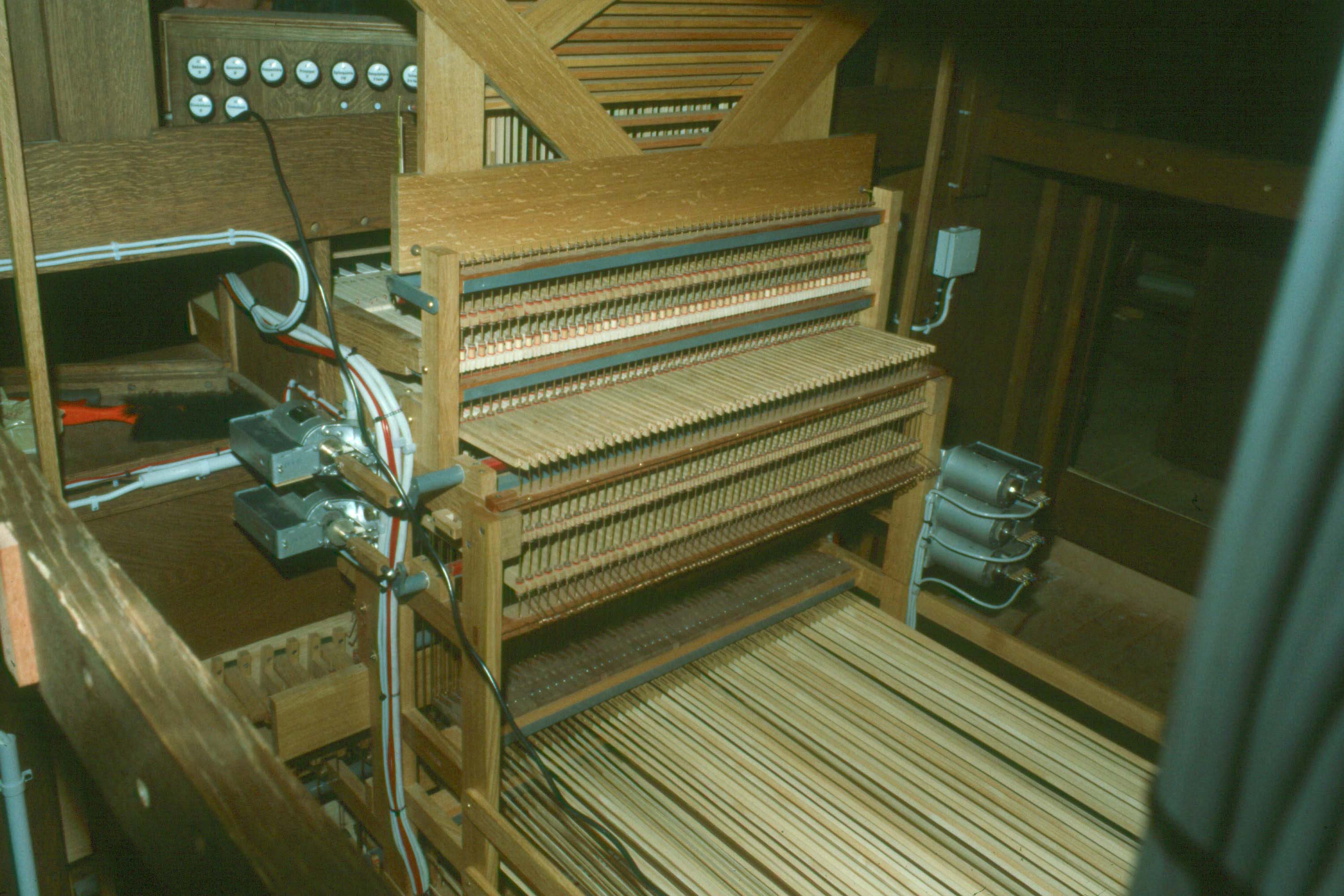
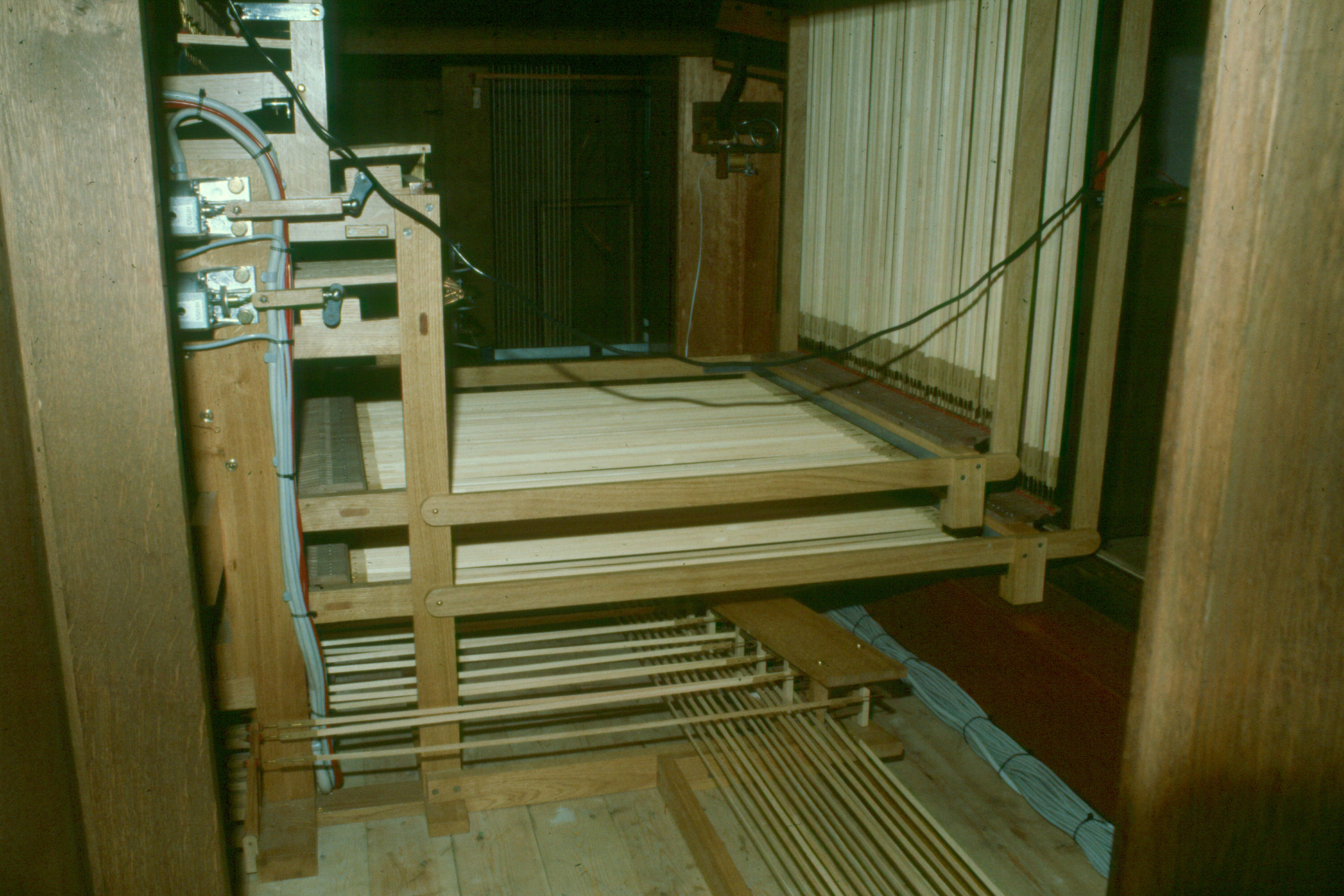
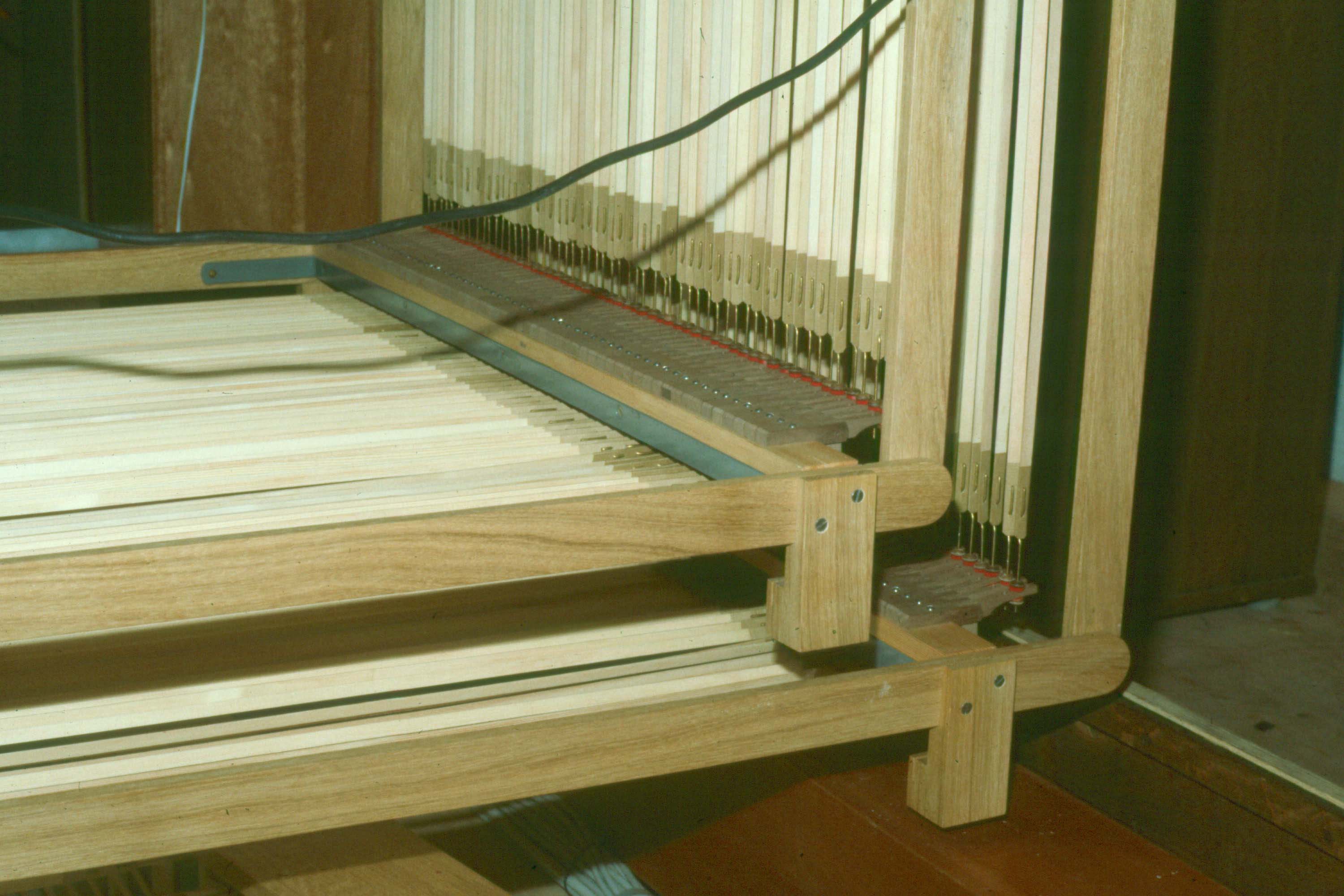
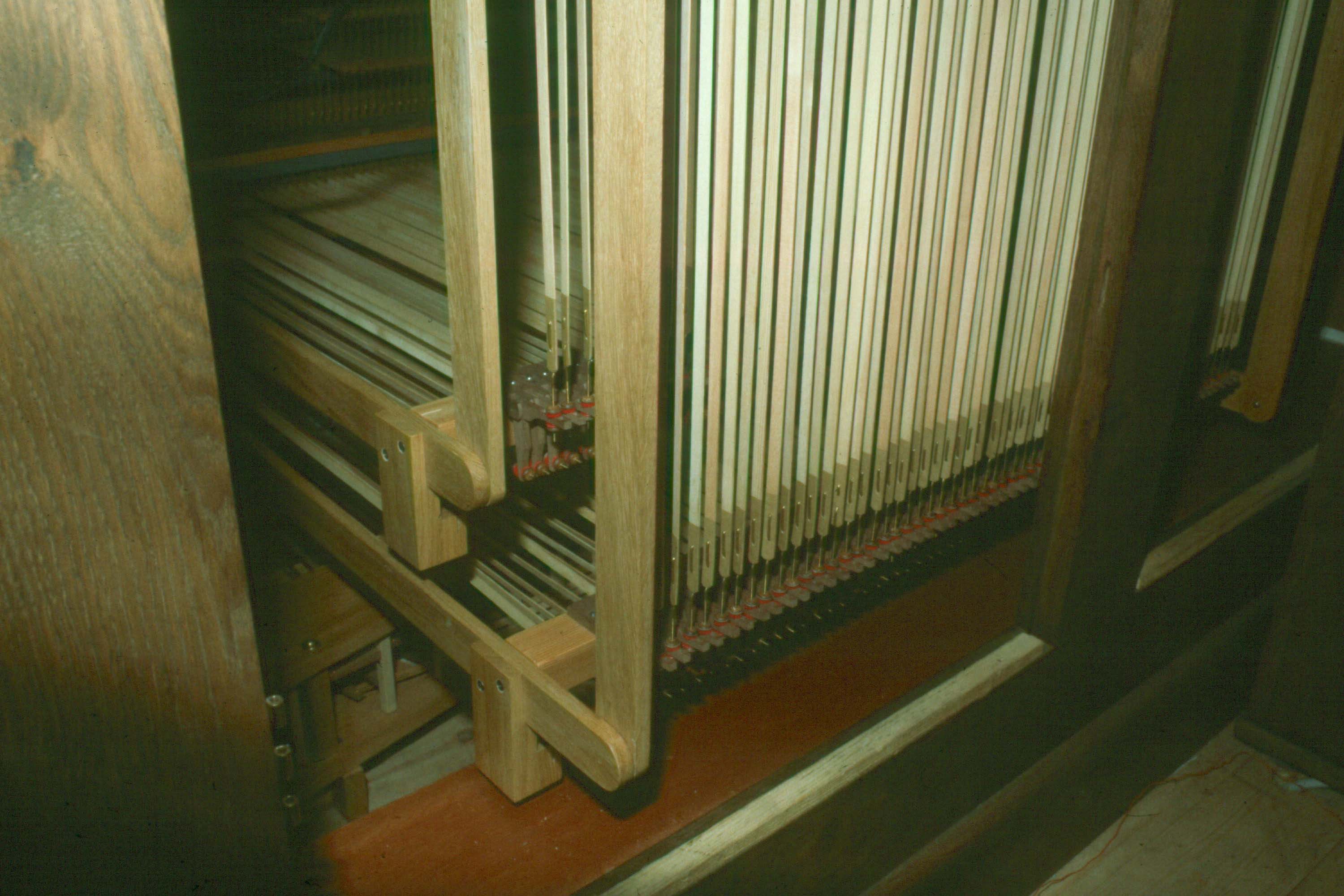
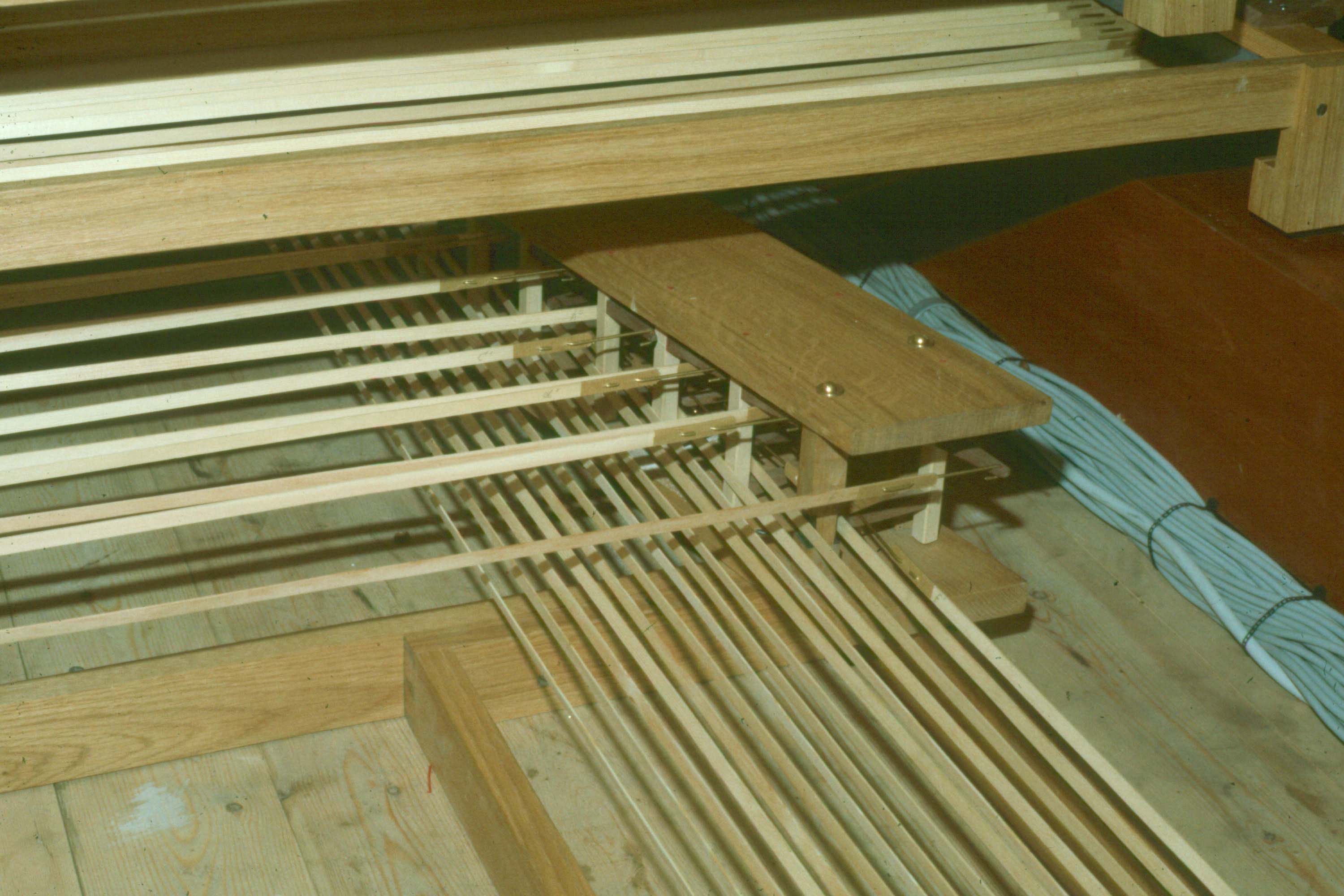
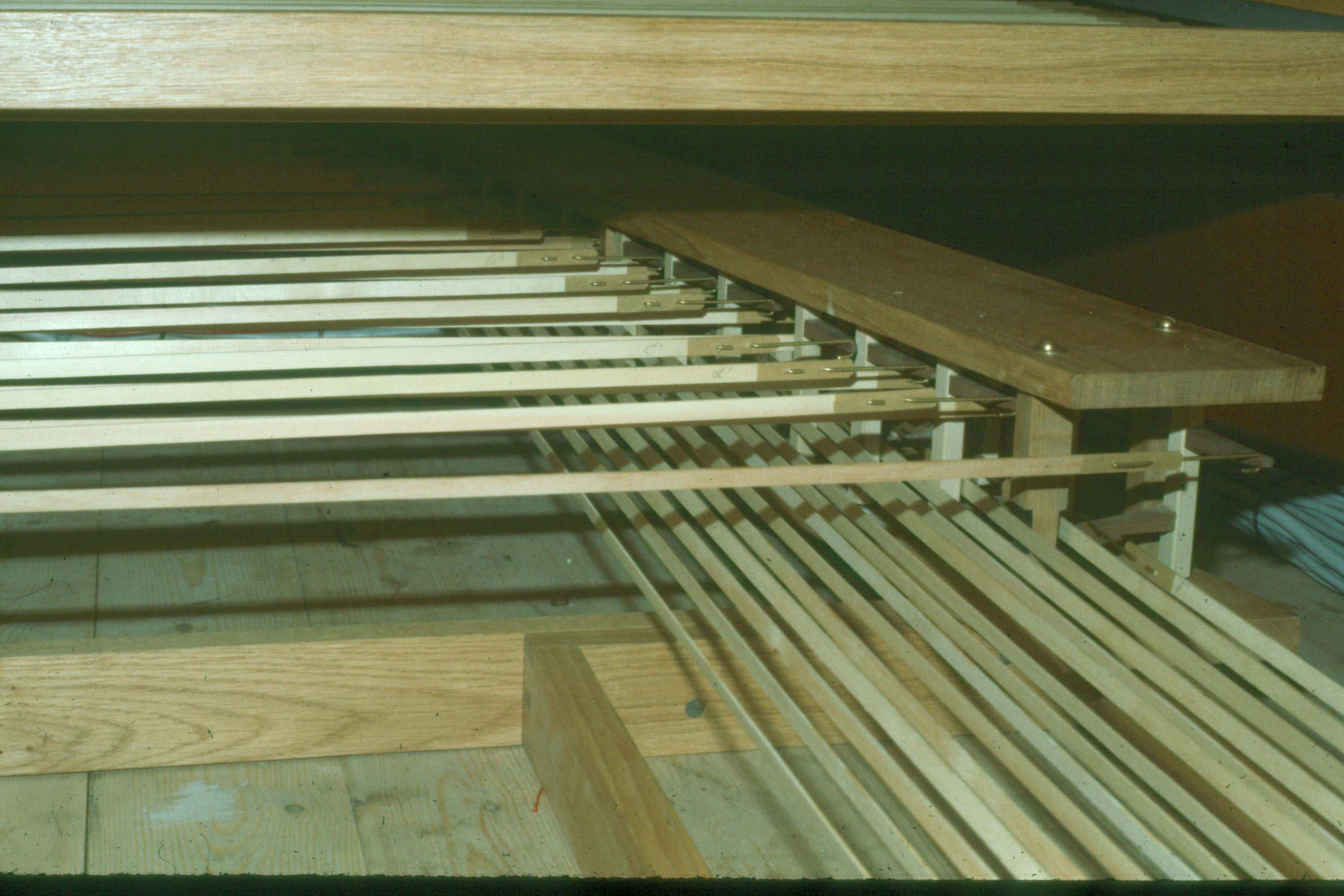
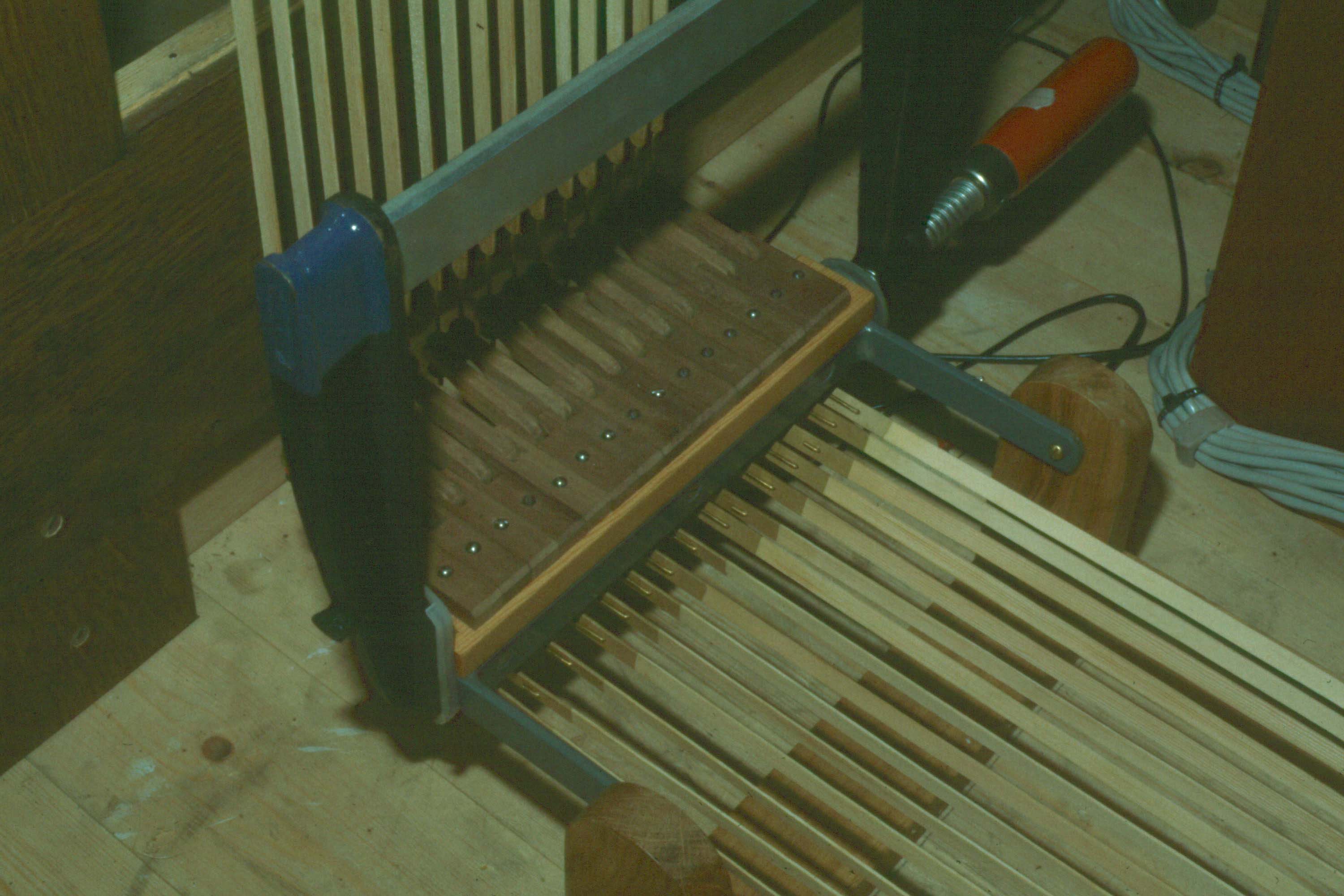
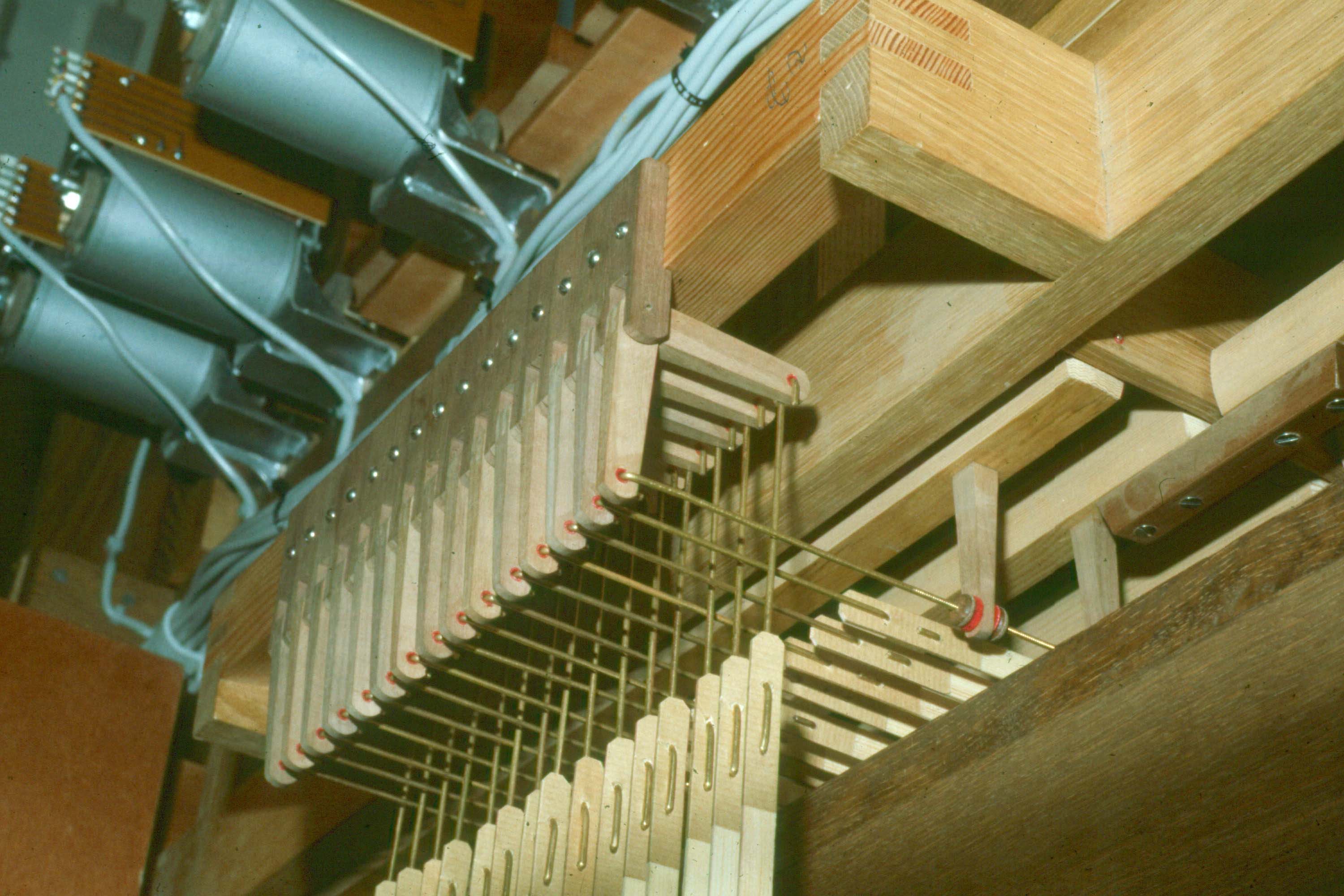
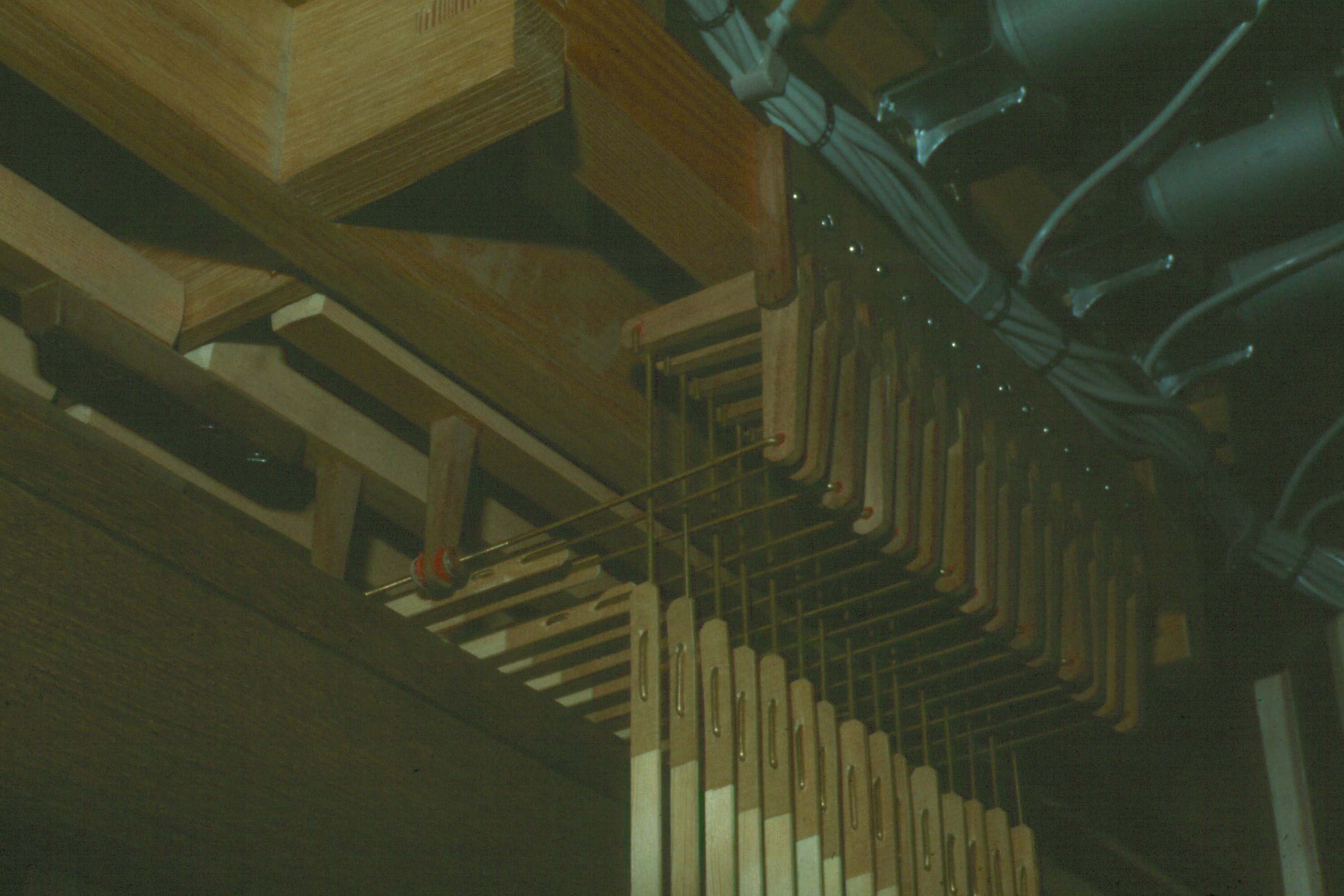
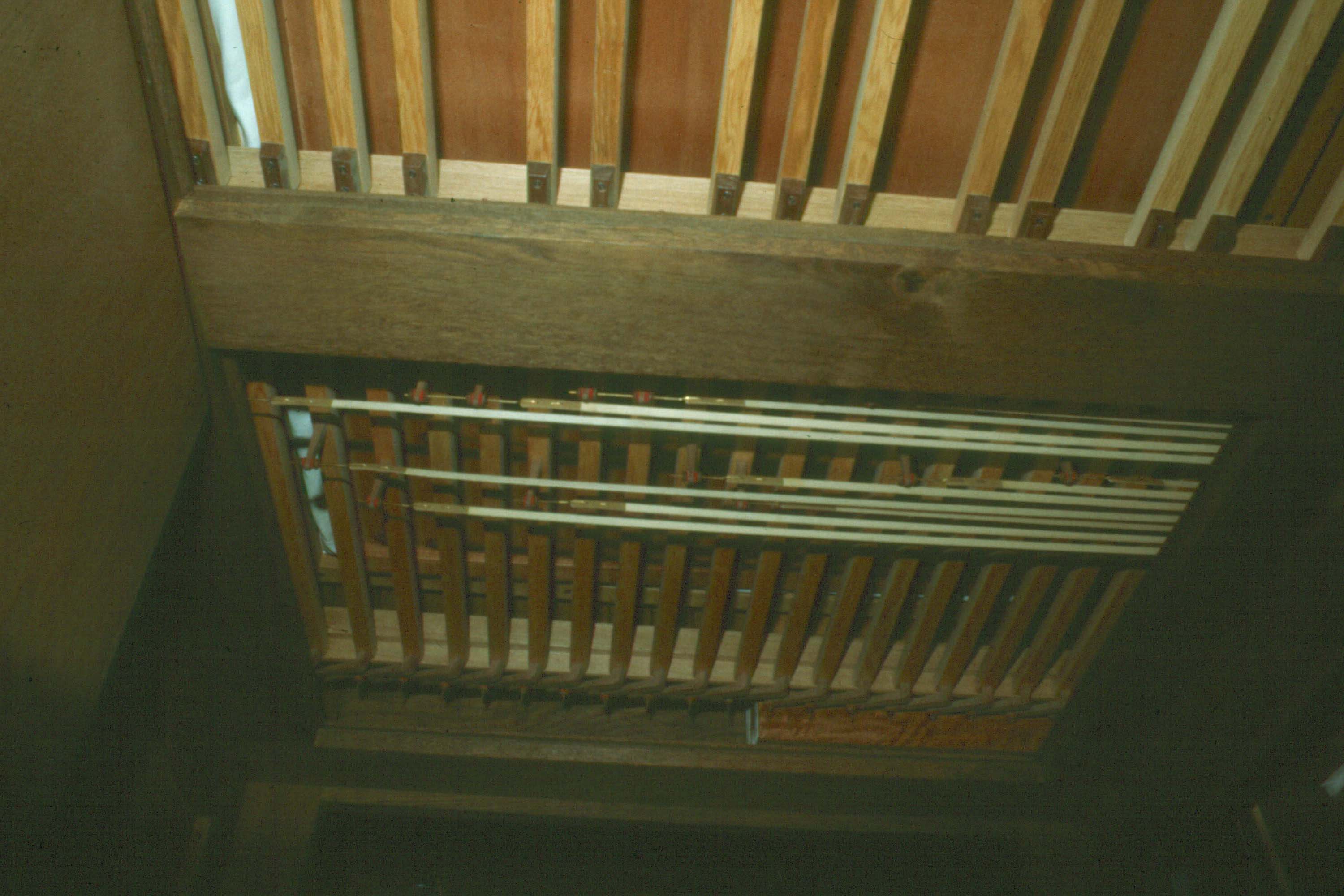
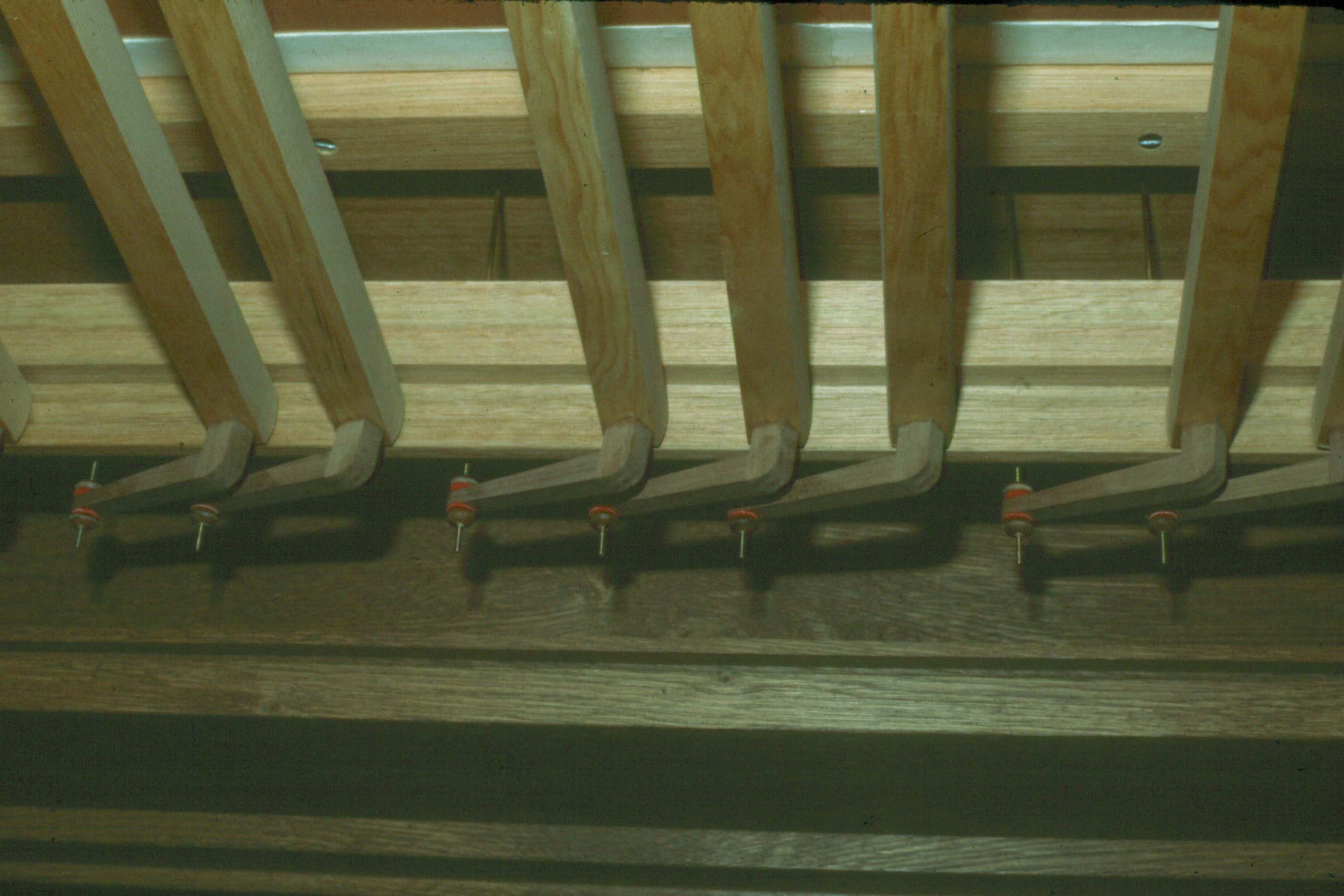
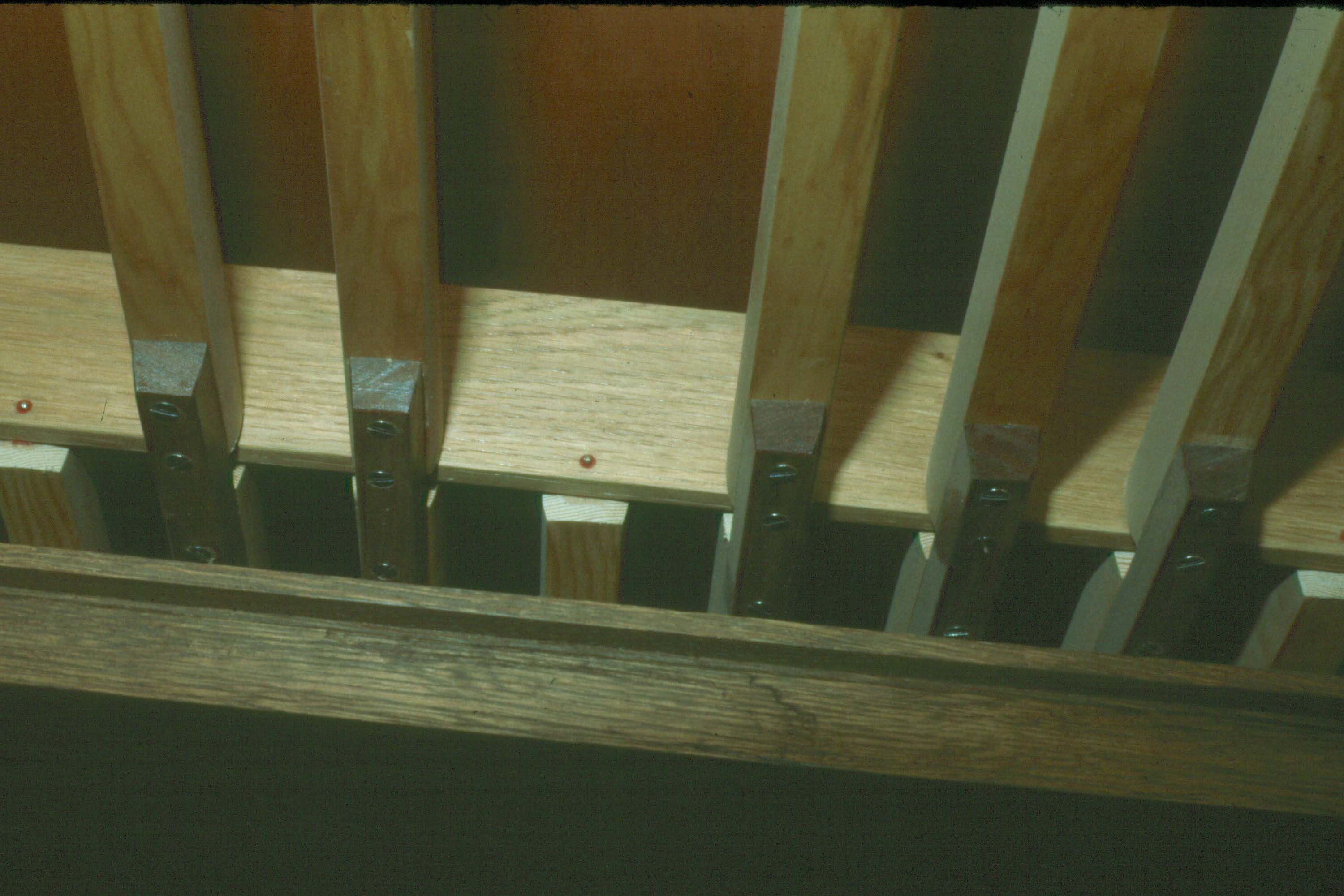
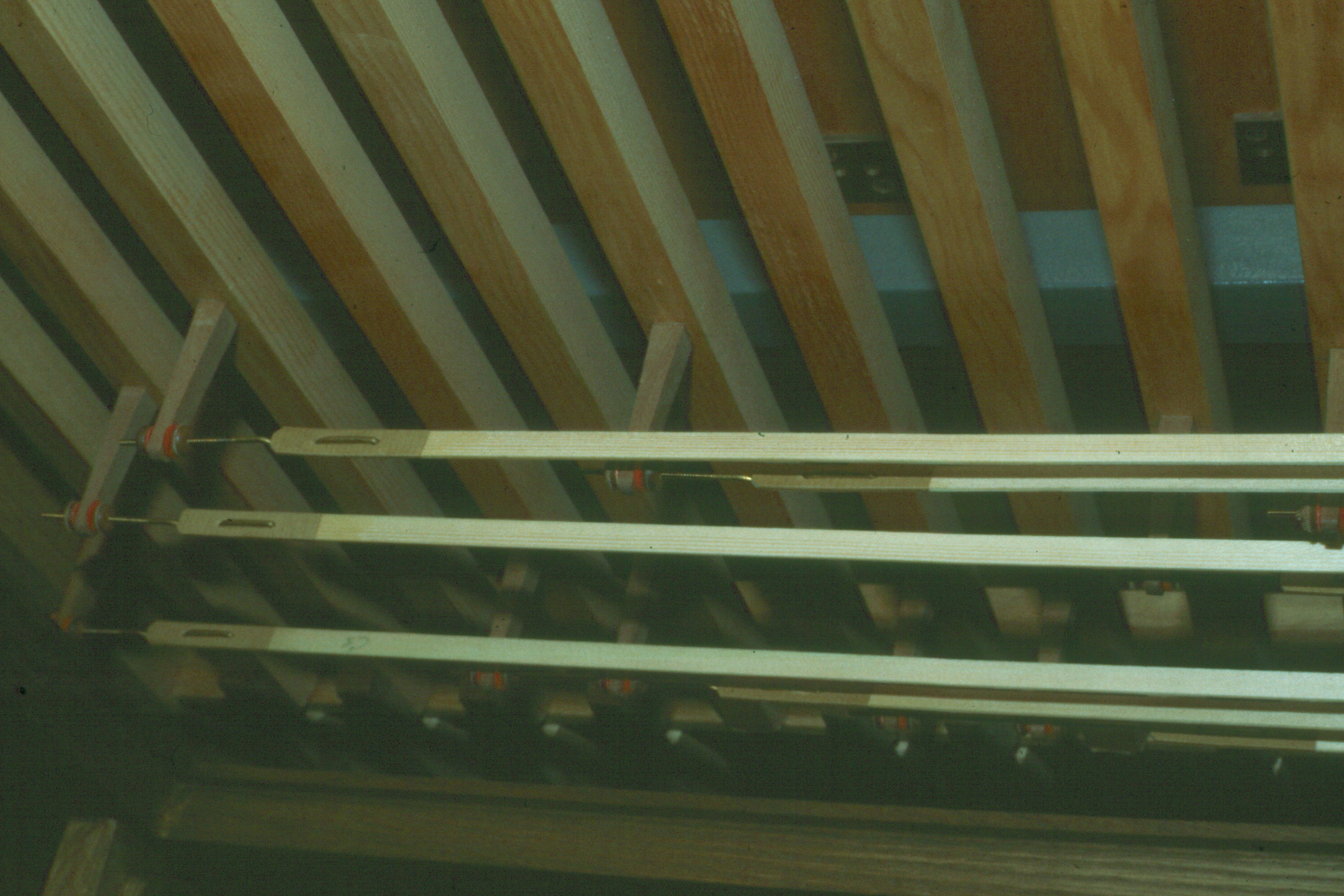
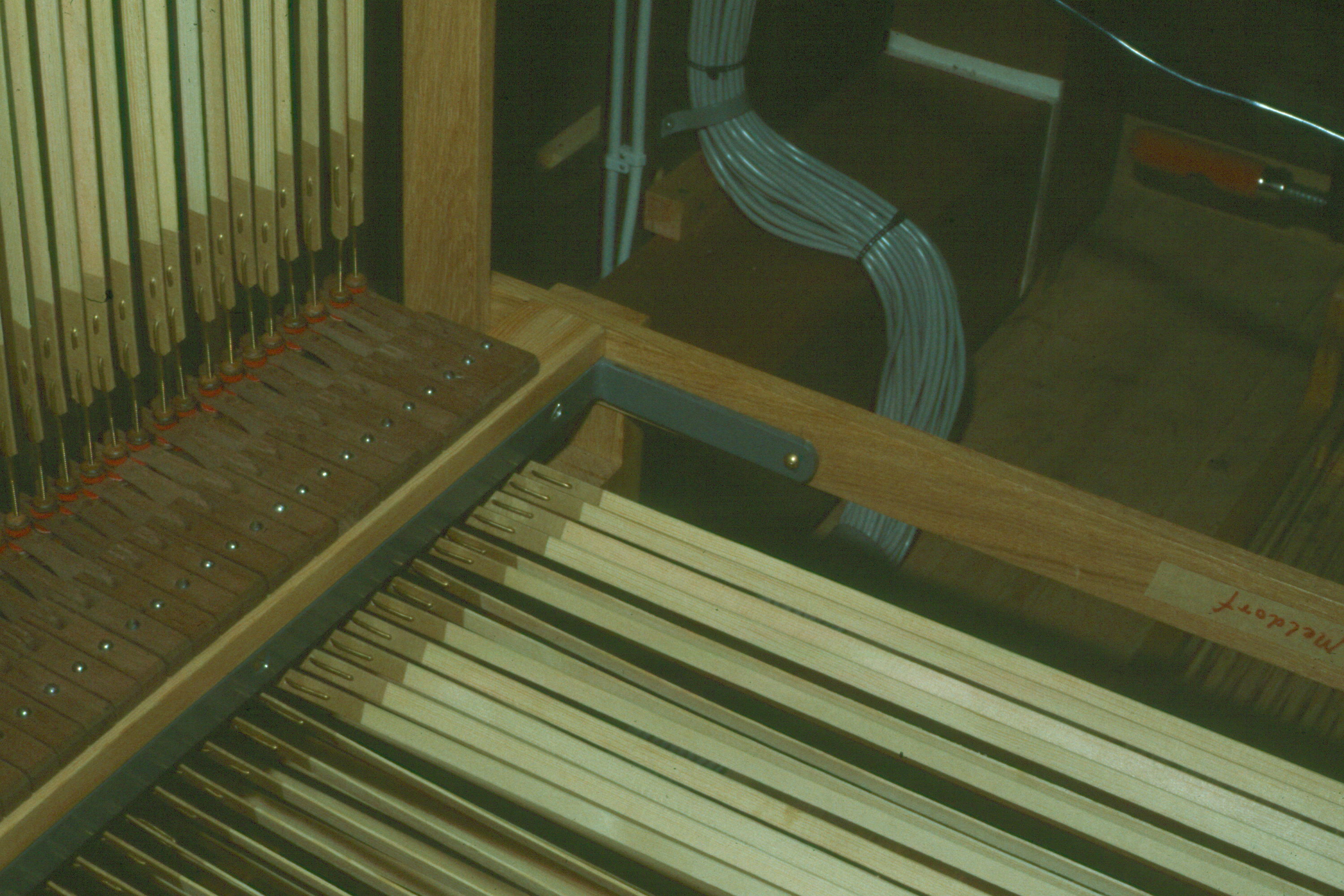
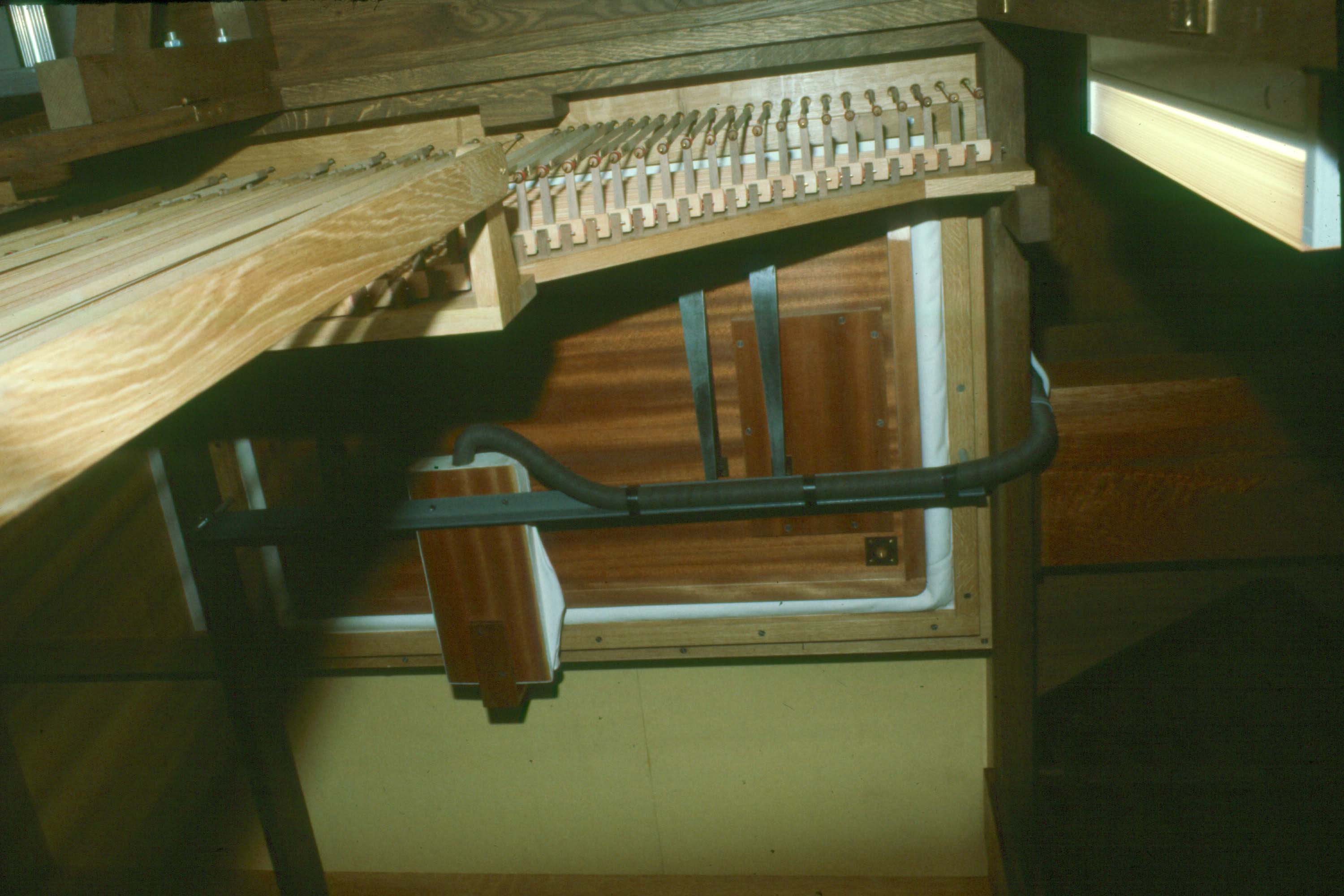
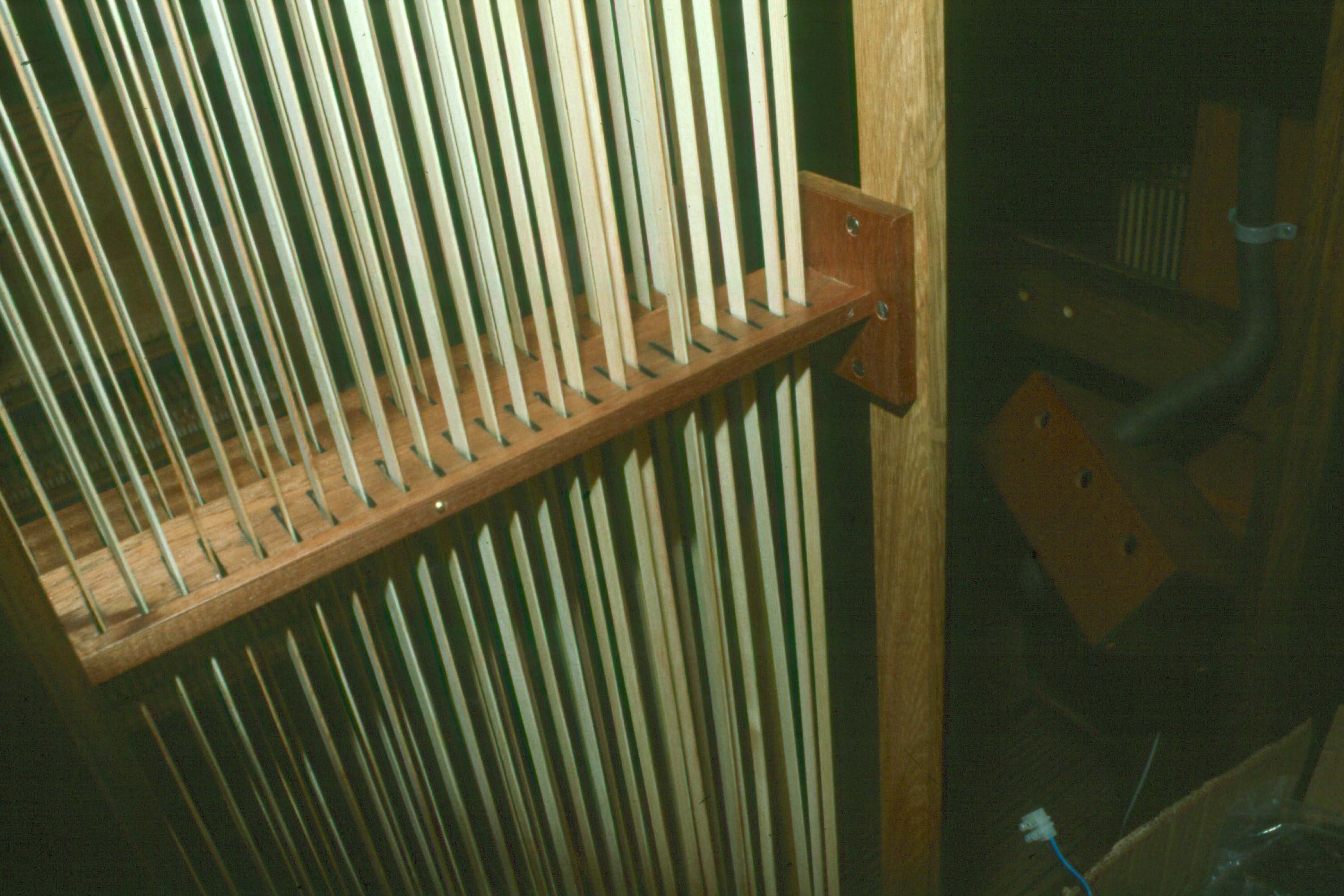
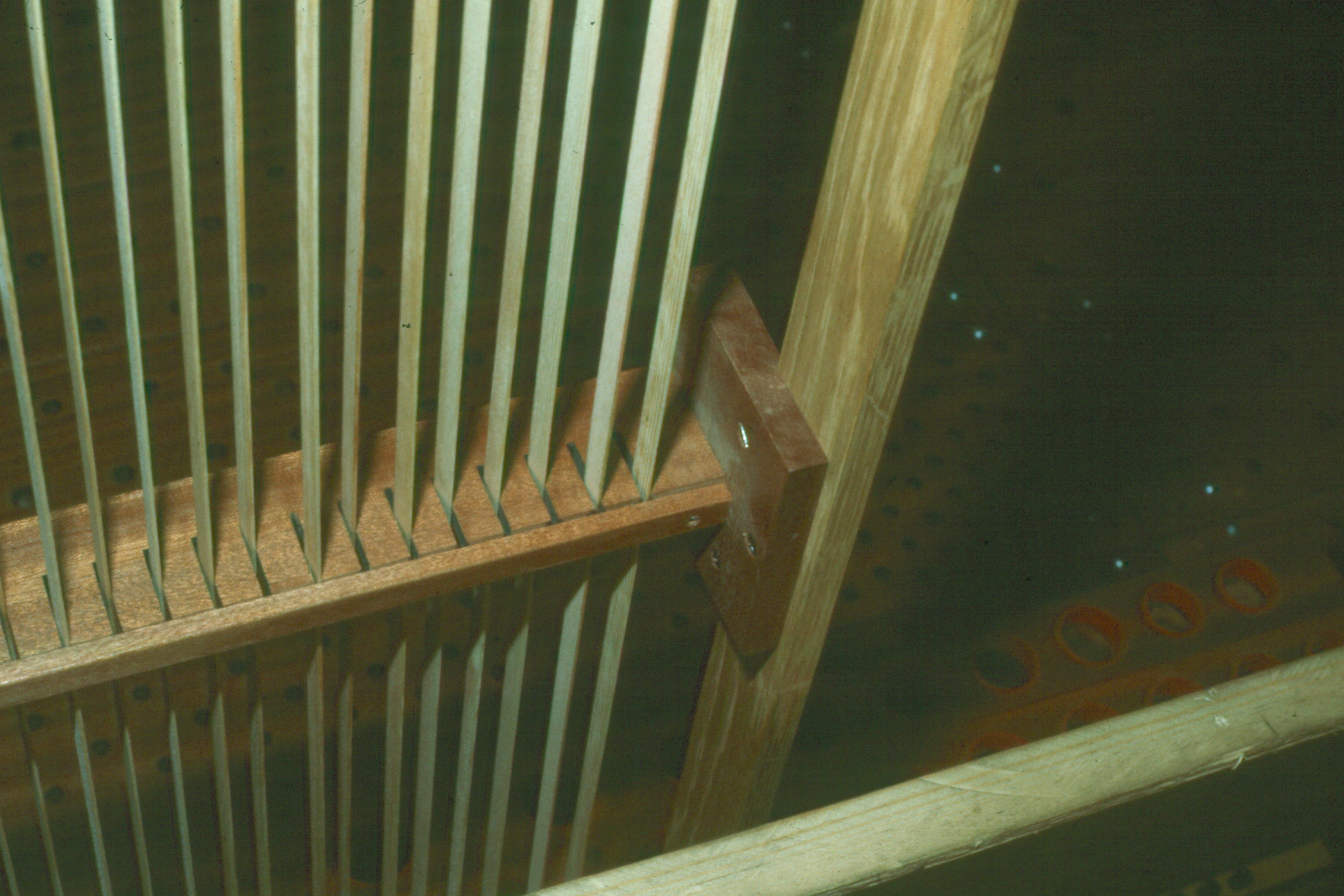
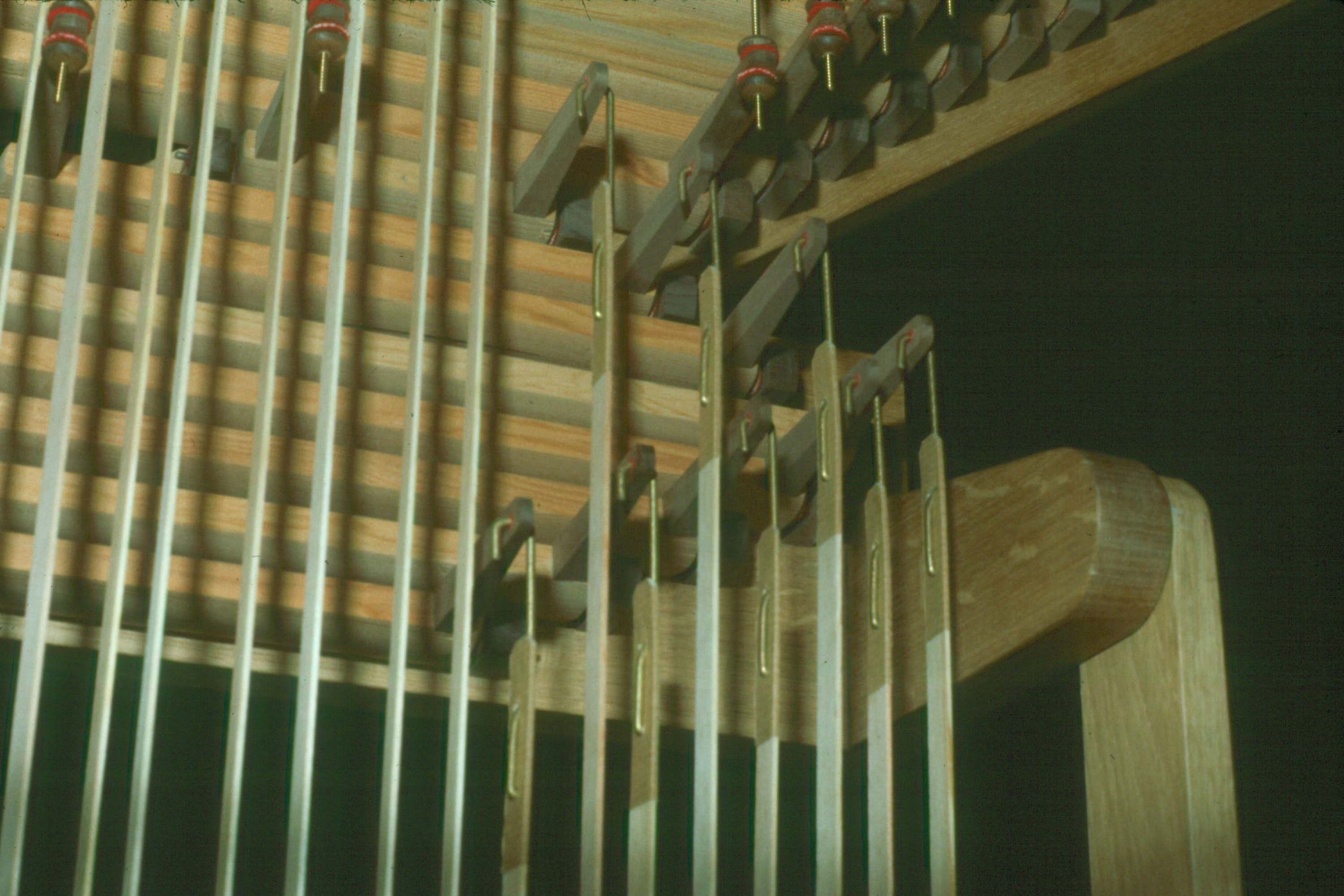
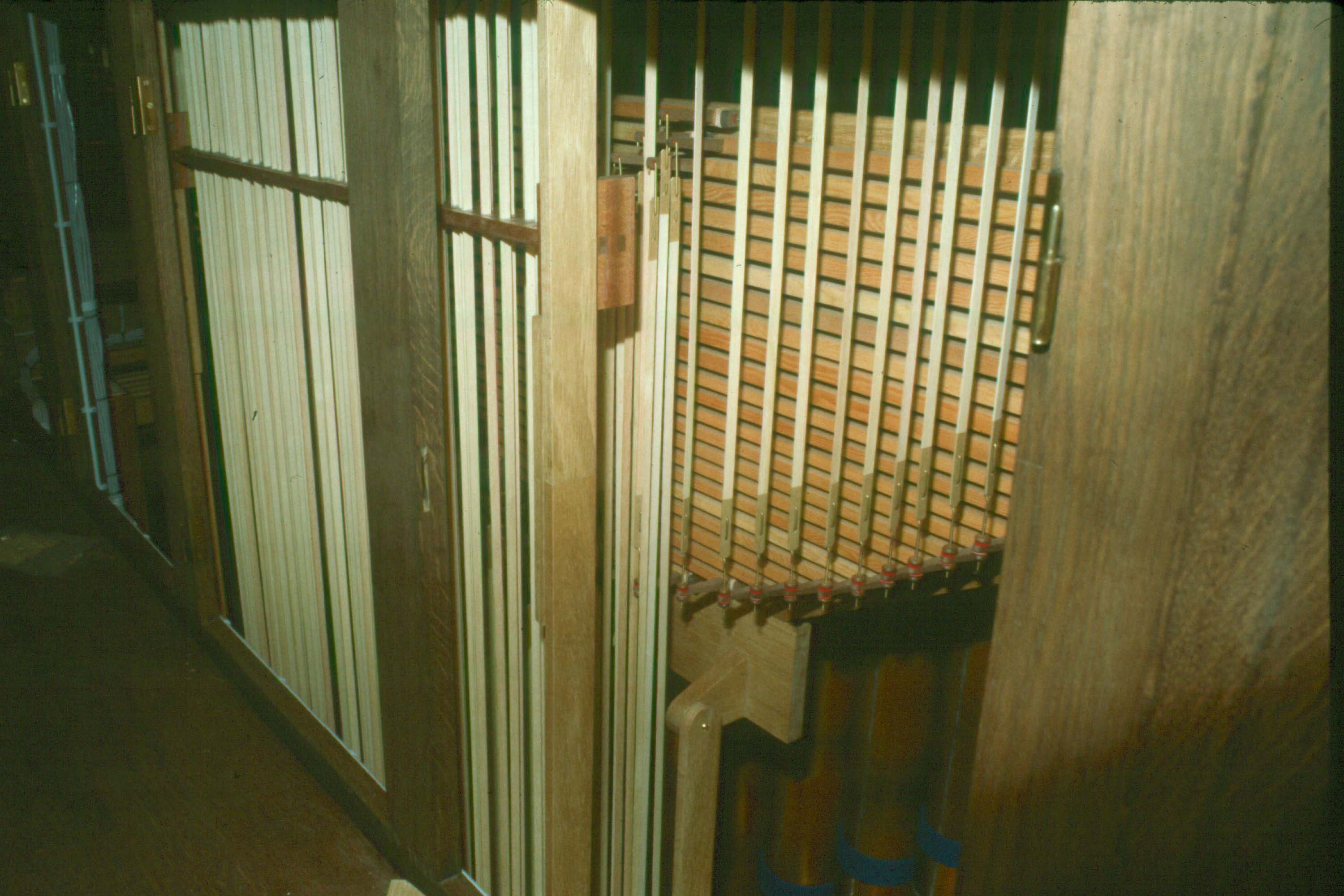
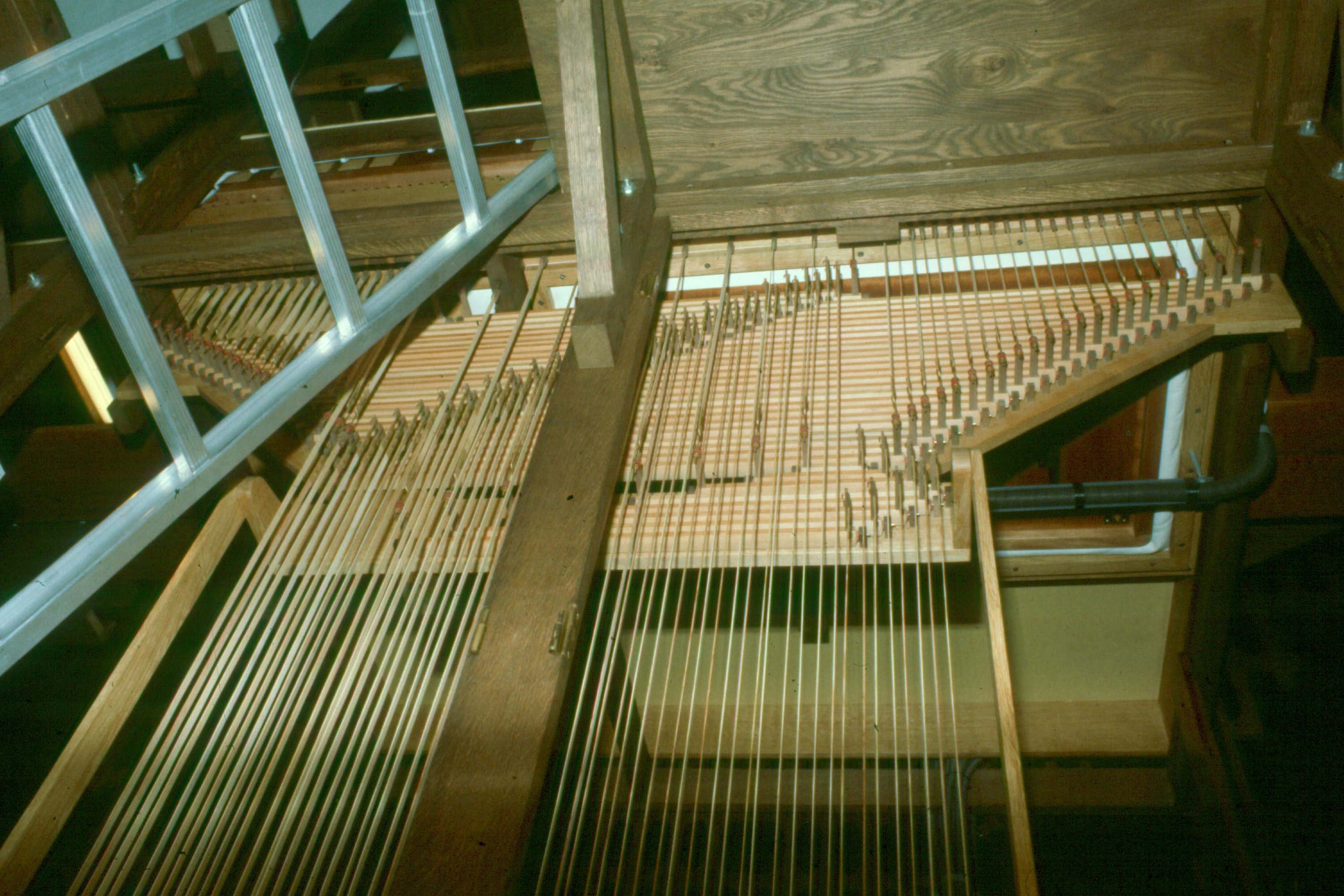
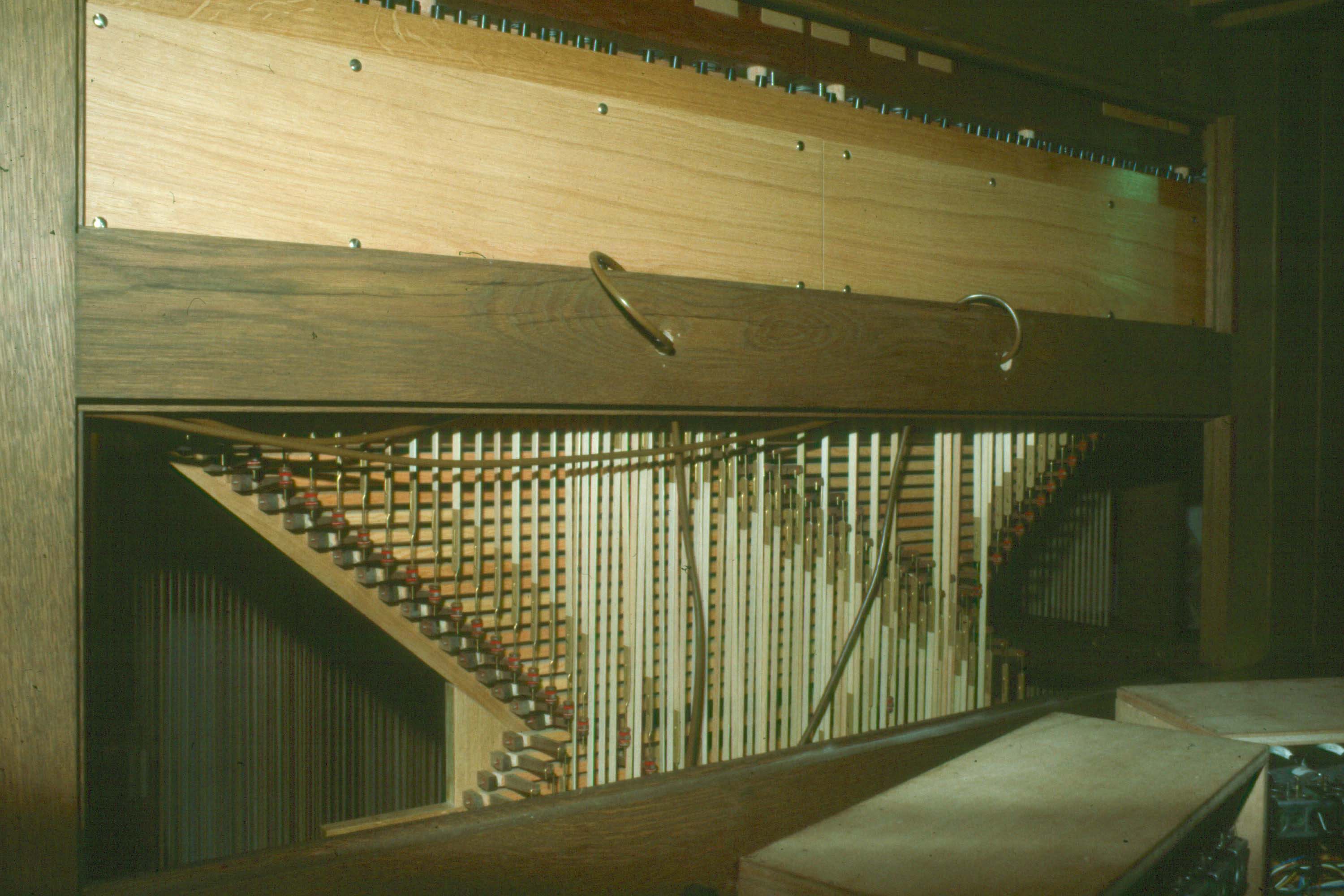
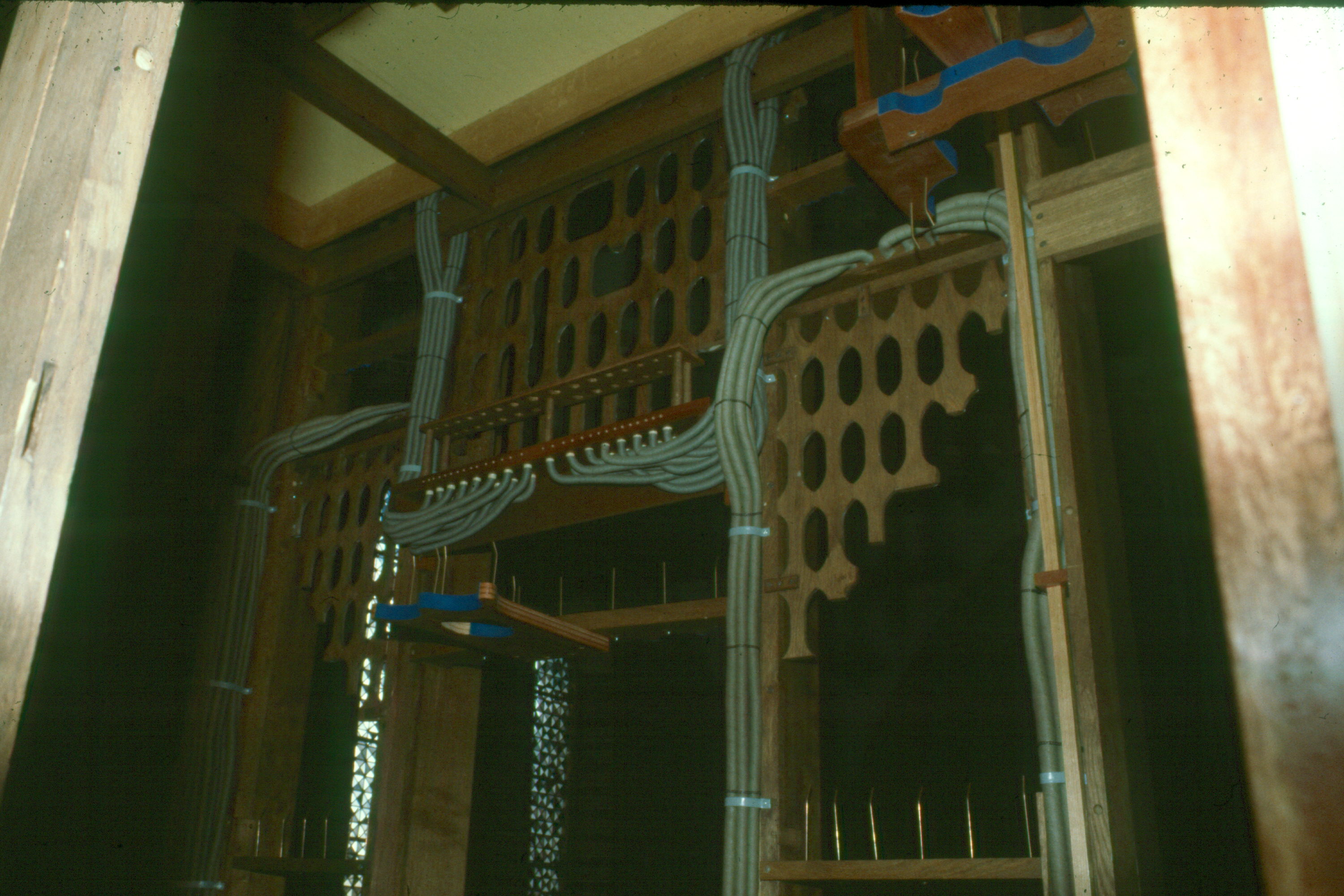
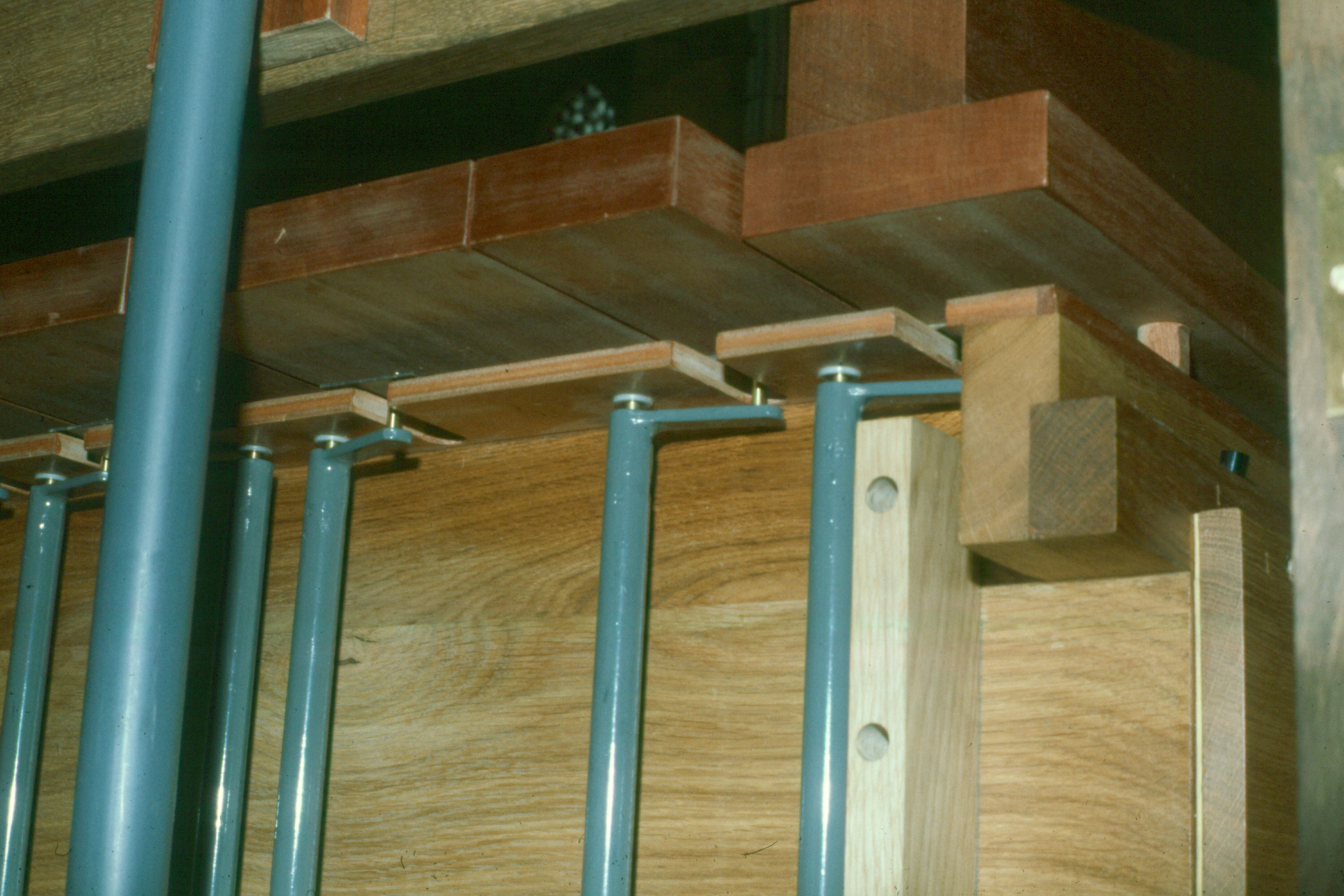
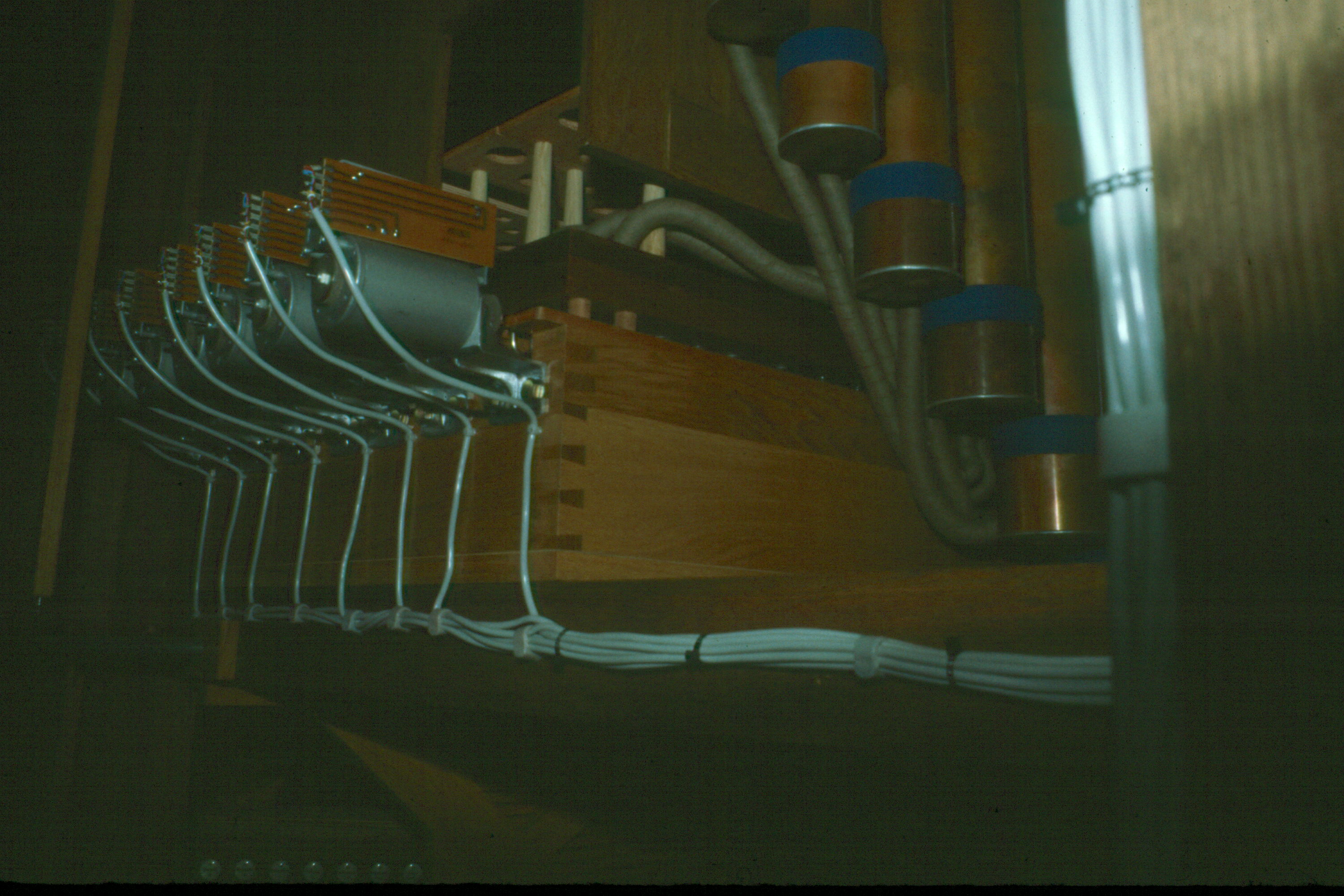
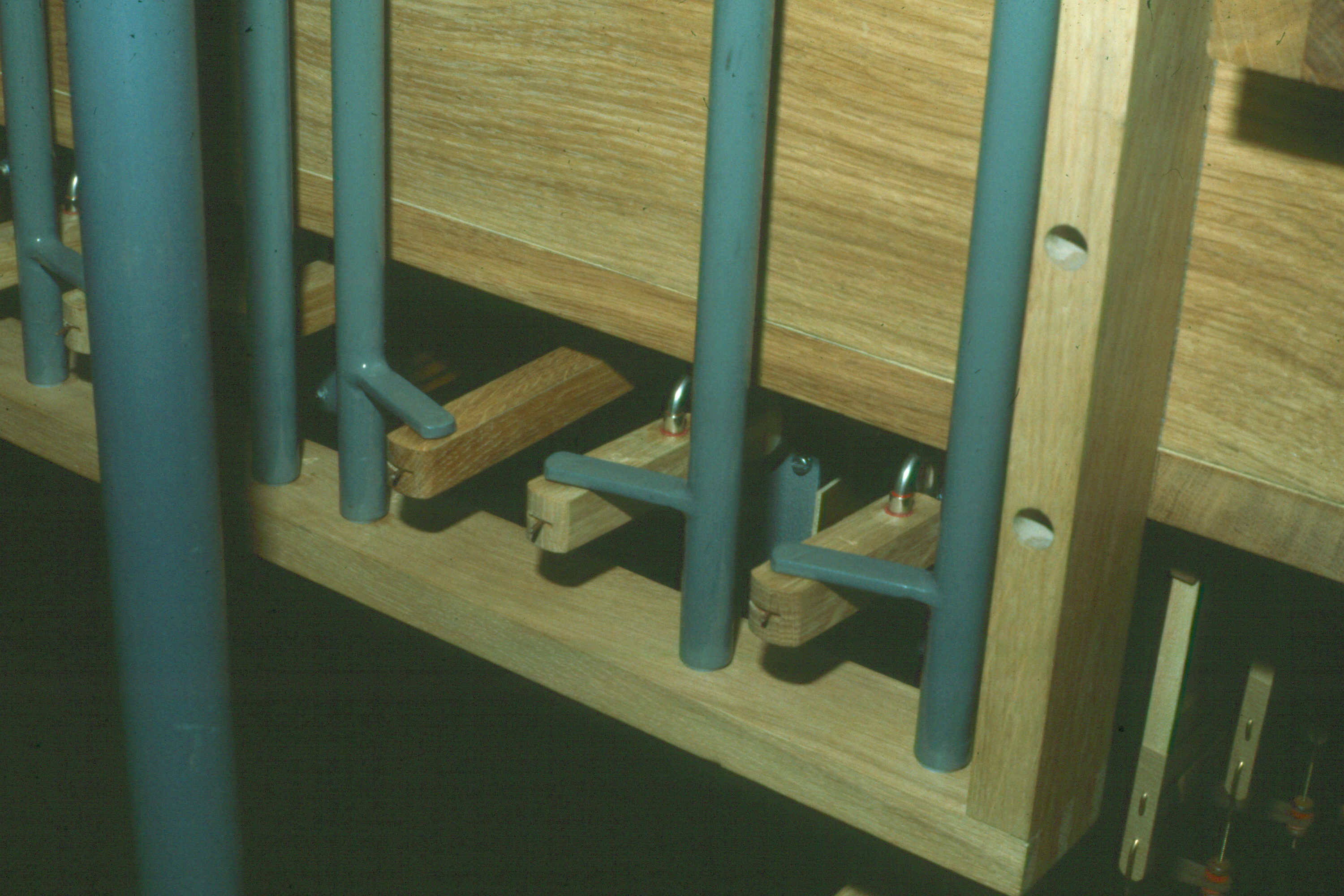
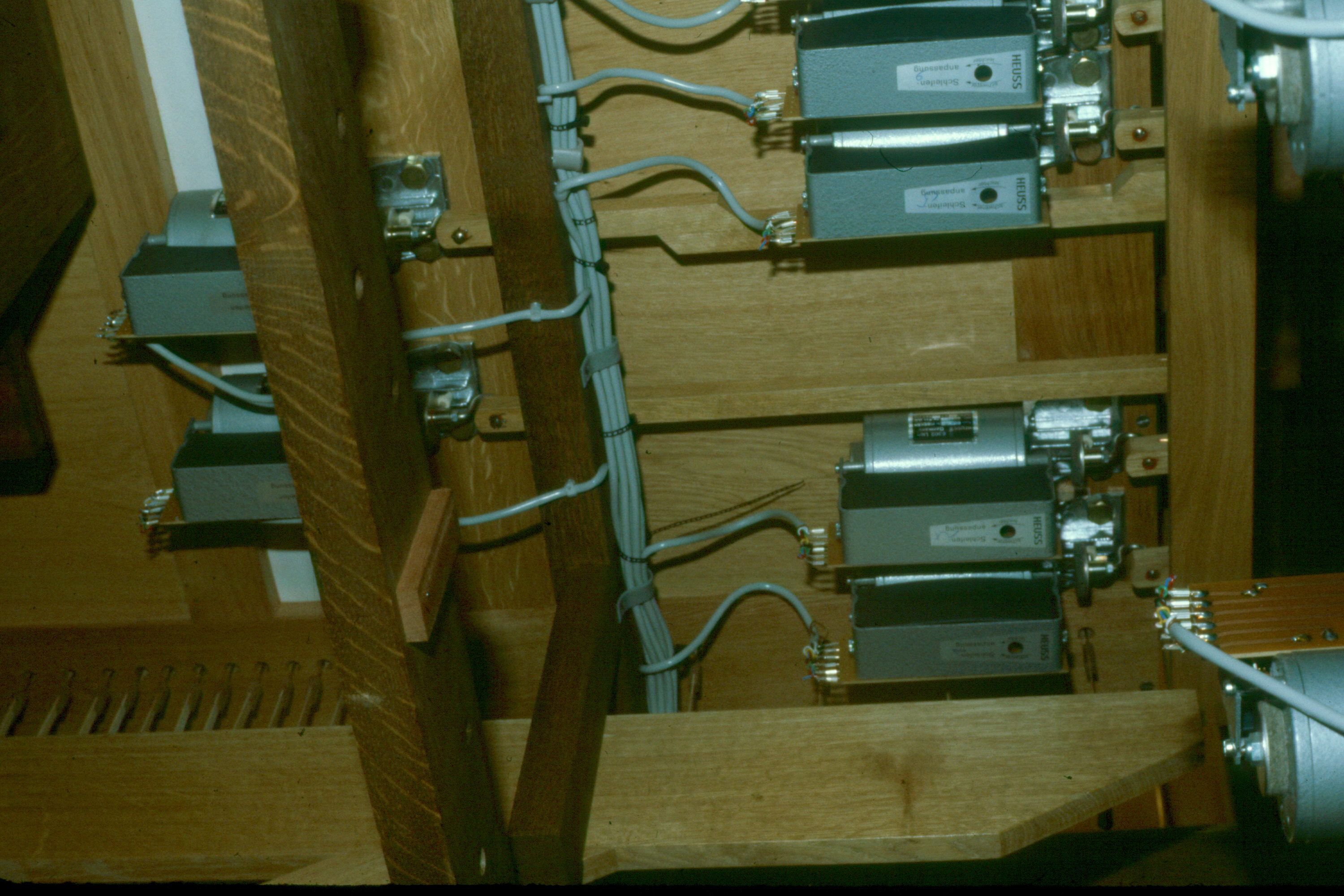
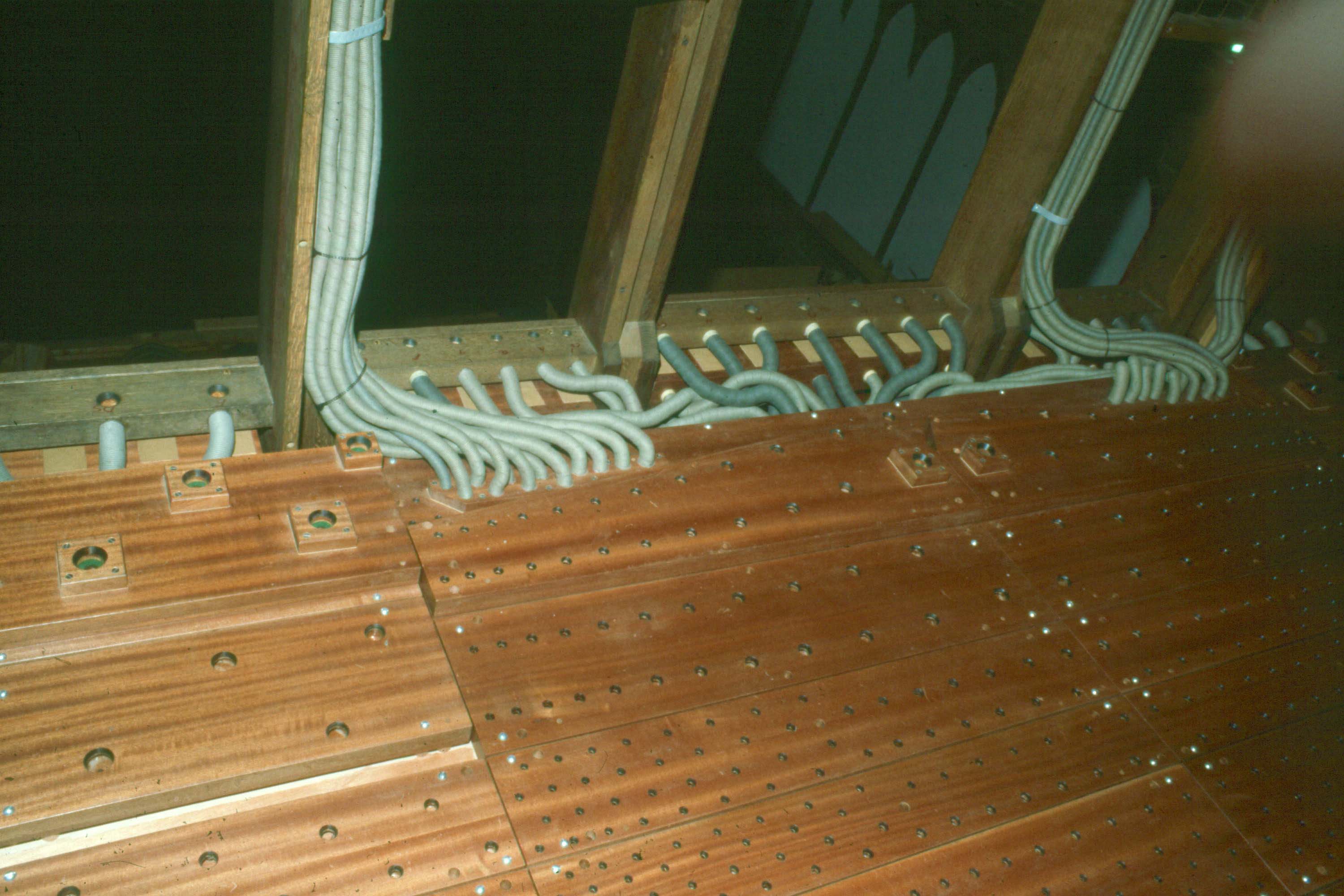
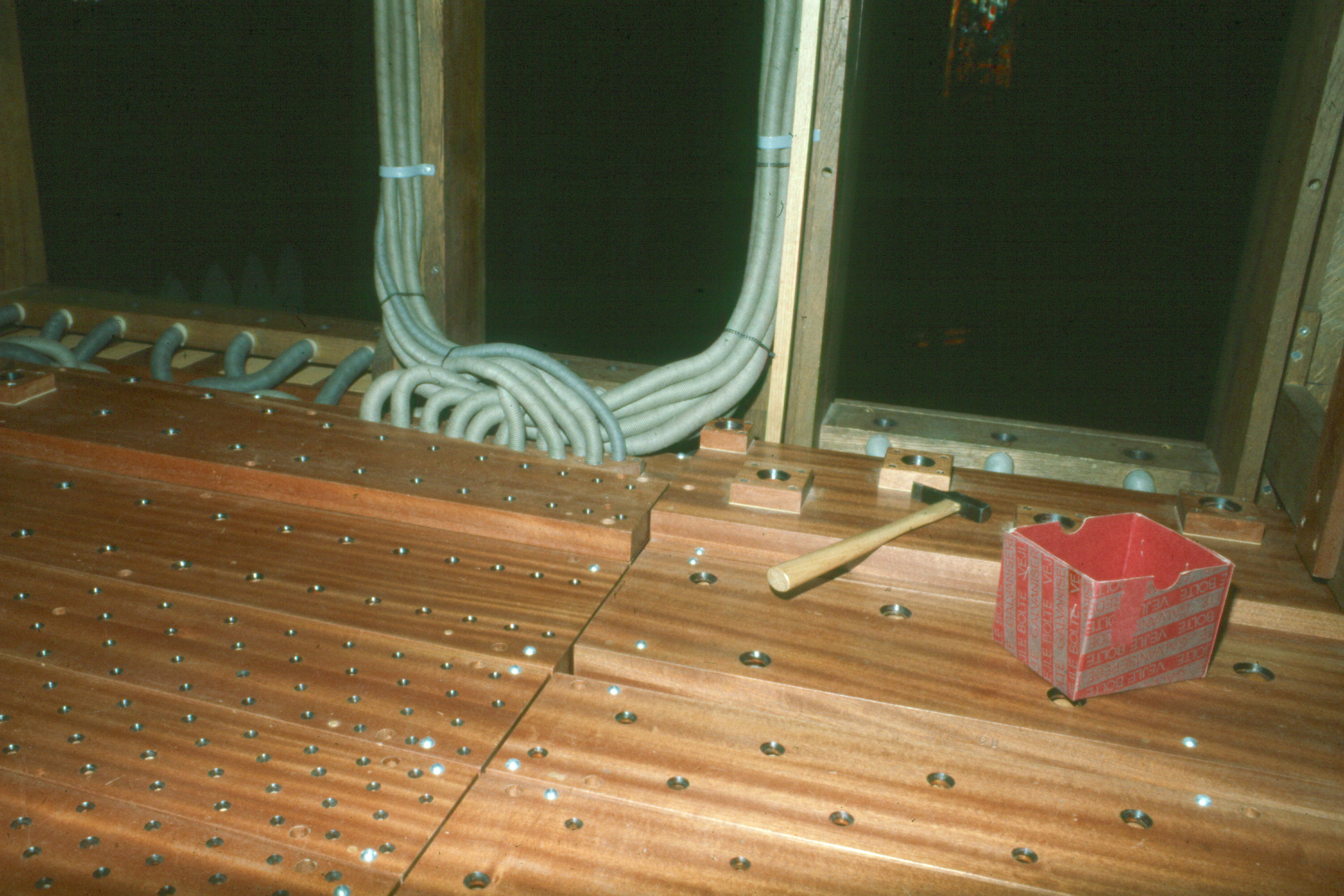
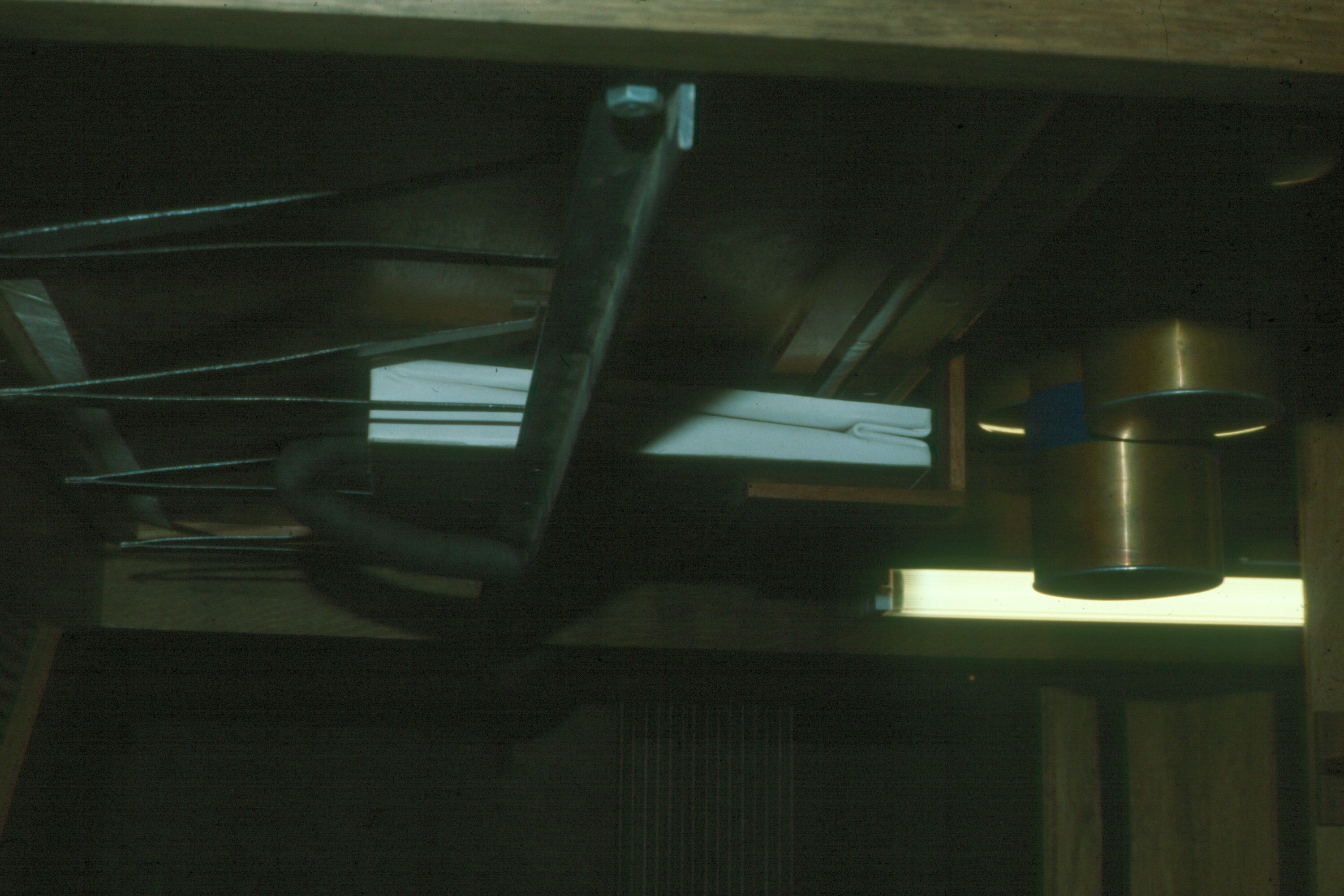
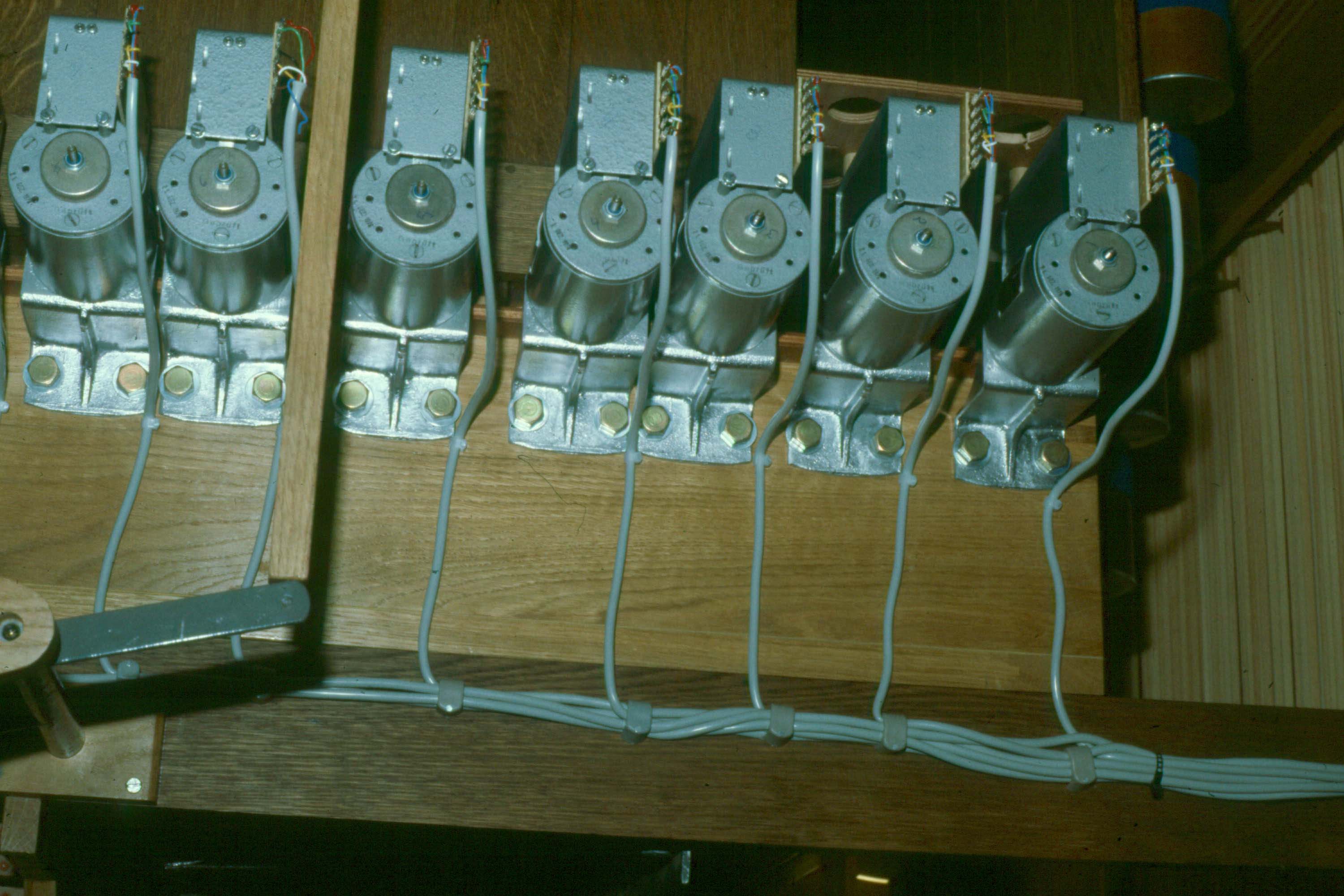
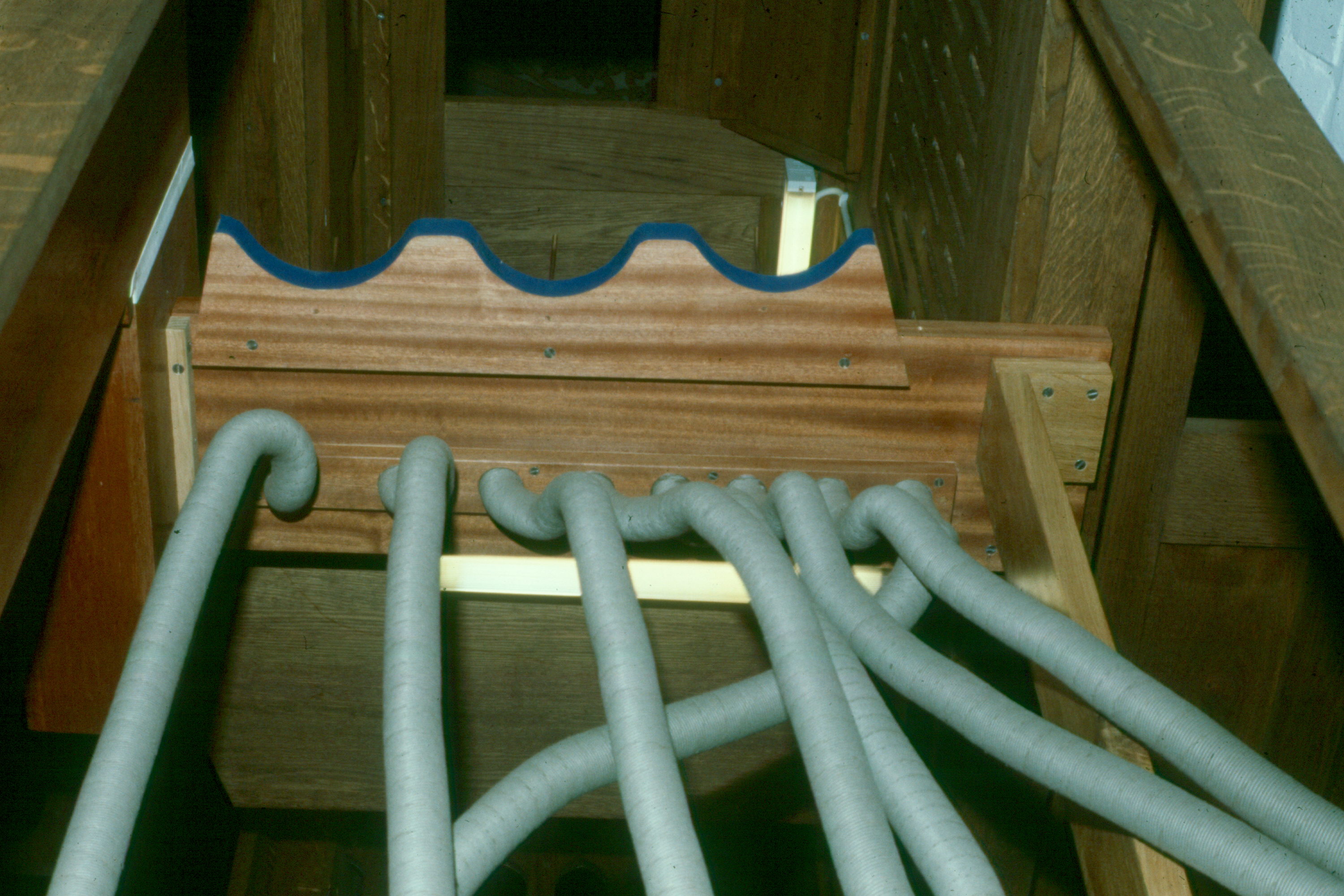
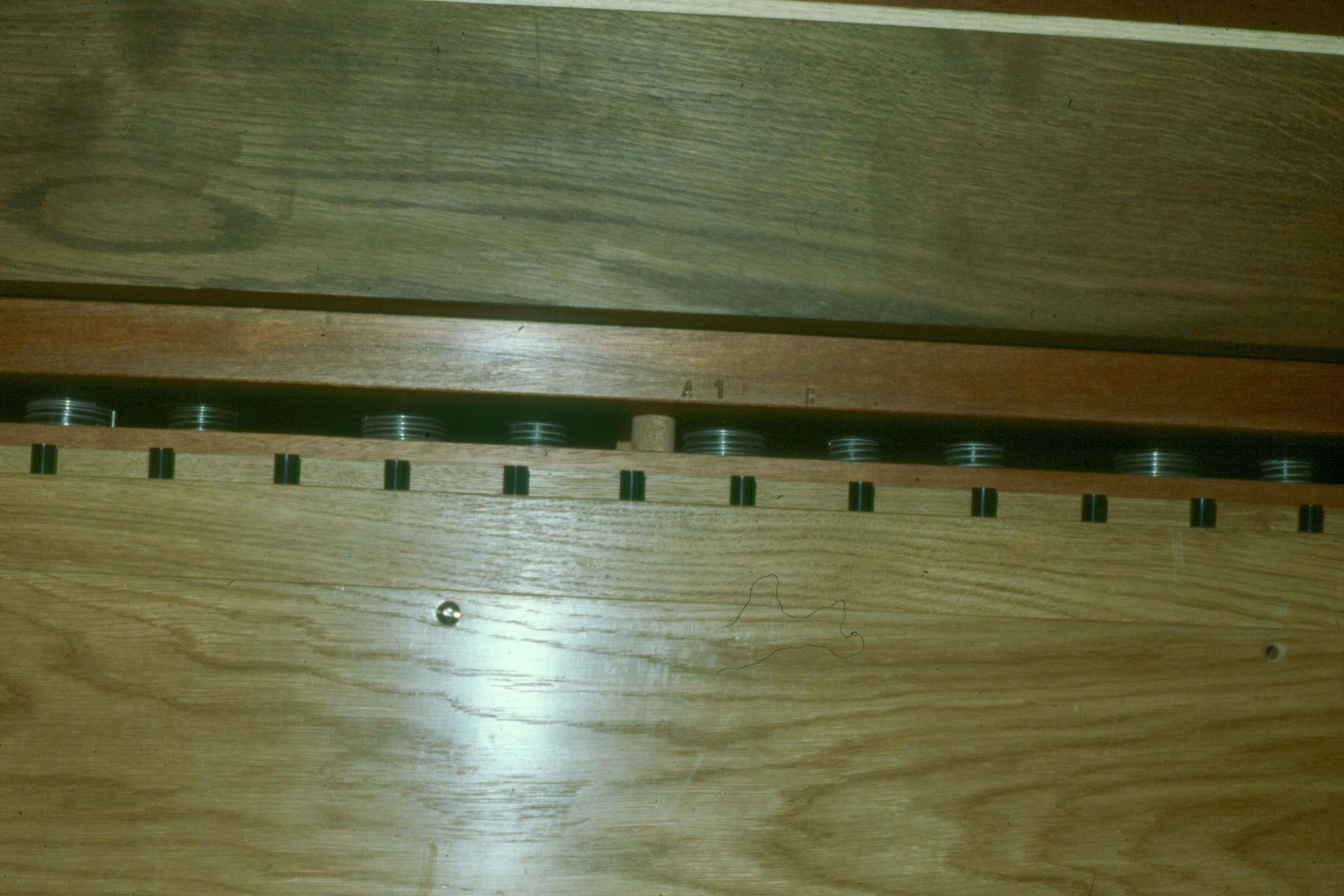
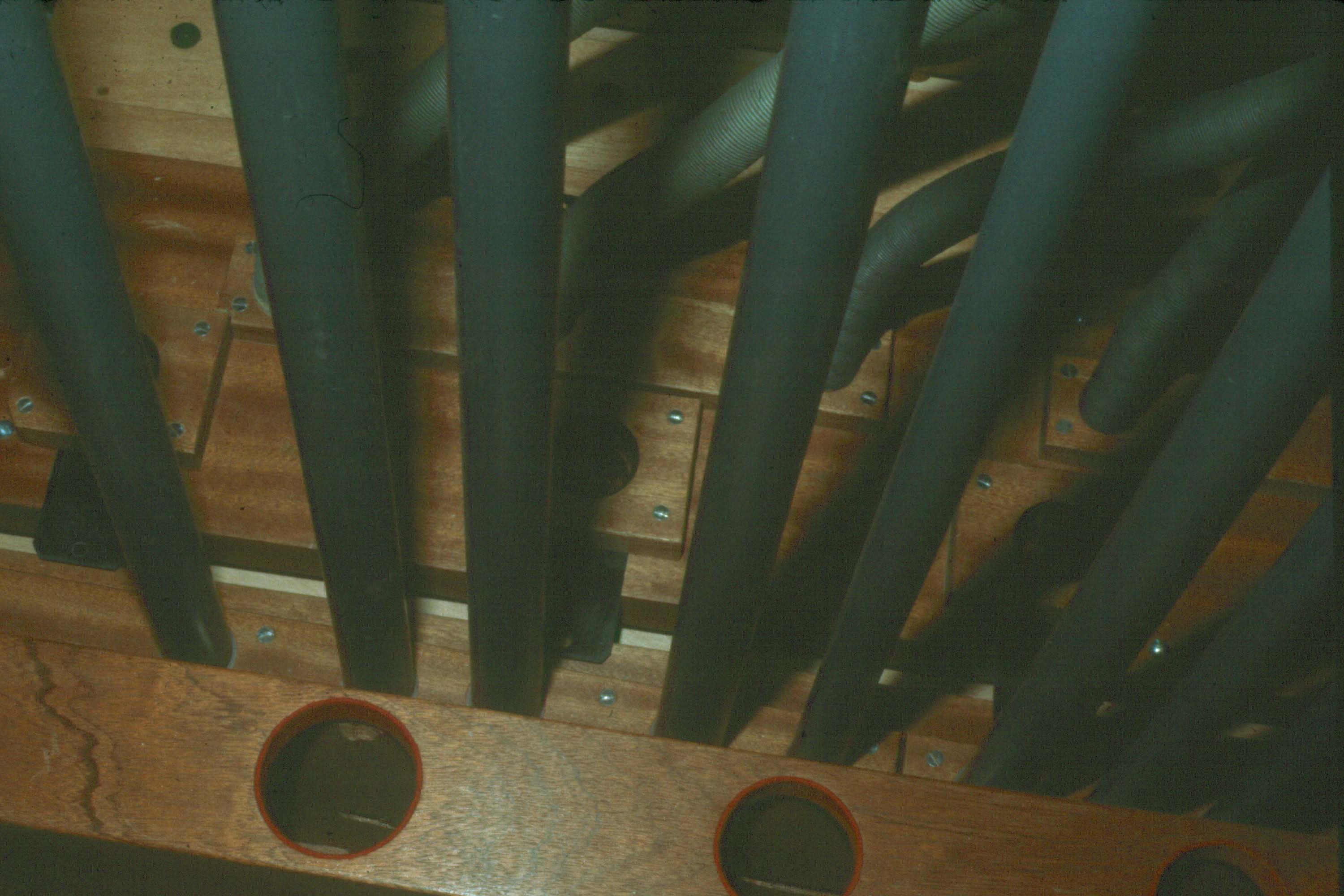
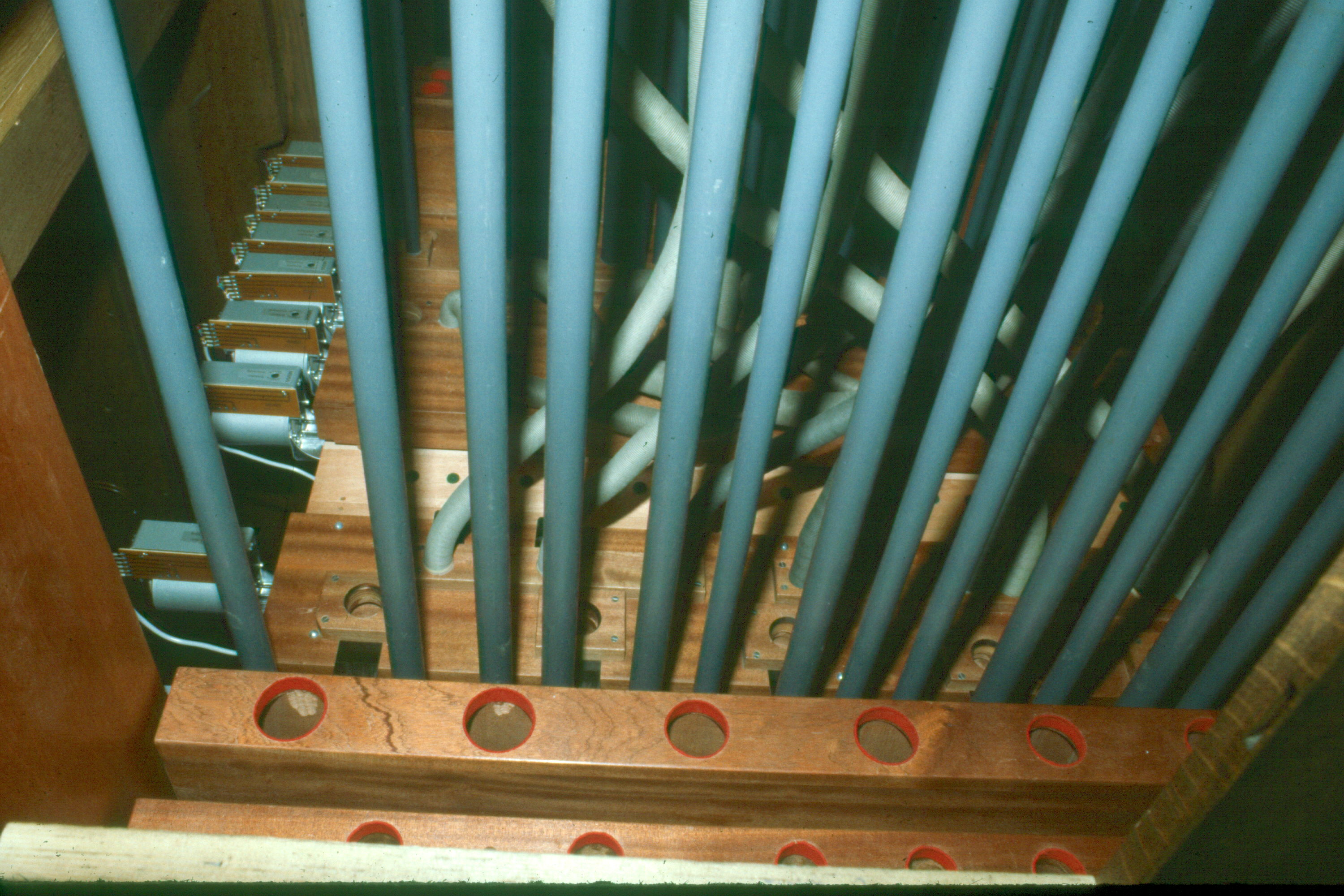
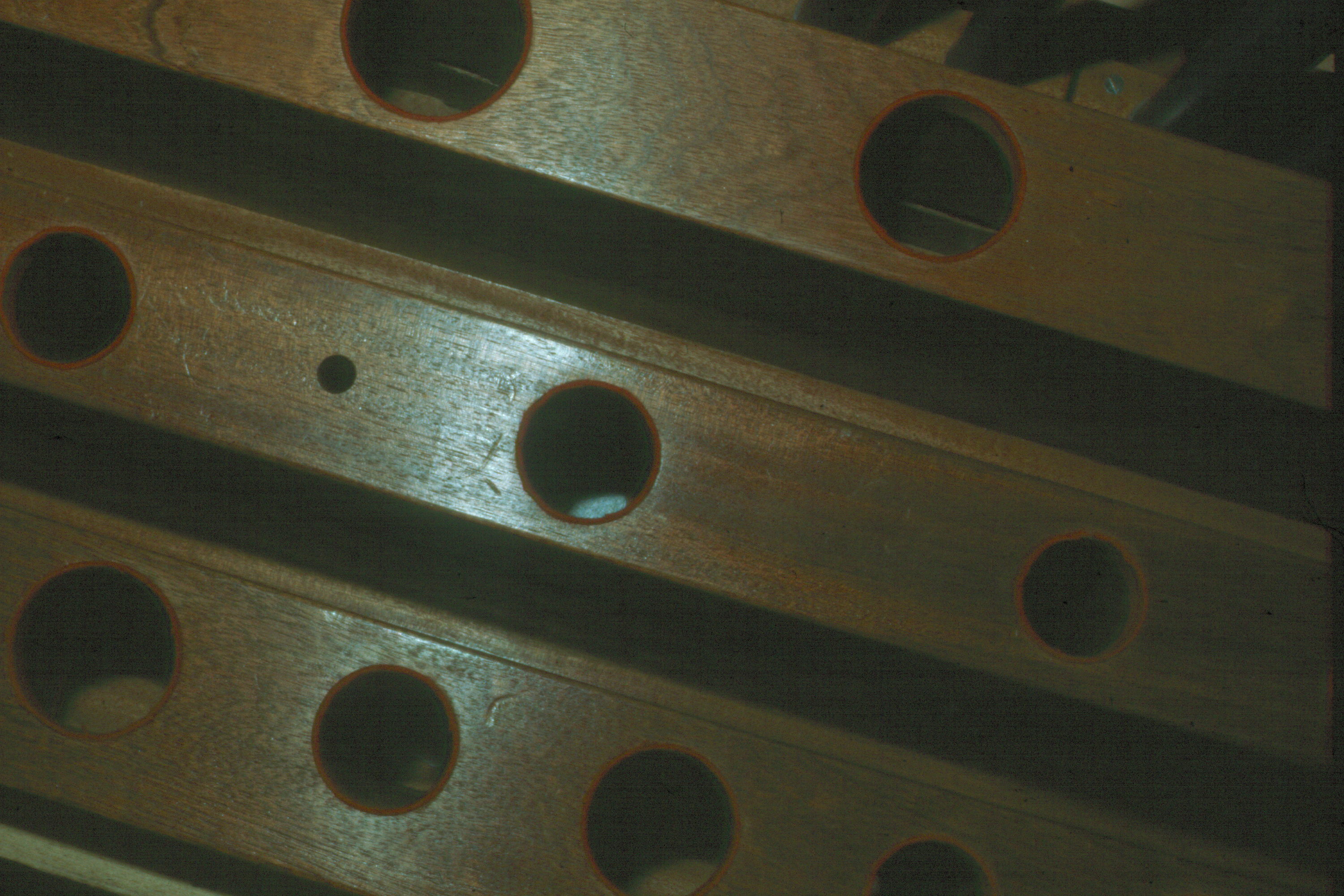
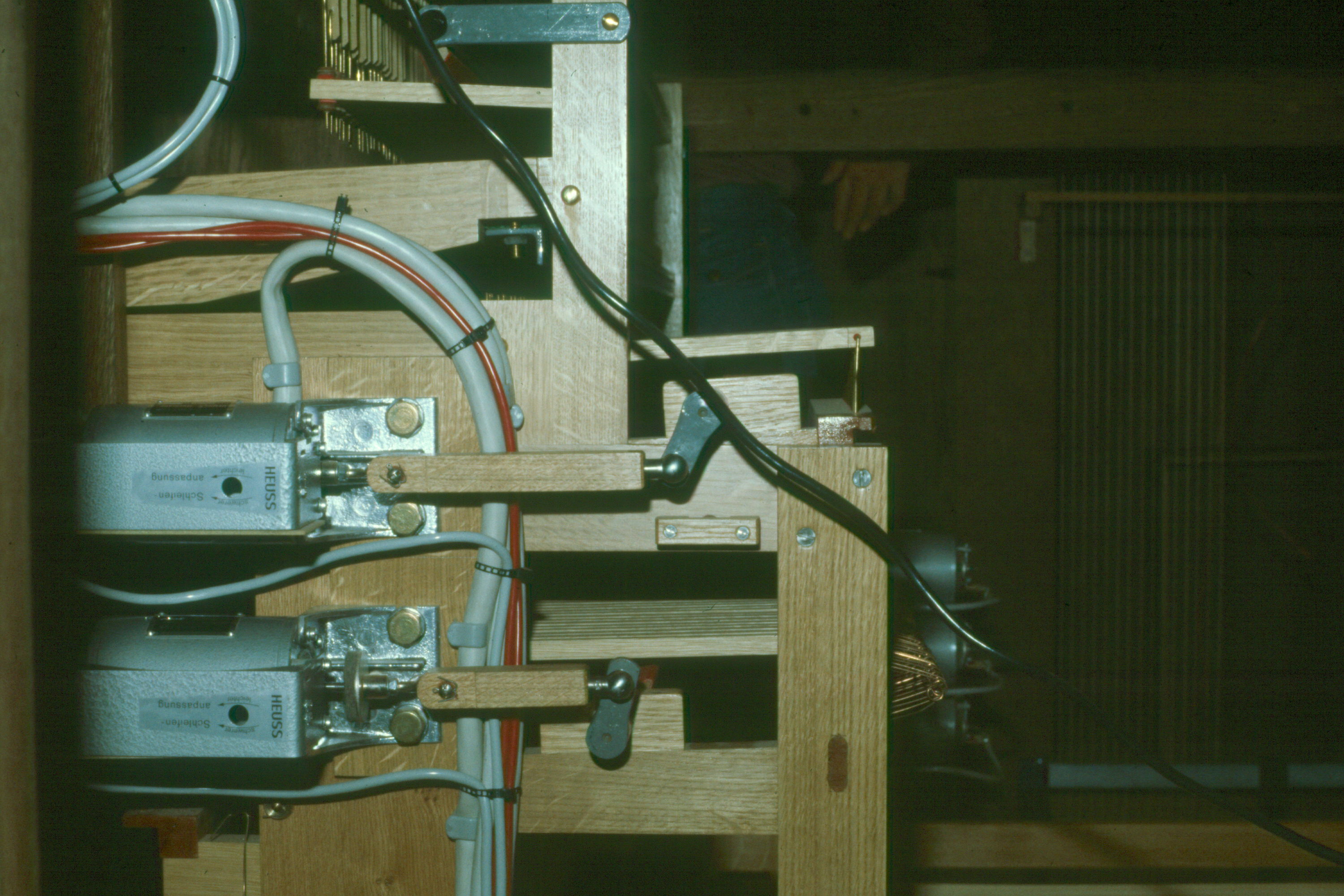
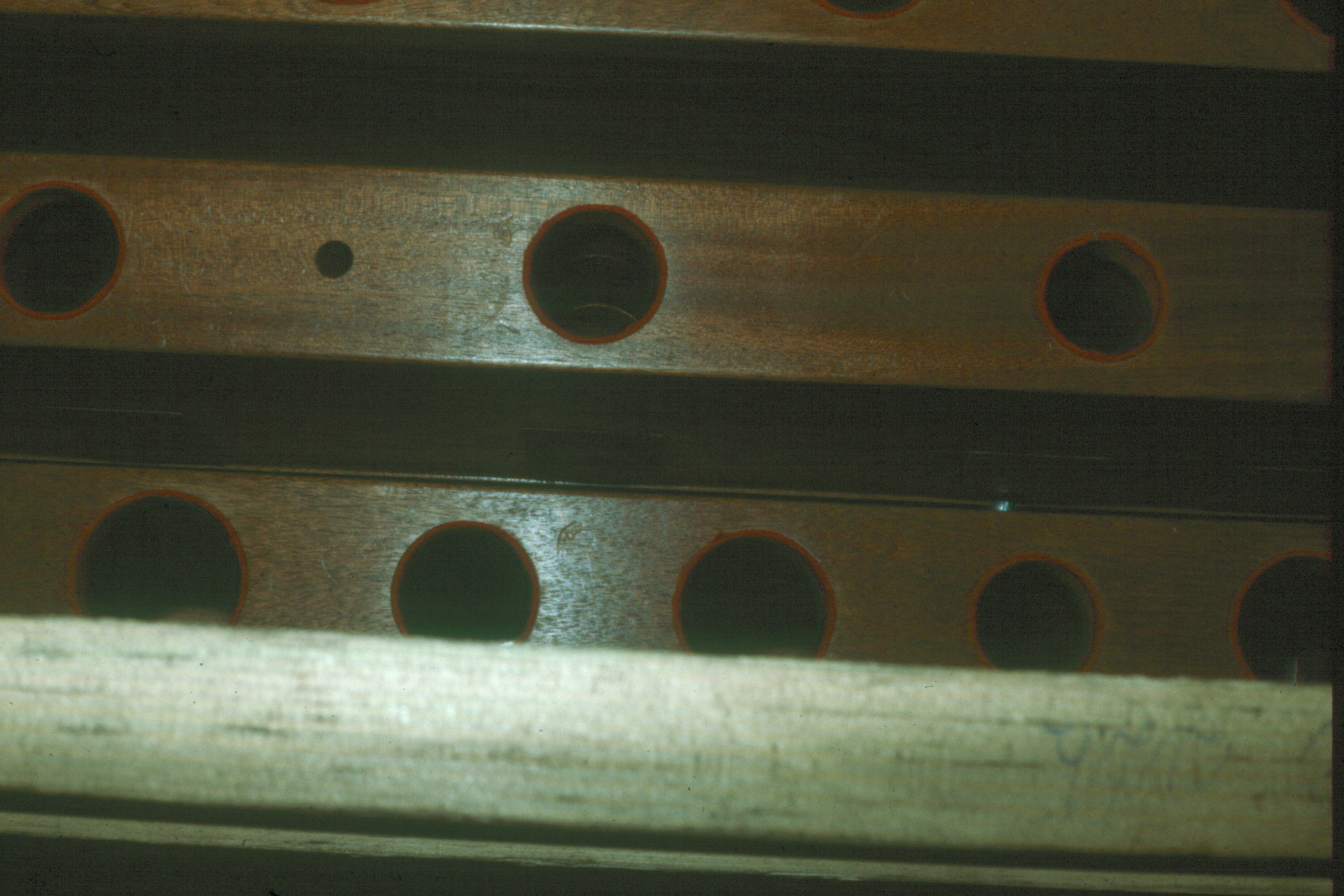
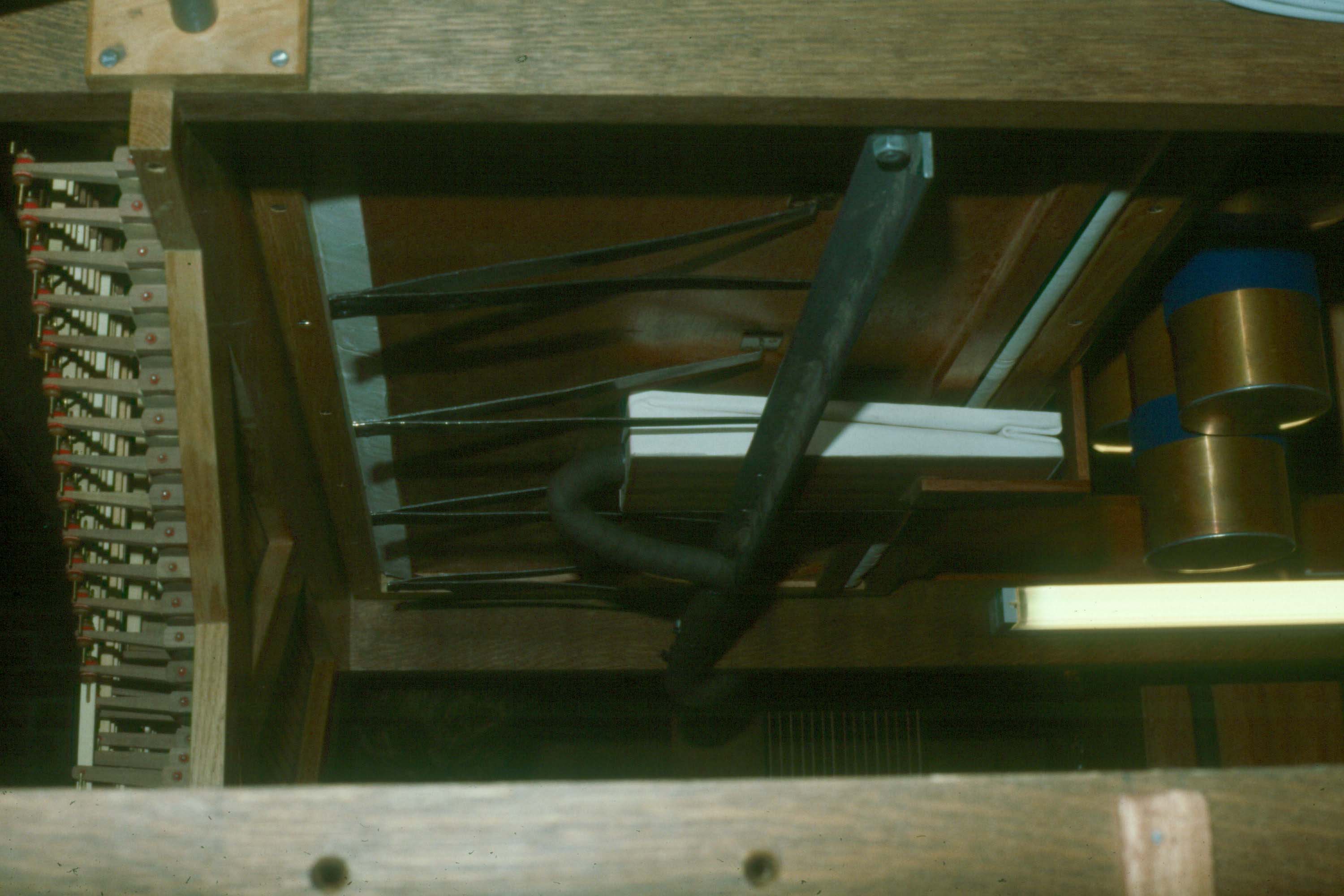
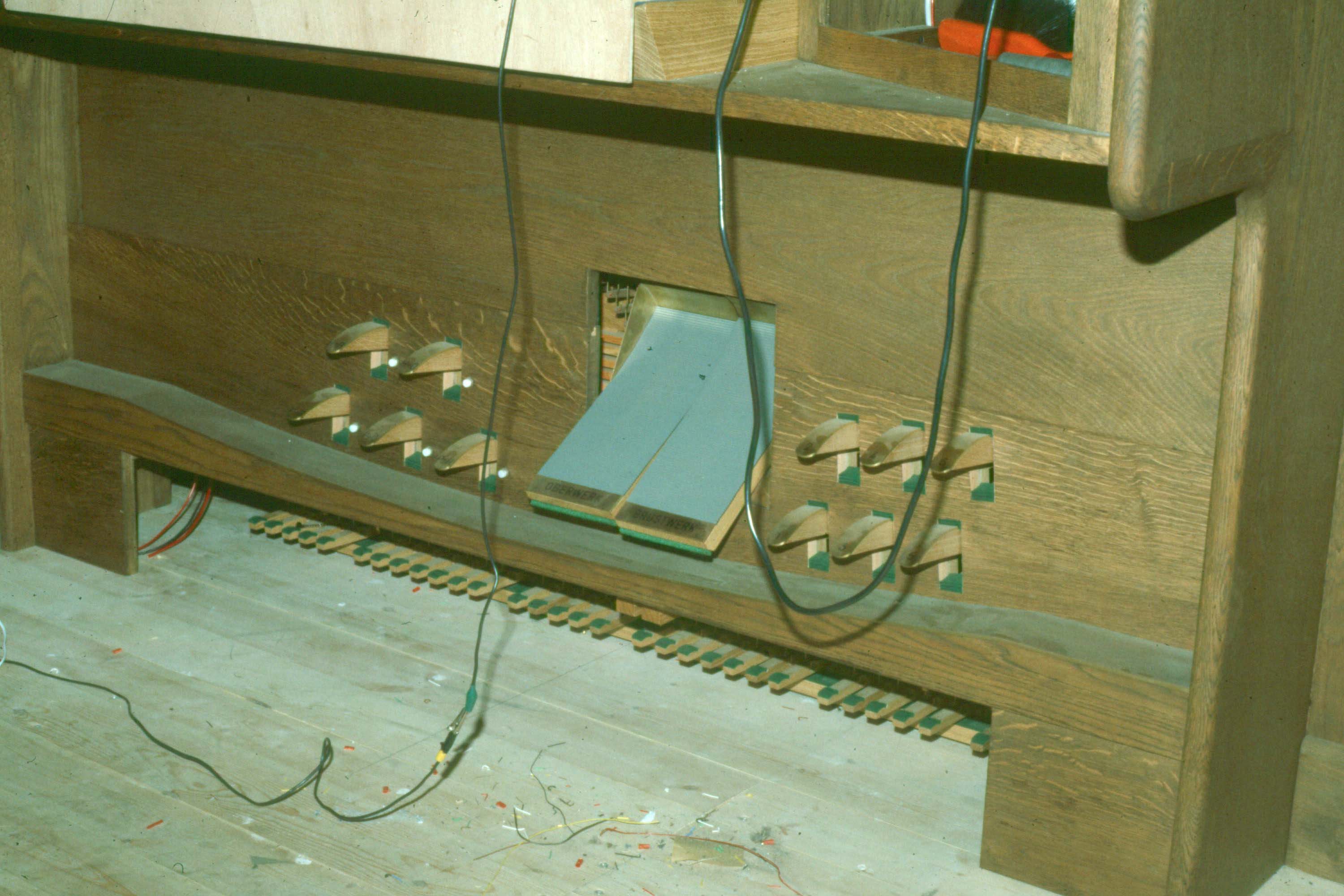
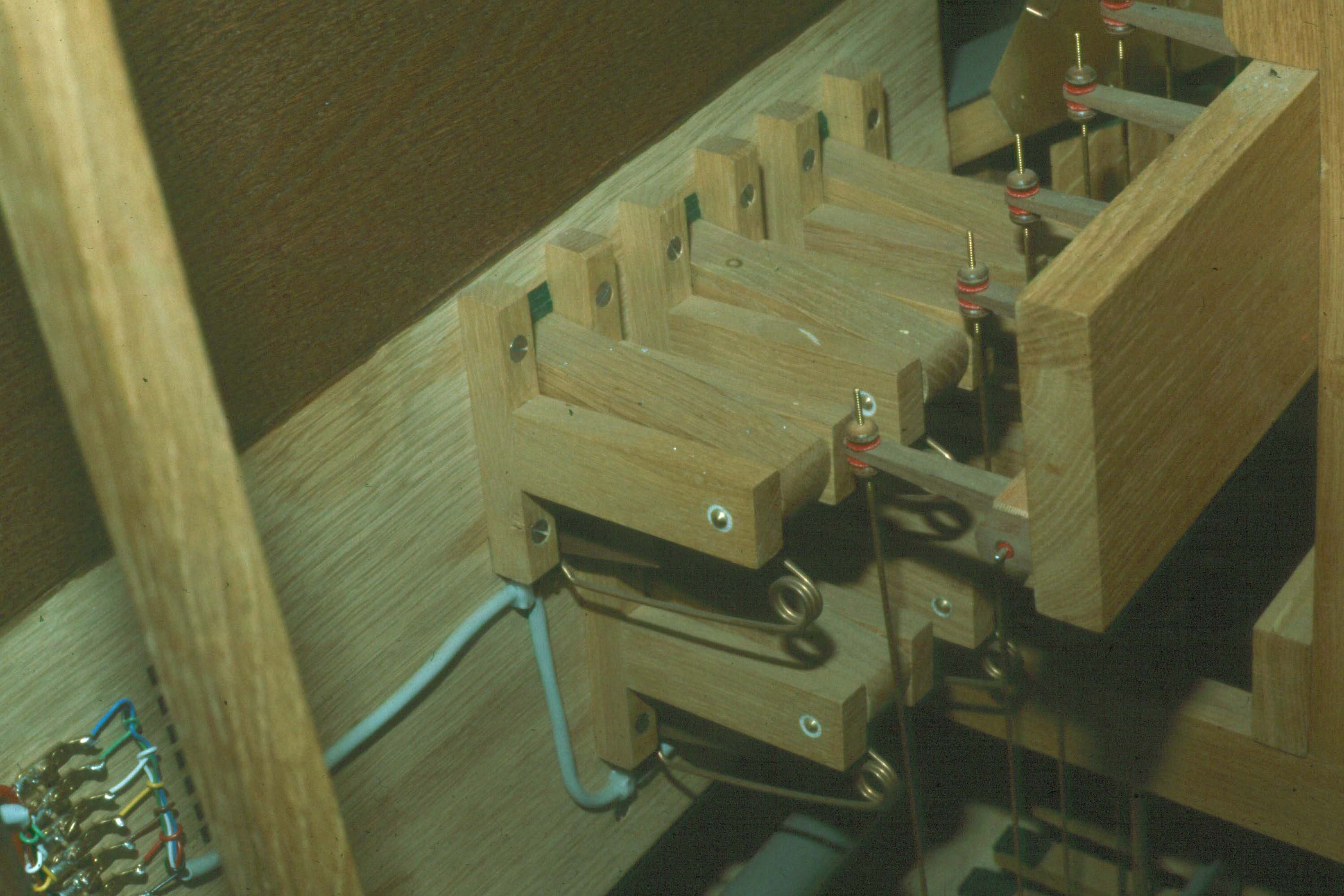
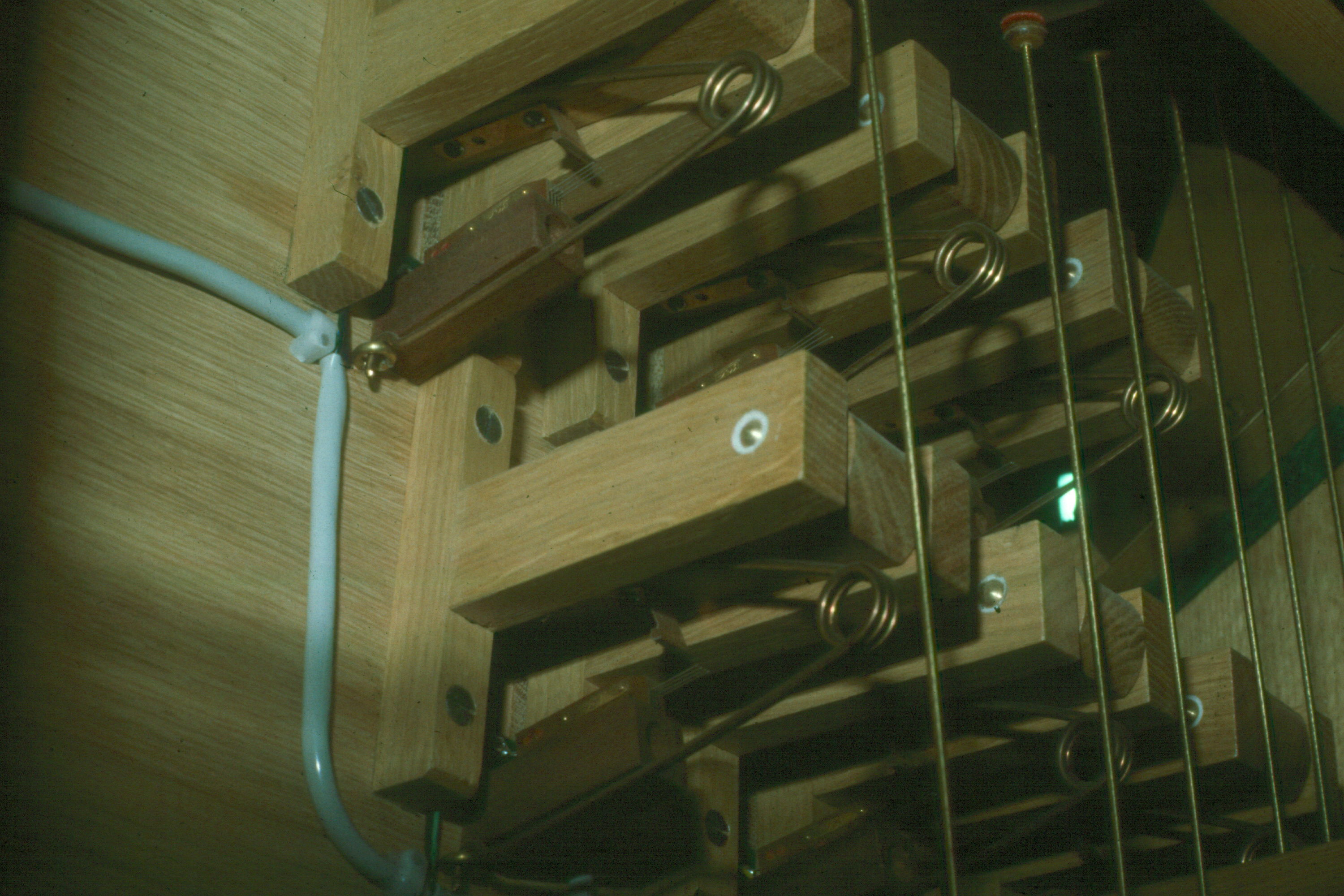
The quality of woodworking was breath taking. There were no screws visible anywhere, except as necessary for service disassembly. All the woodwork was polished, inside the organ and out. Dovetails and mortise and tenon joints were everywhere. All the action was beautifully handcrafted from walnut, maple, brass, and using leather nuts. No plastic and aluminum Huess stuff here.
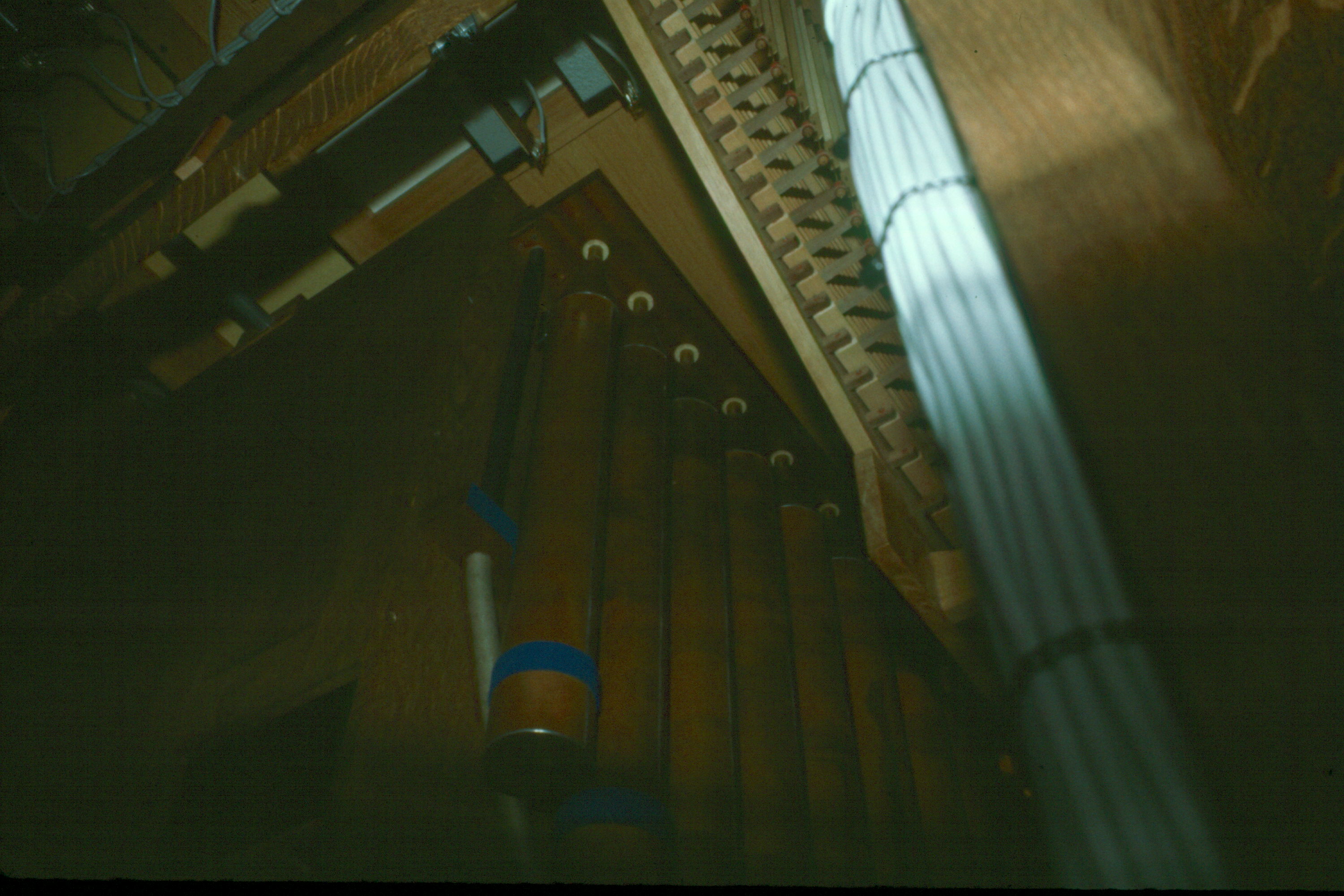
Of special interest to me was photo #6, "Bourdon16 & helper". This organ had an open metal principal 16' in the pedal. But the biggest 6 pipes wouldn't fit in the facade, so Marcussen place six wooden Bourdon 16' pipes behind the organ to replace them. But these Bourdons were special, they were two pipes in one: a 16' Bourdon and an 8' open wood as a helper pipe. They are both on the same wind. The Bourdon provides the fundamental and the helper pipe fills in the missing harmonics, making a convincing replacement for the metal Principal. I desperately wanted to scale it, but didn't dare...
At the time, I was especially interested in tracker action, there were no pipes available. I was using a 35mm camera with colour slide film, my flash wasn't powerful so some of the photos are dim. I scanned them in the 1980s, so the quality isn't the best.
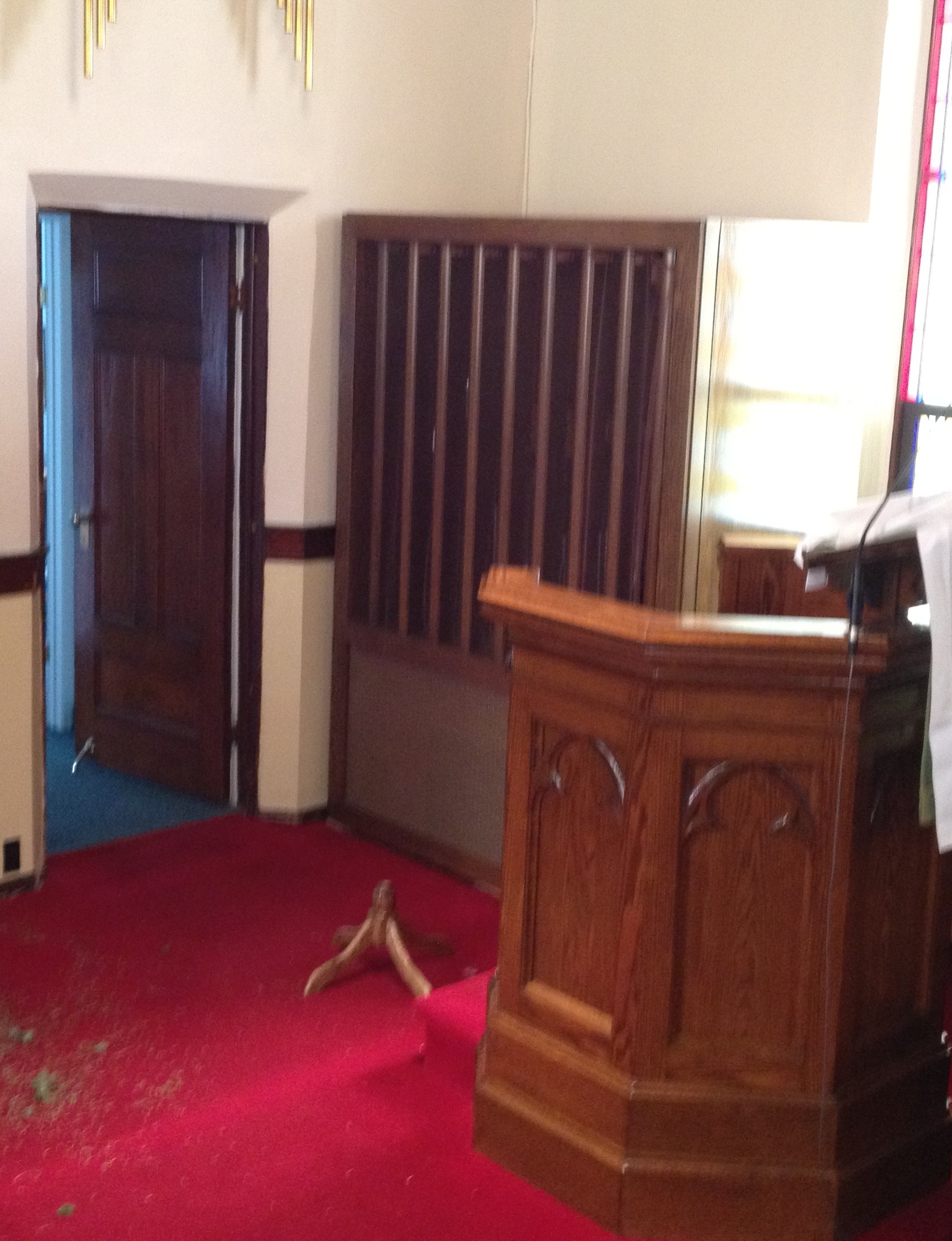
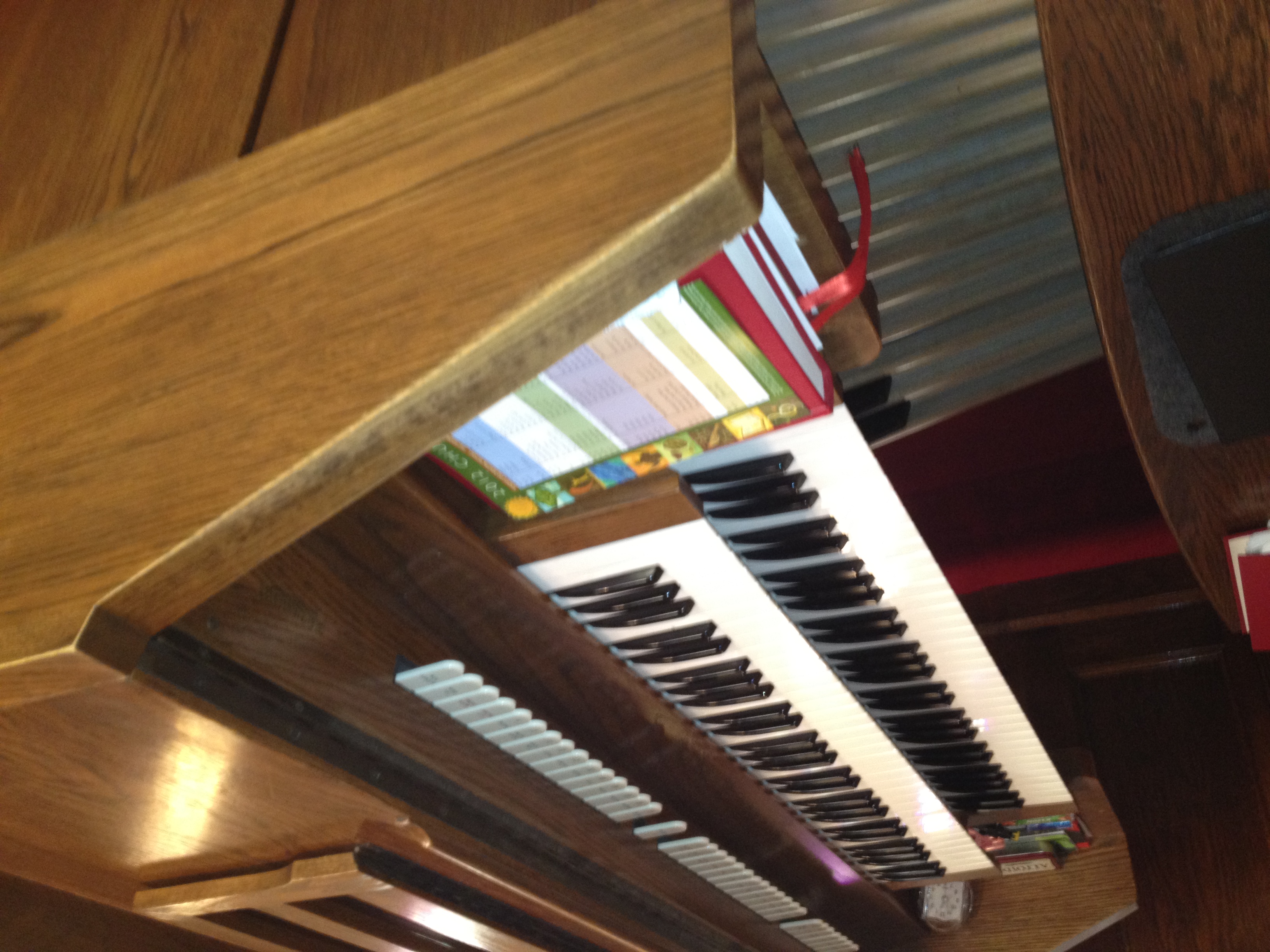
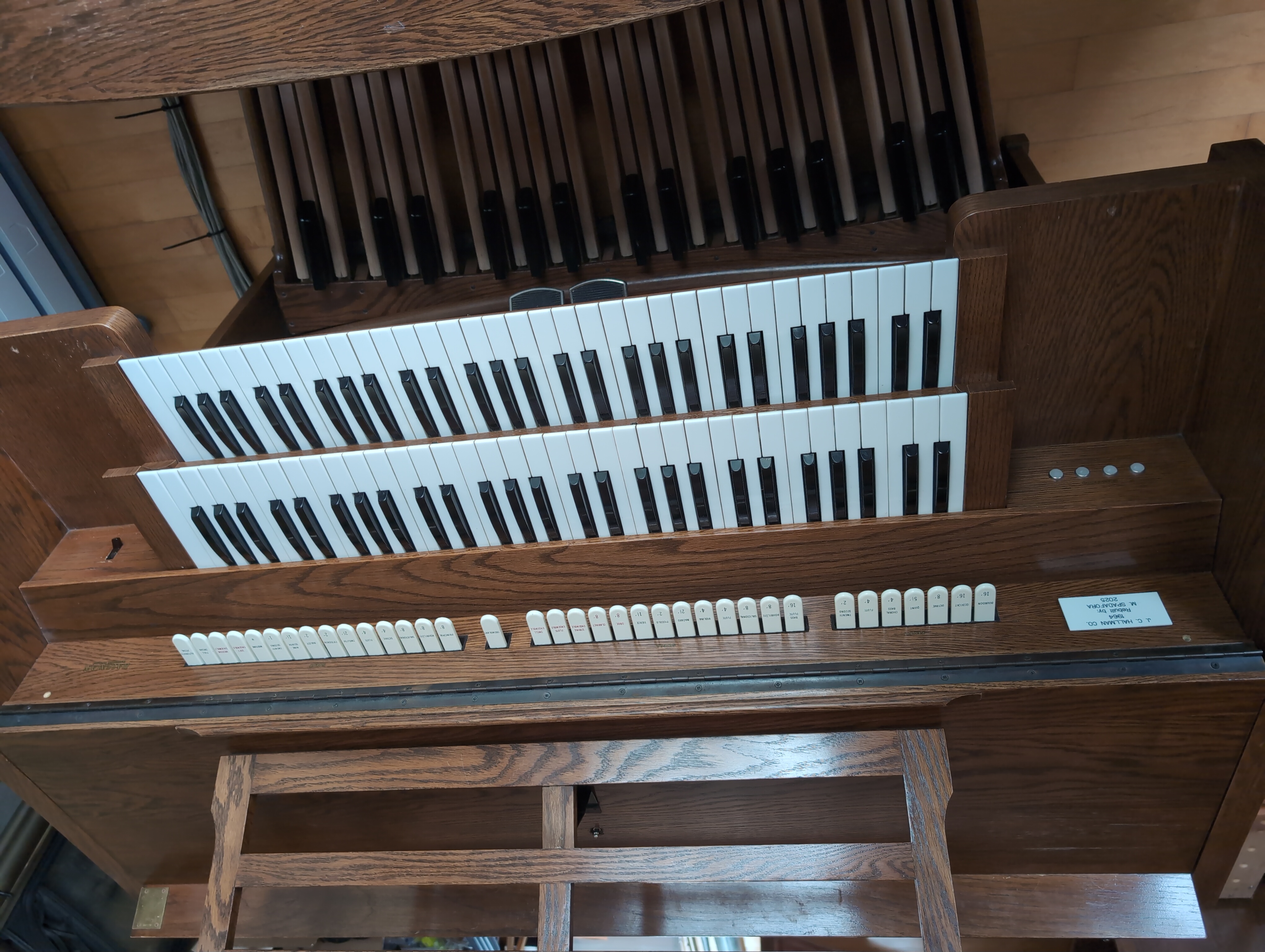
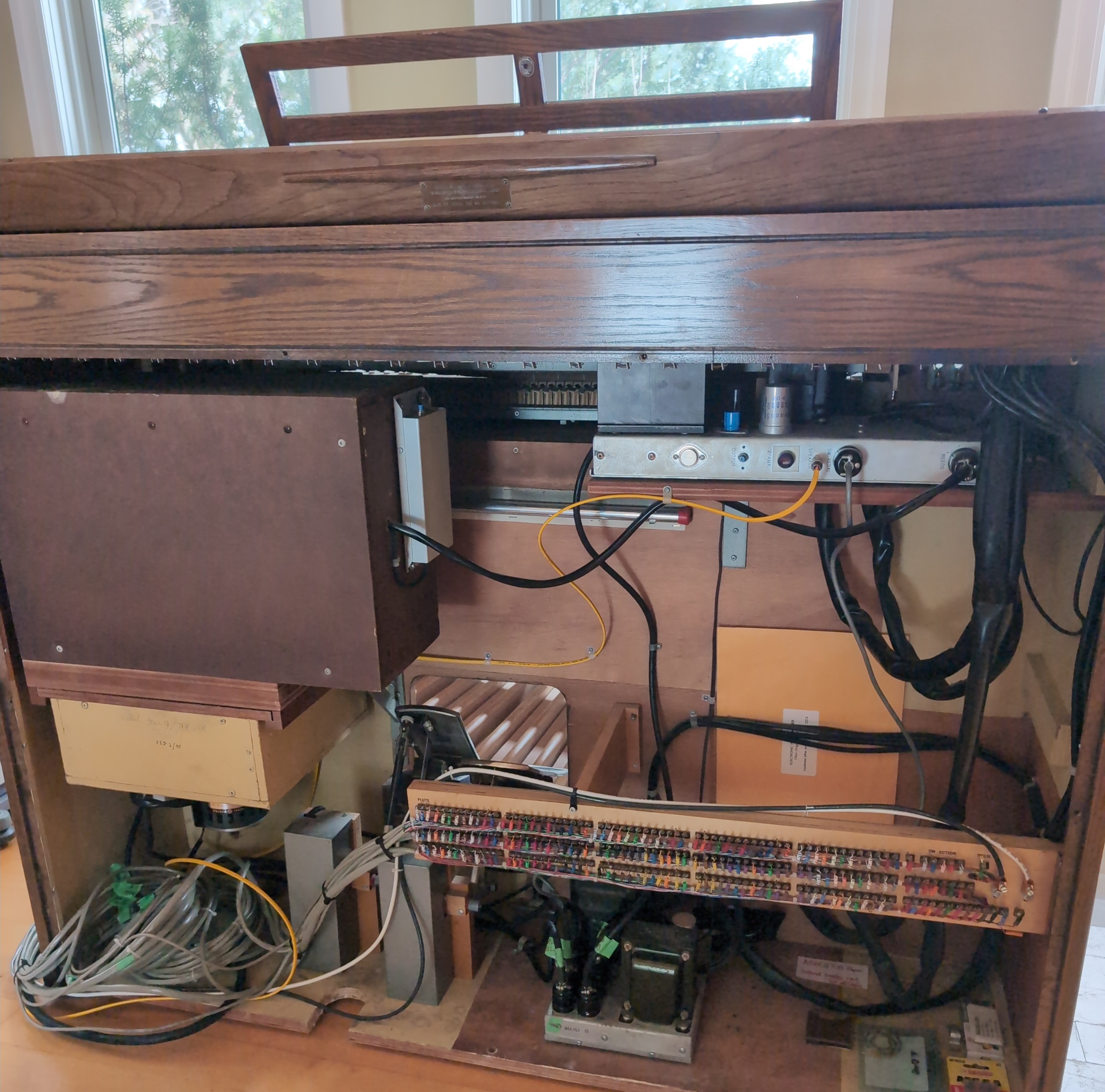
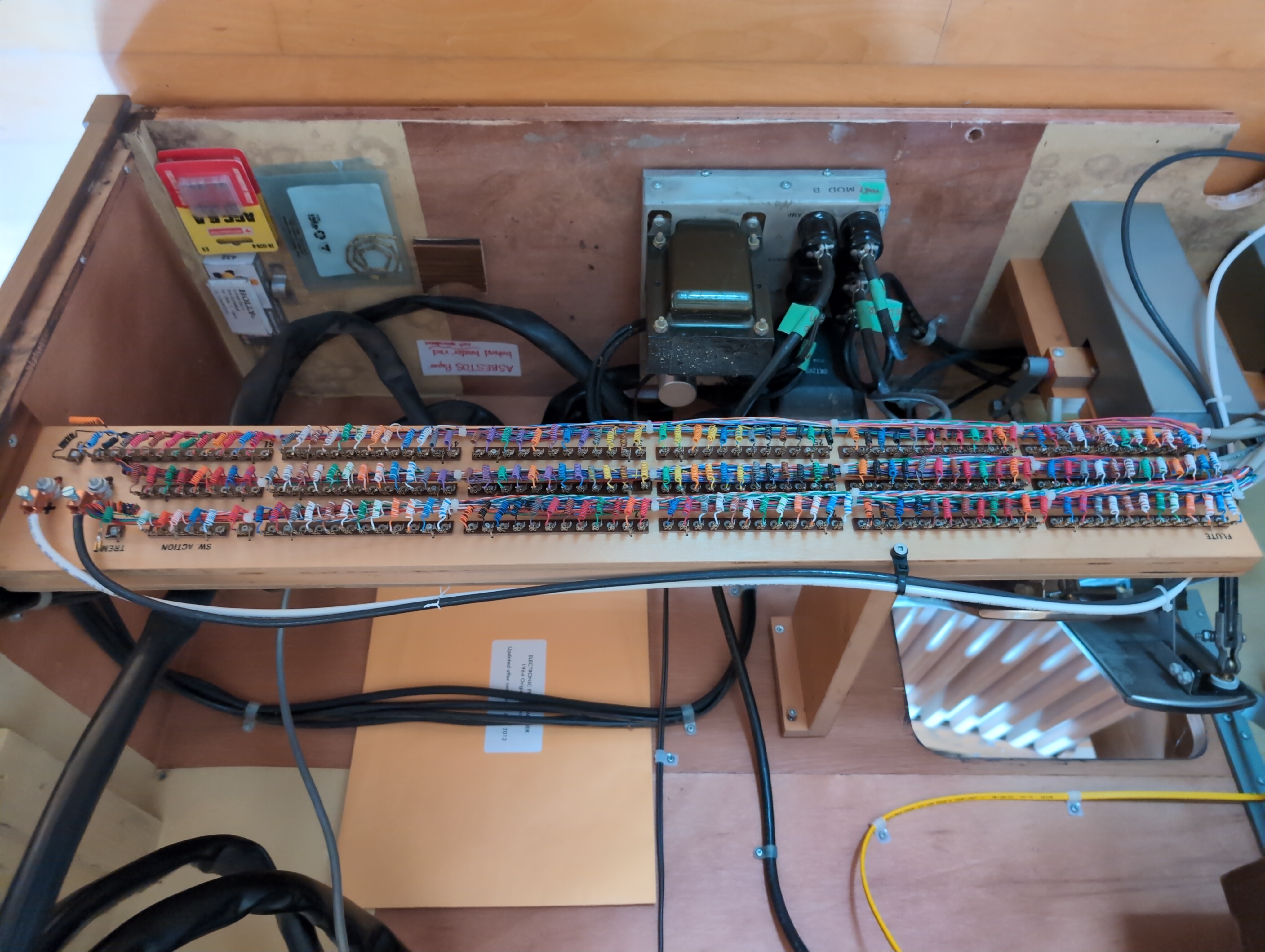
Hallman Organ, Gads Hill, Ontario
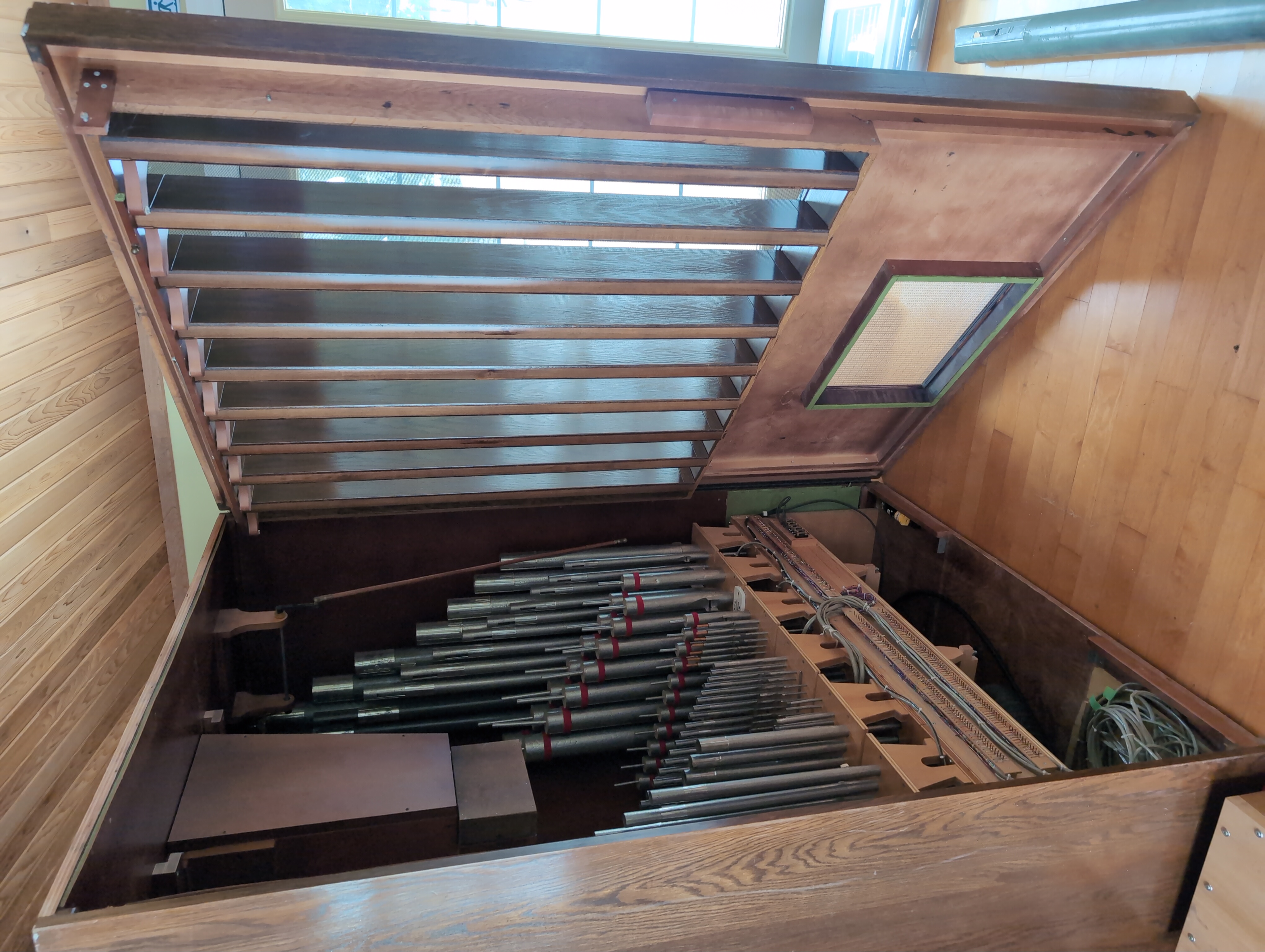
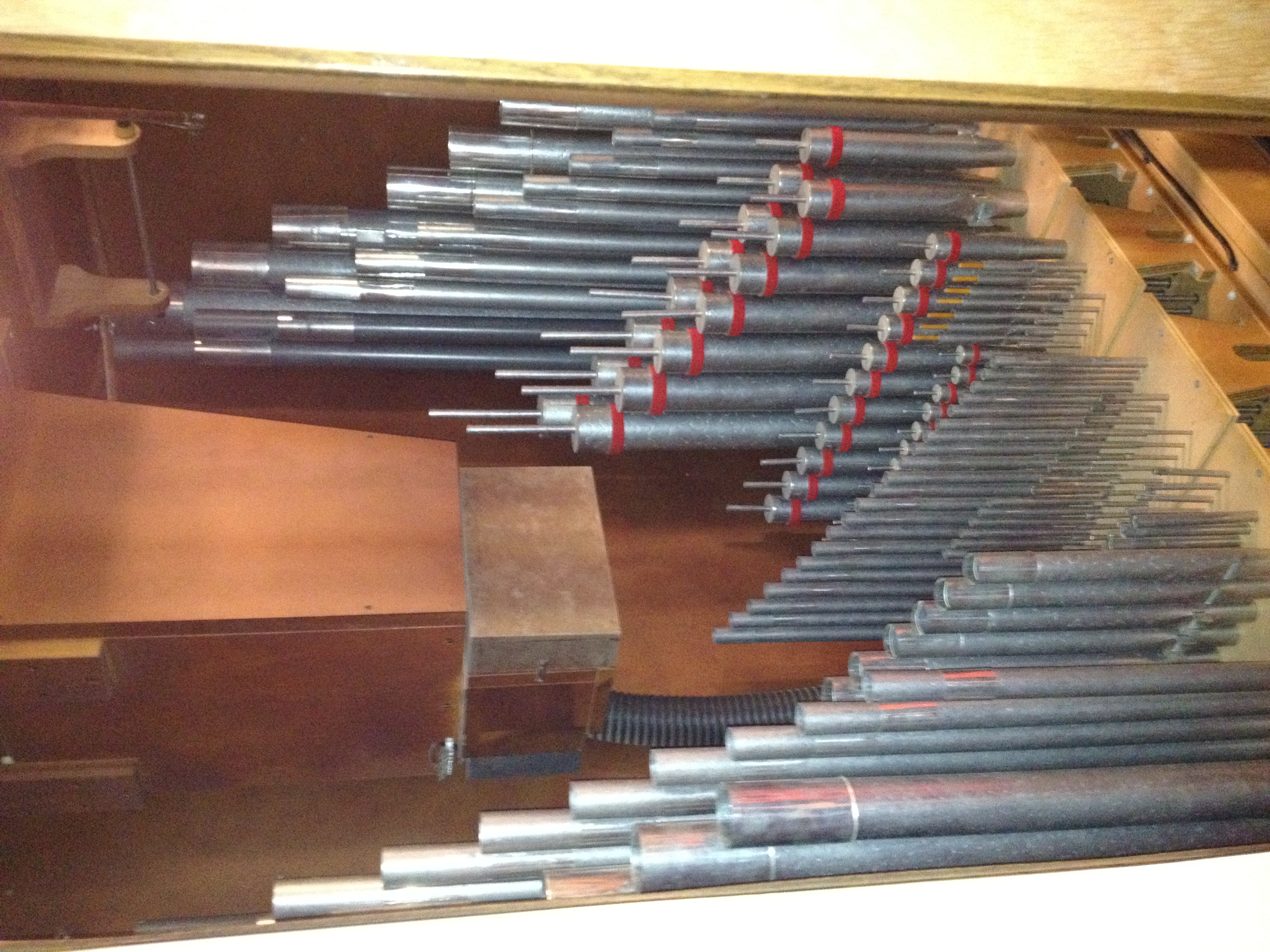
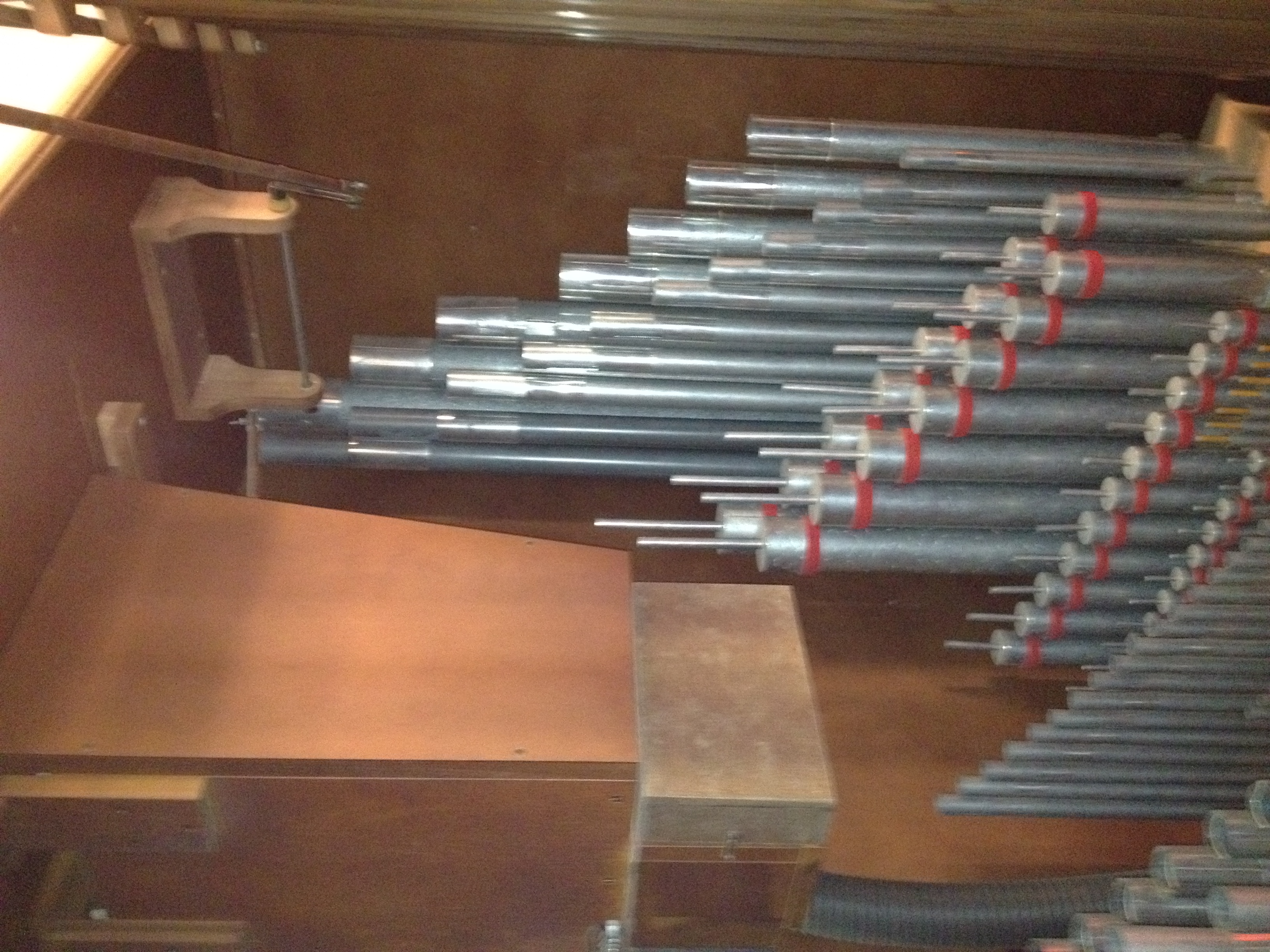
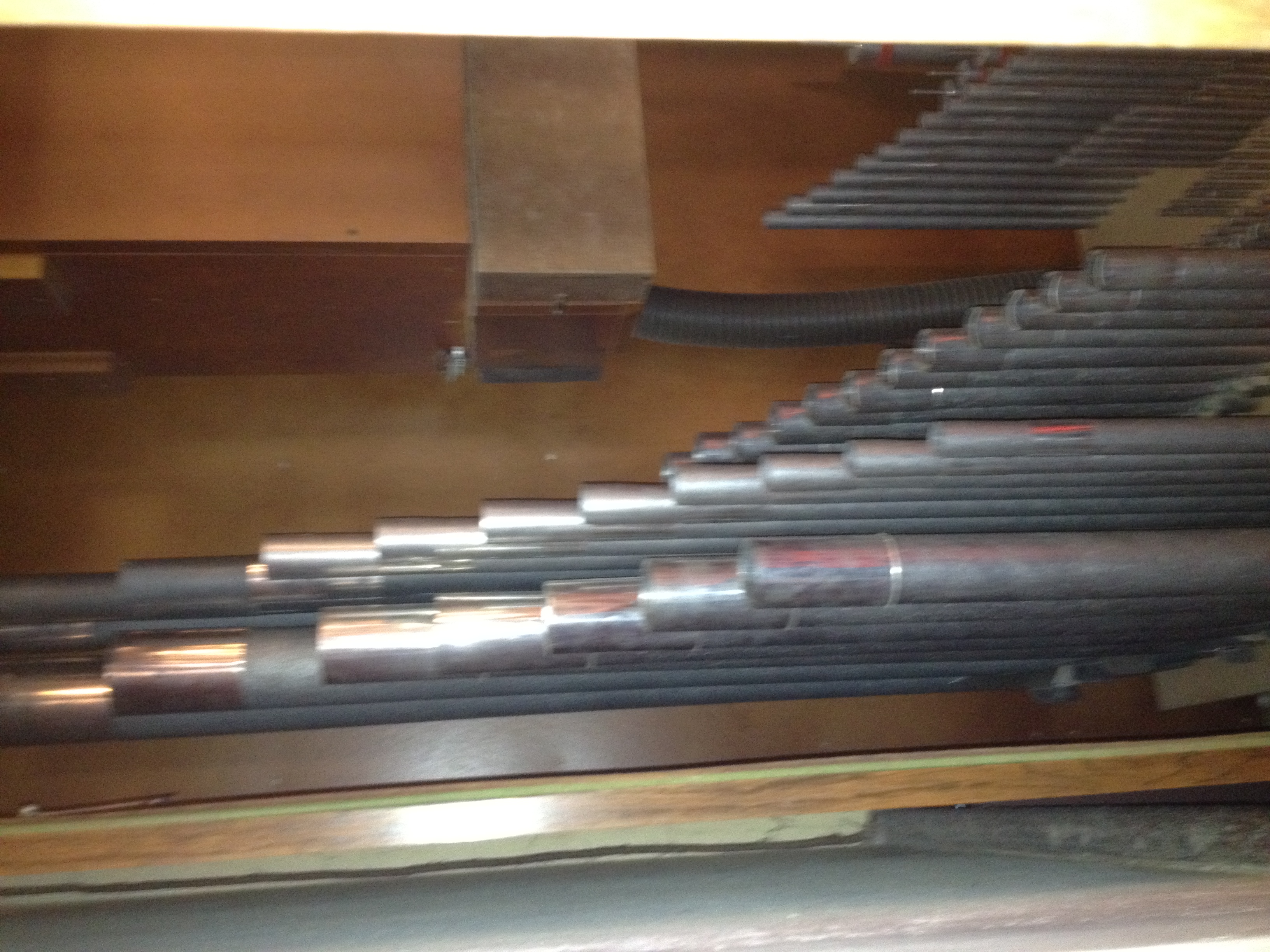
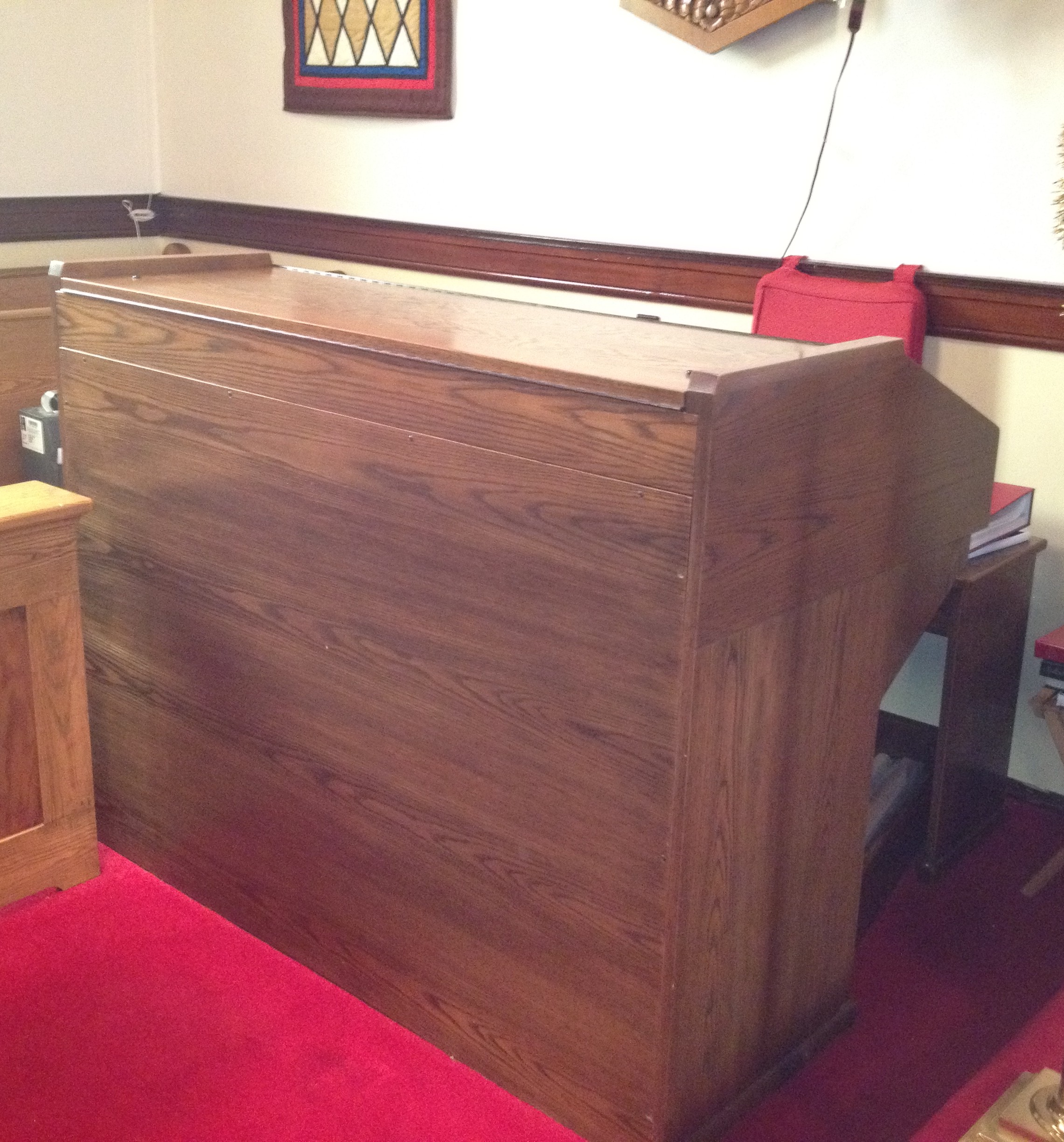
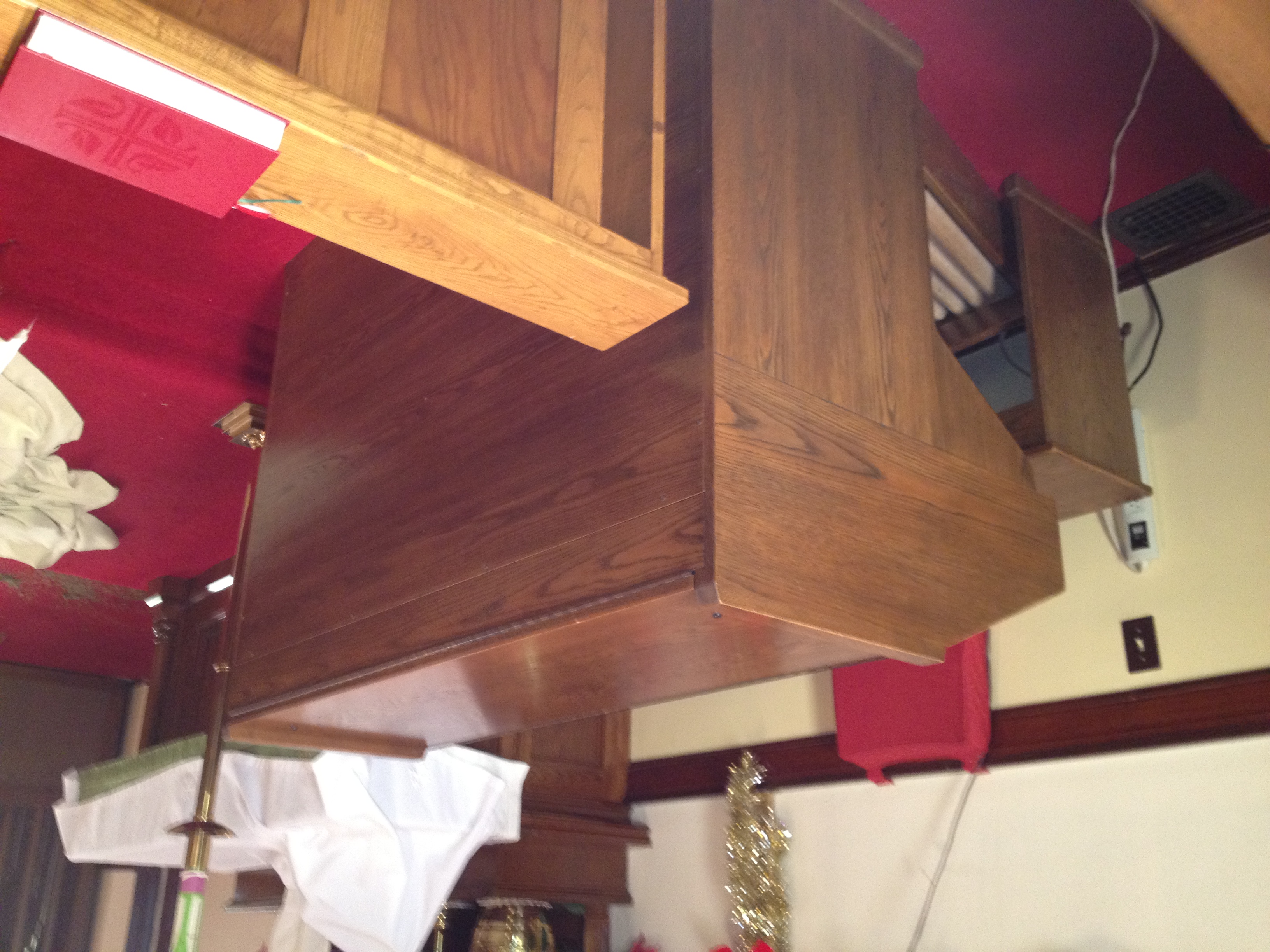
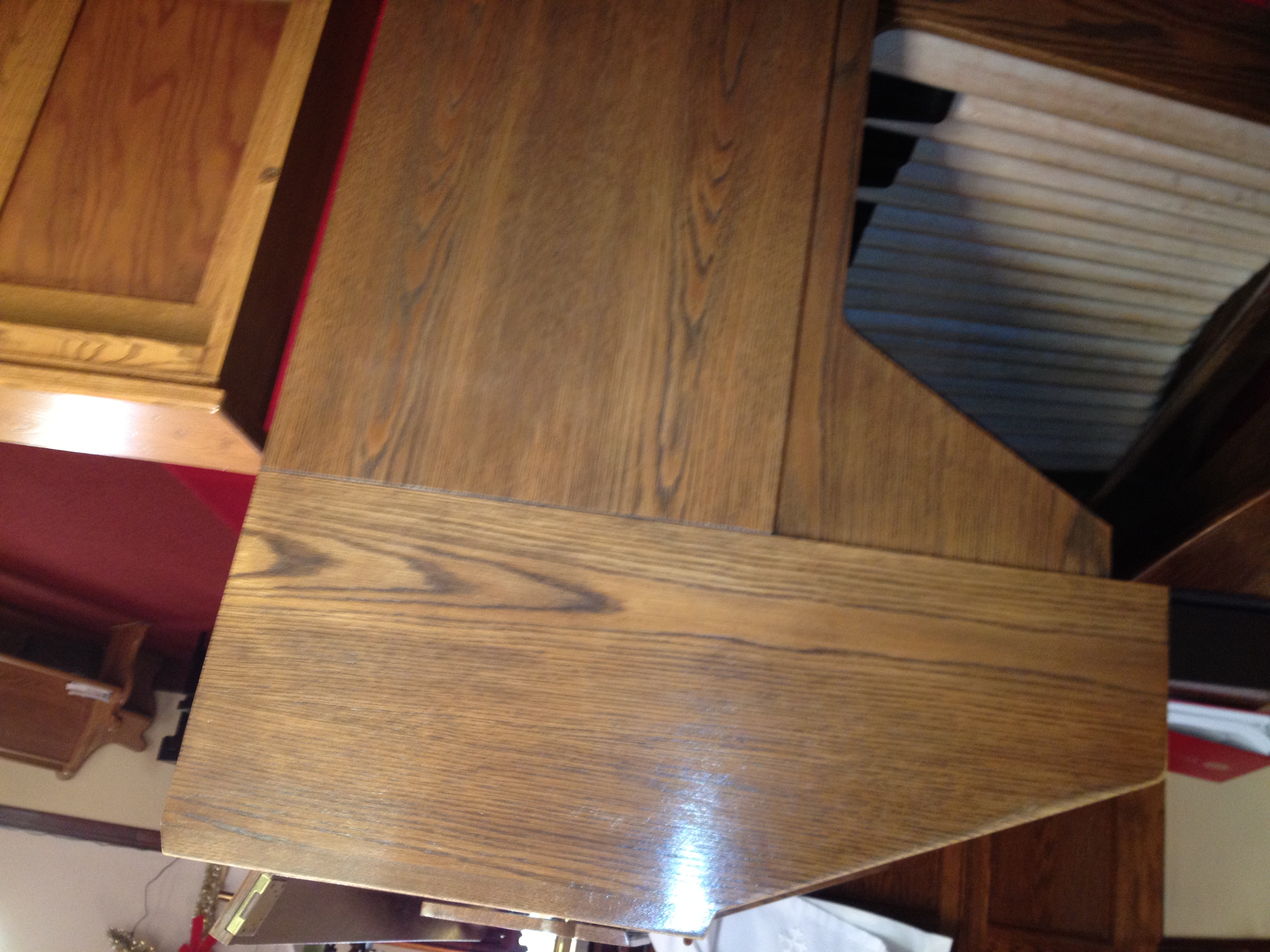
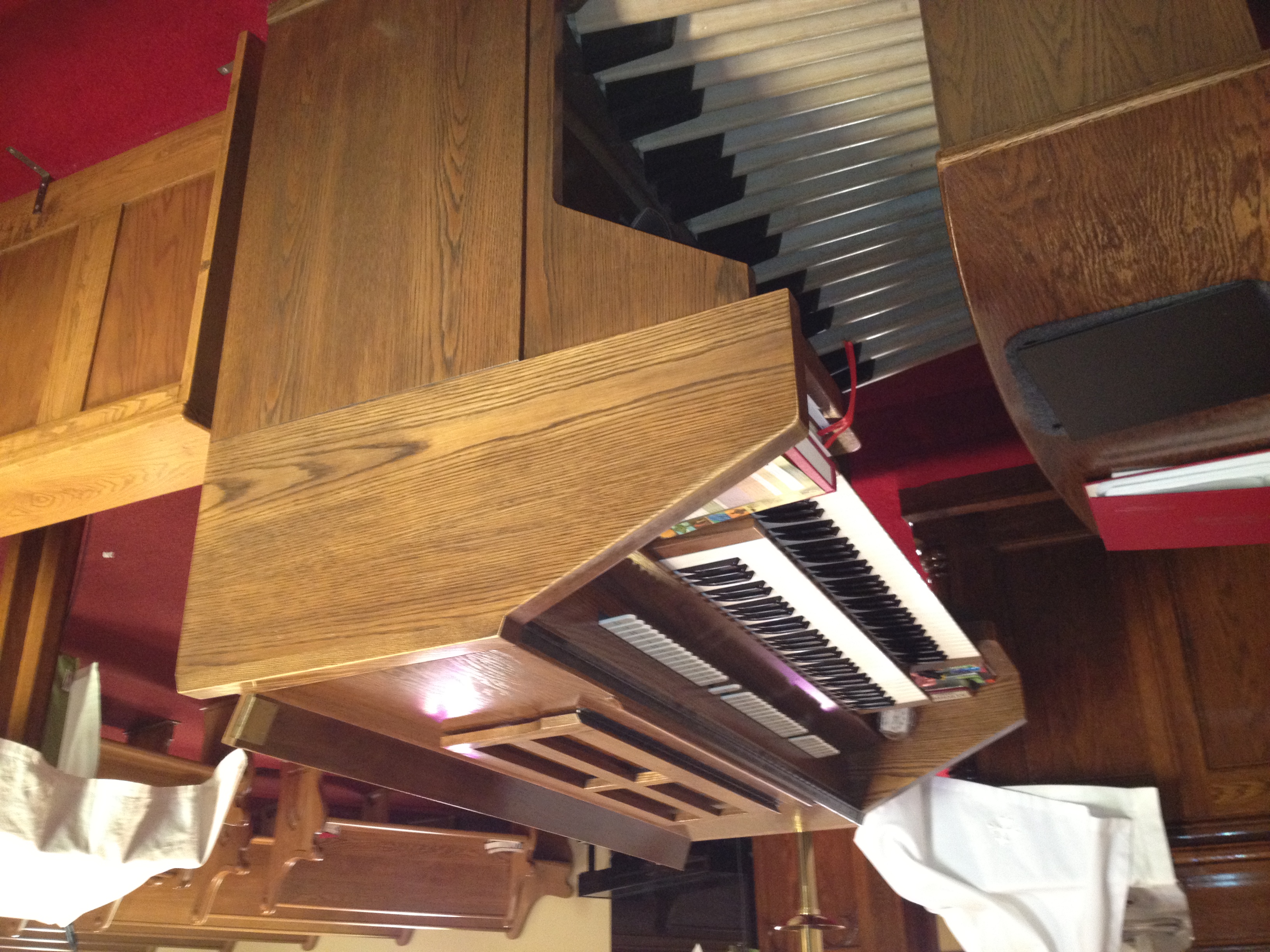
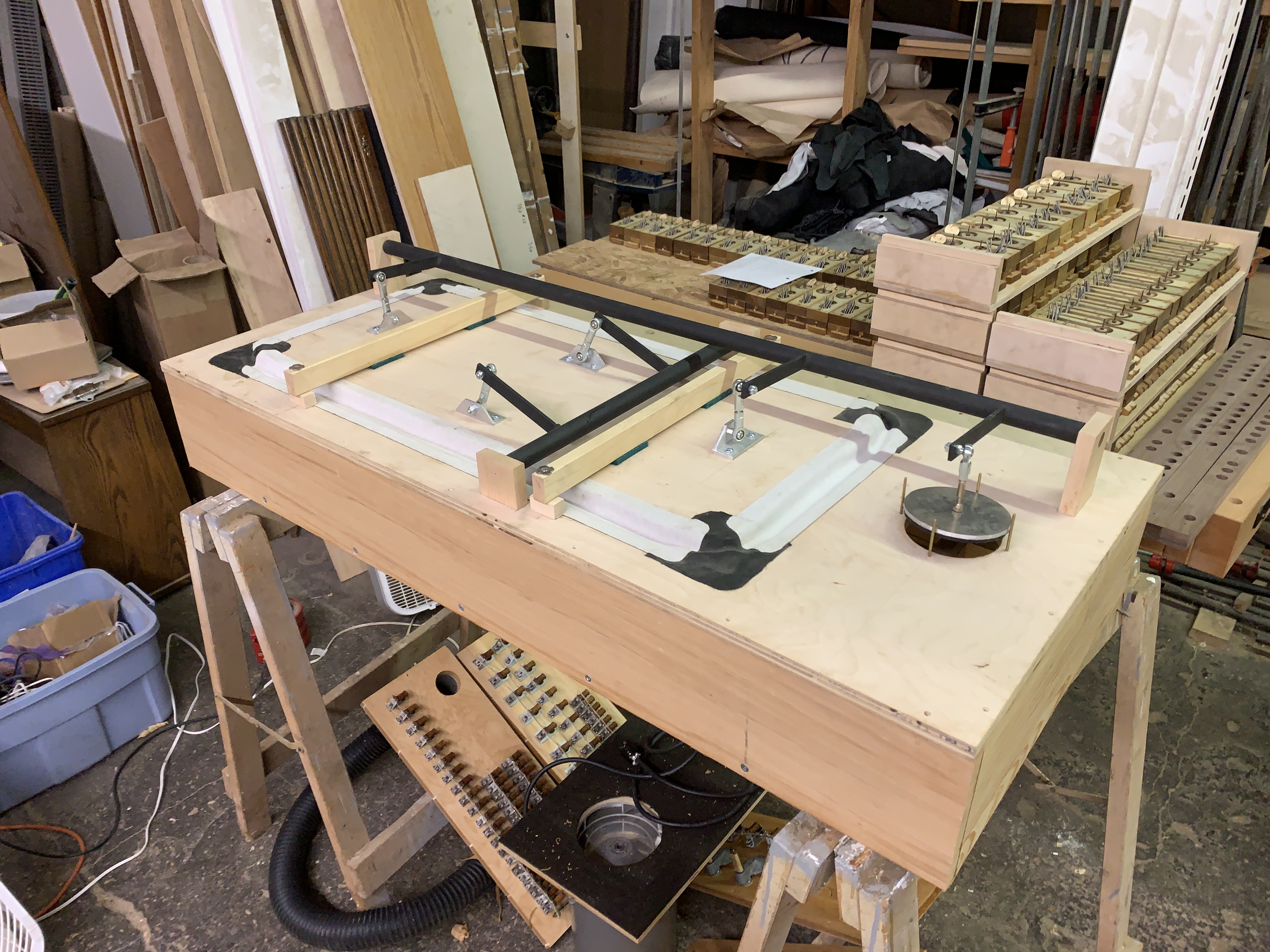
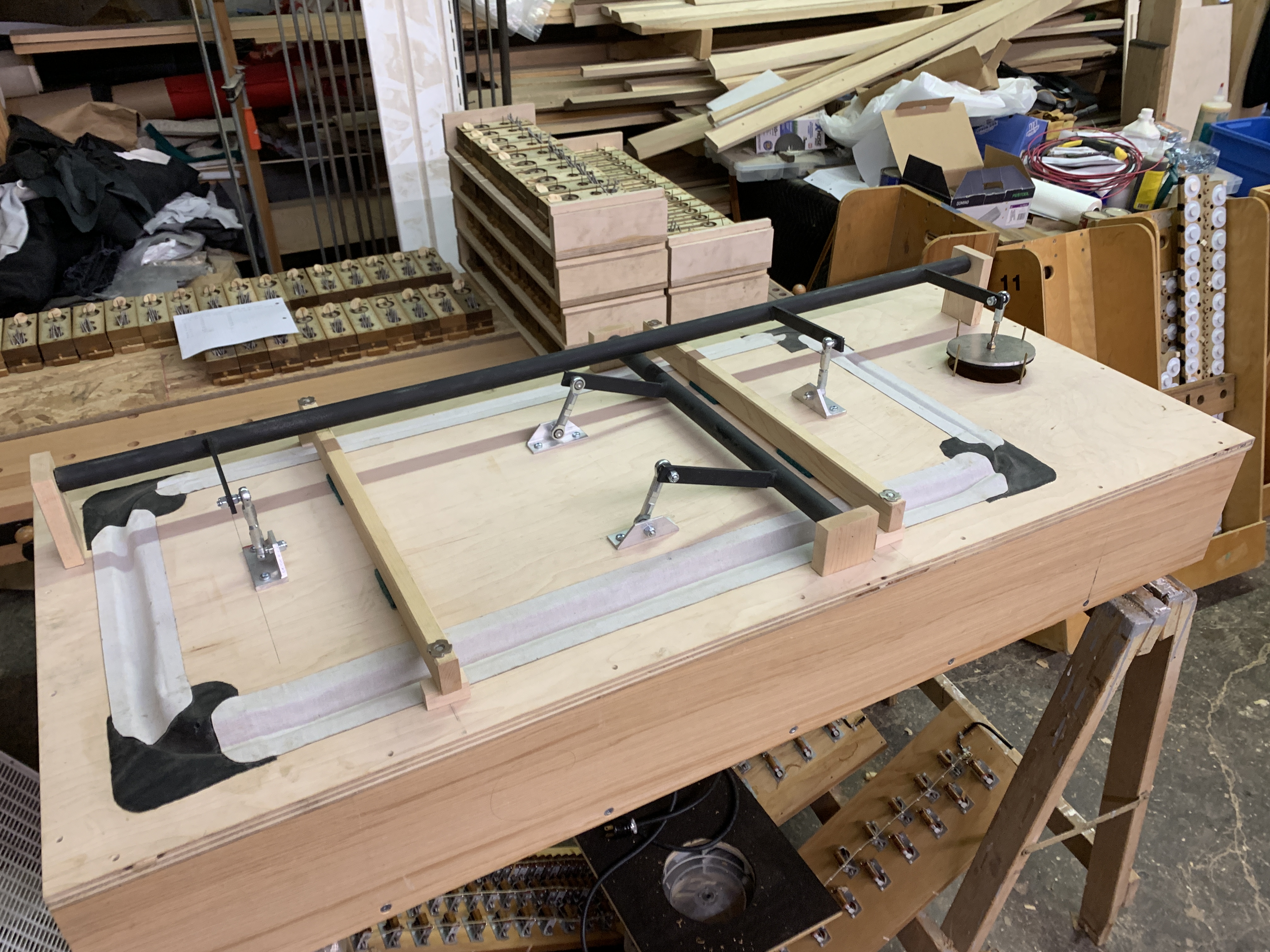
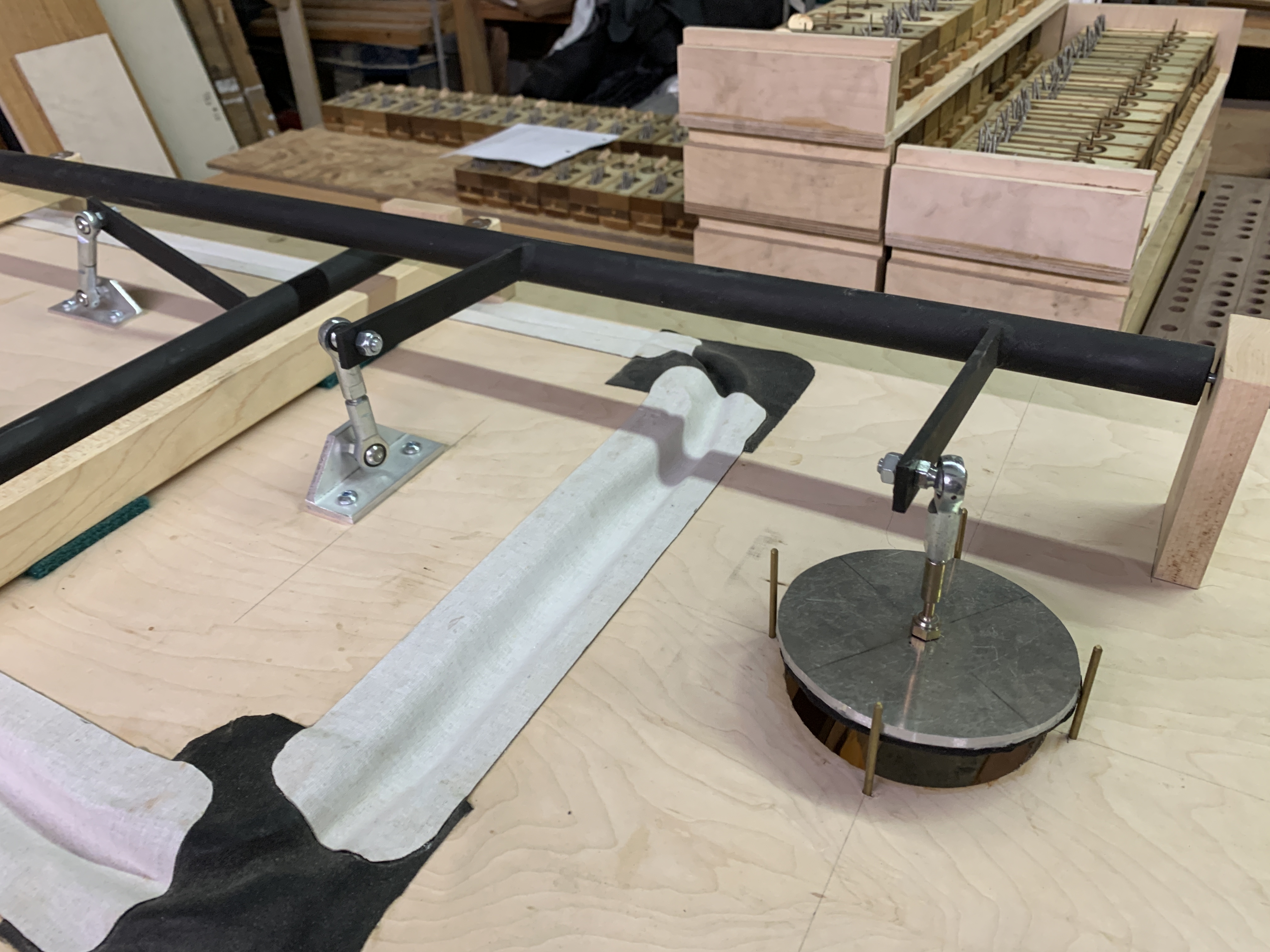
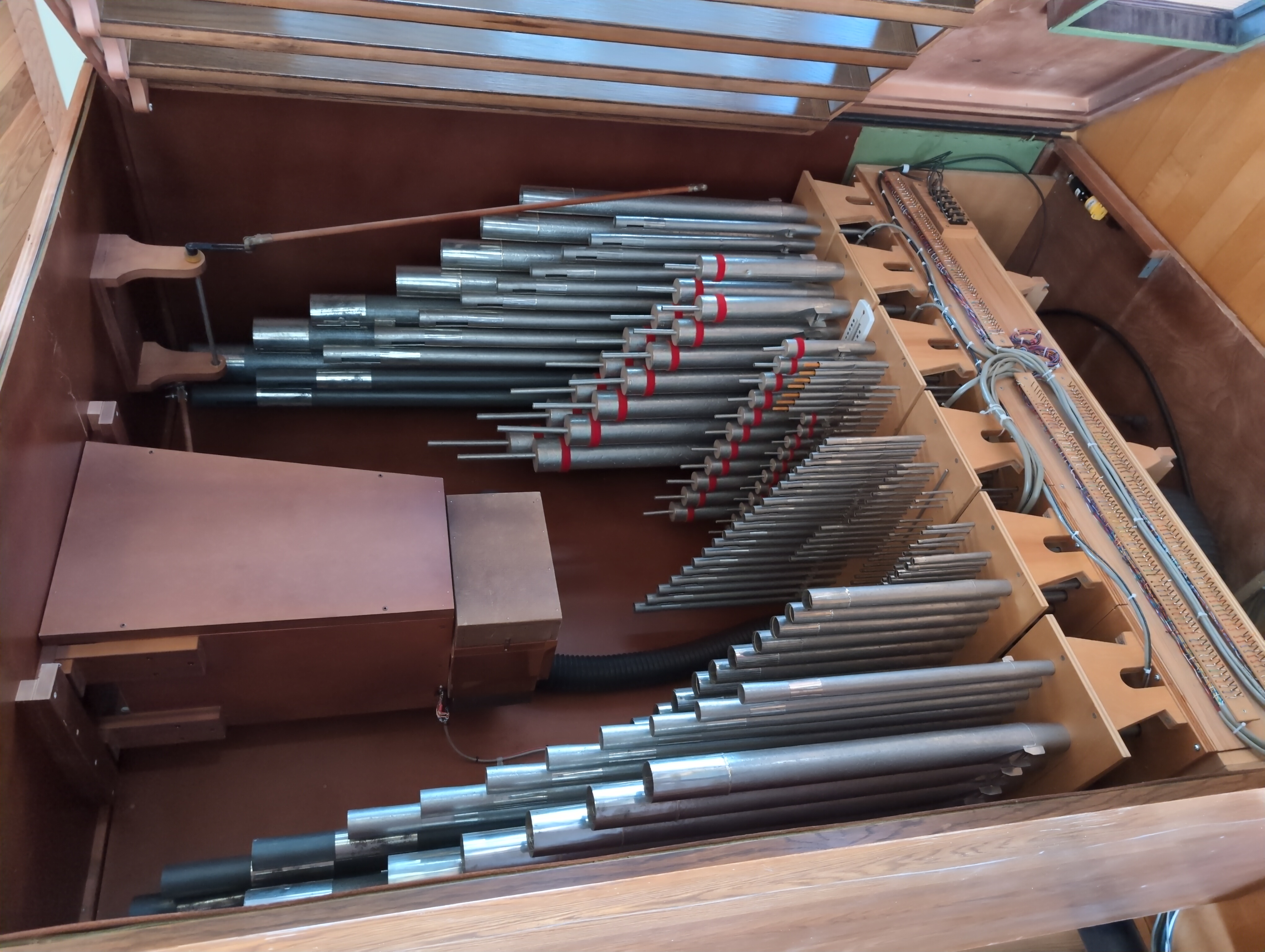
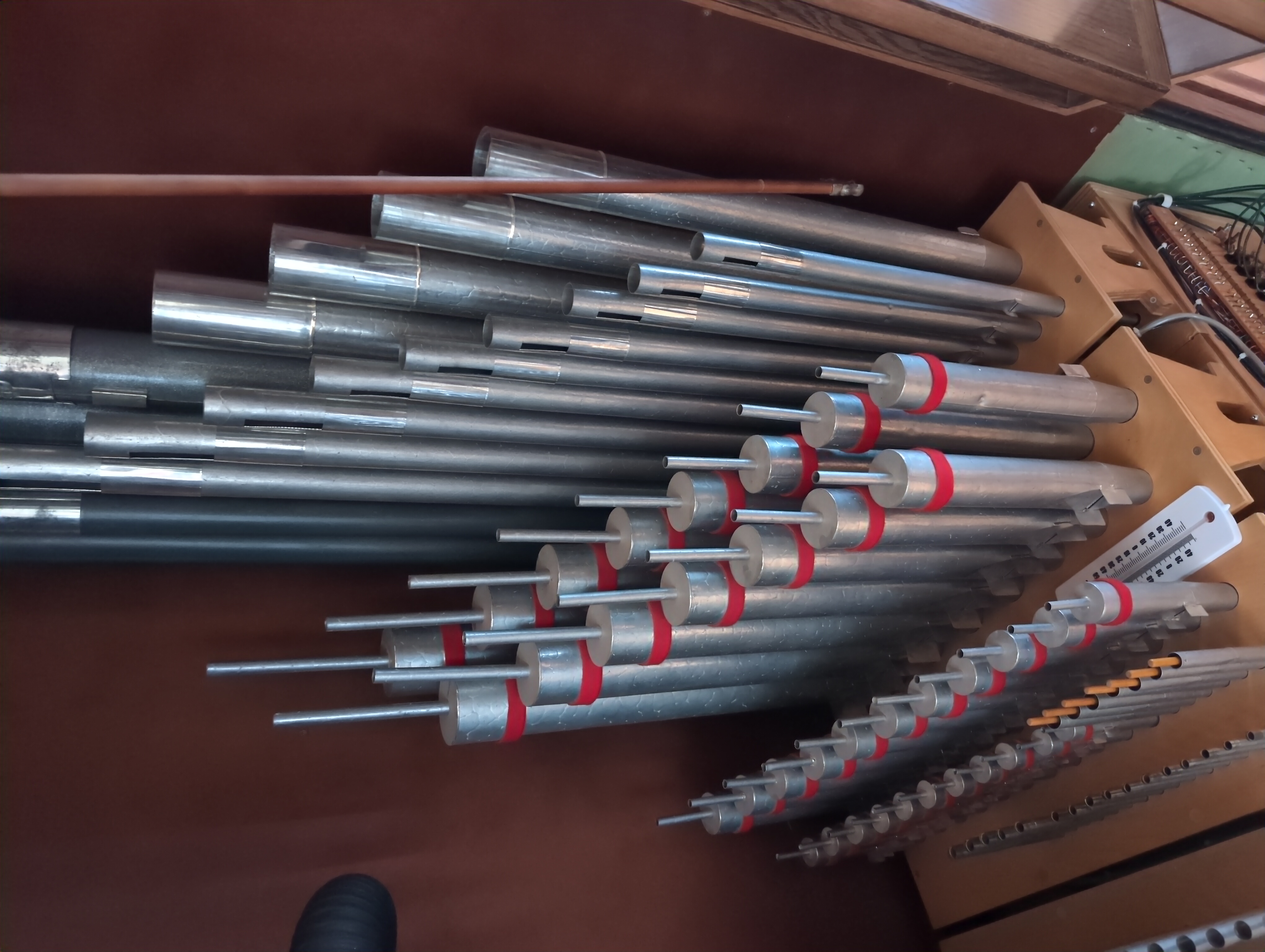
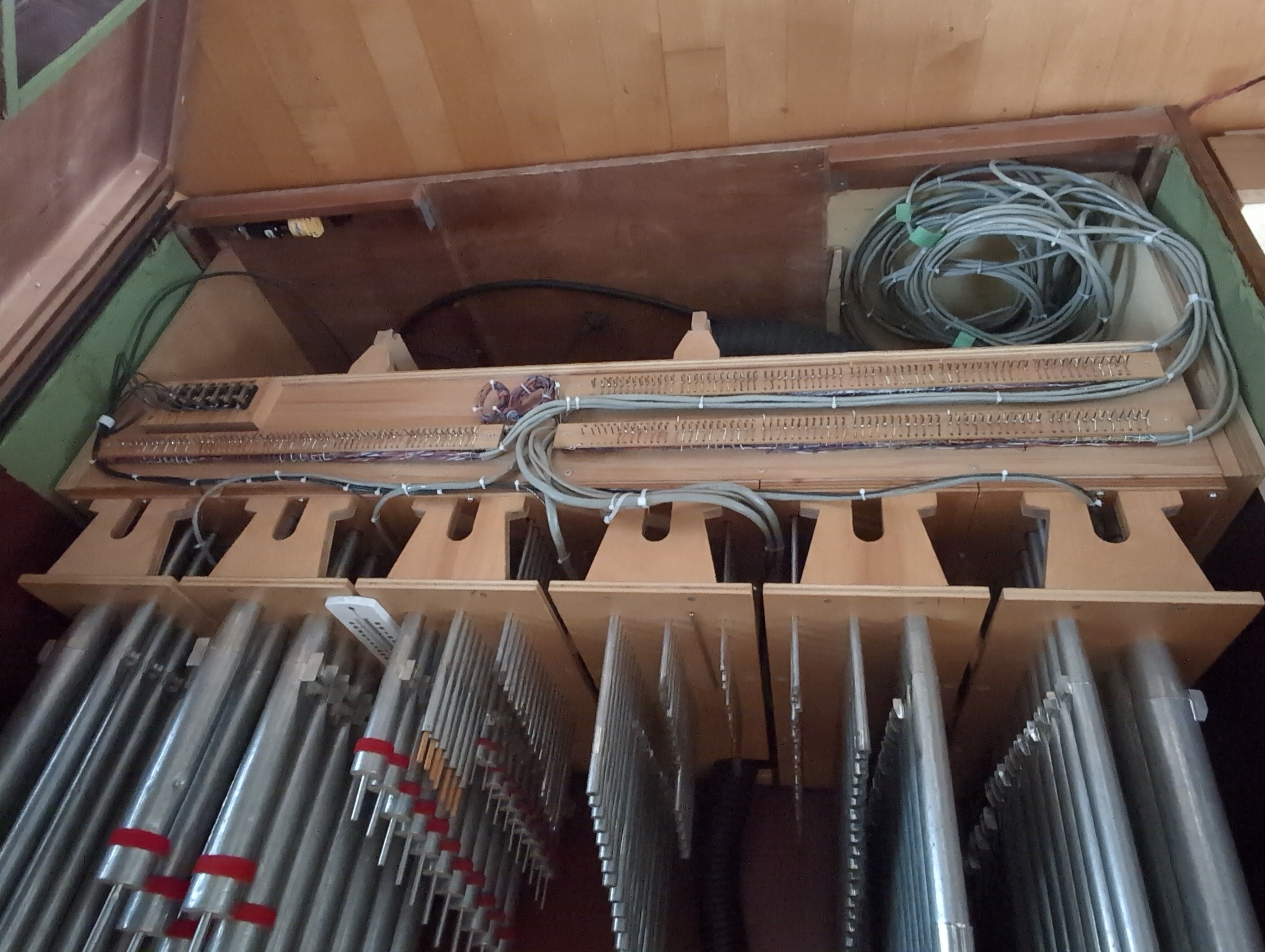
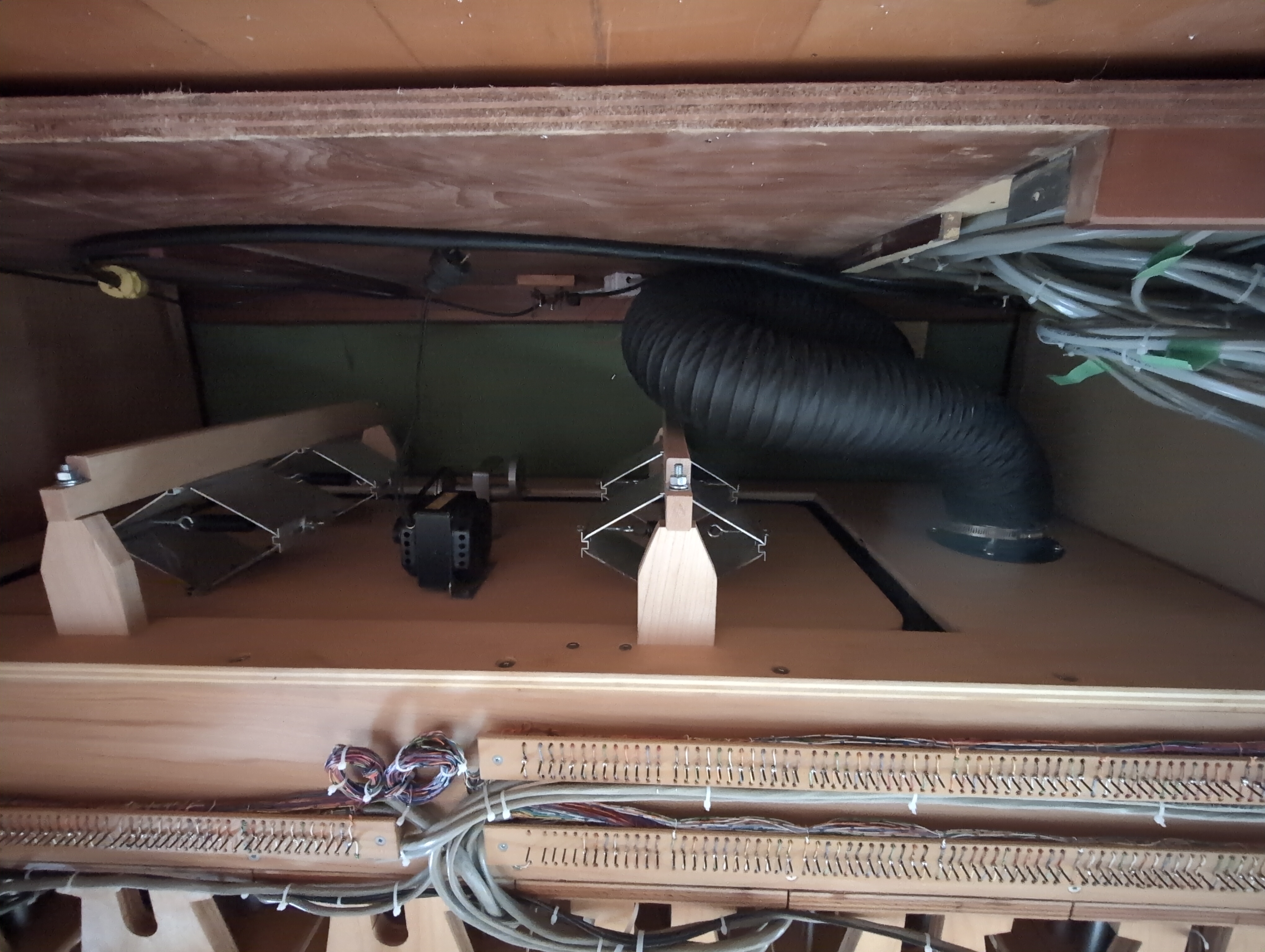
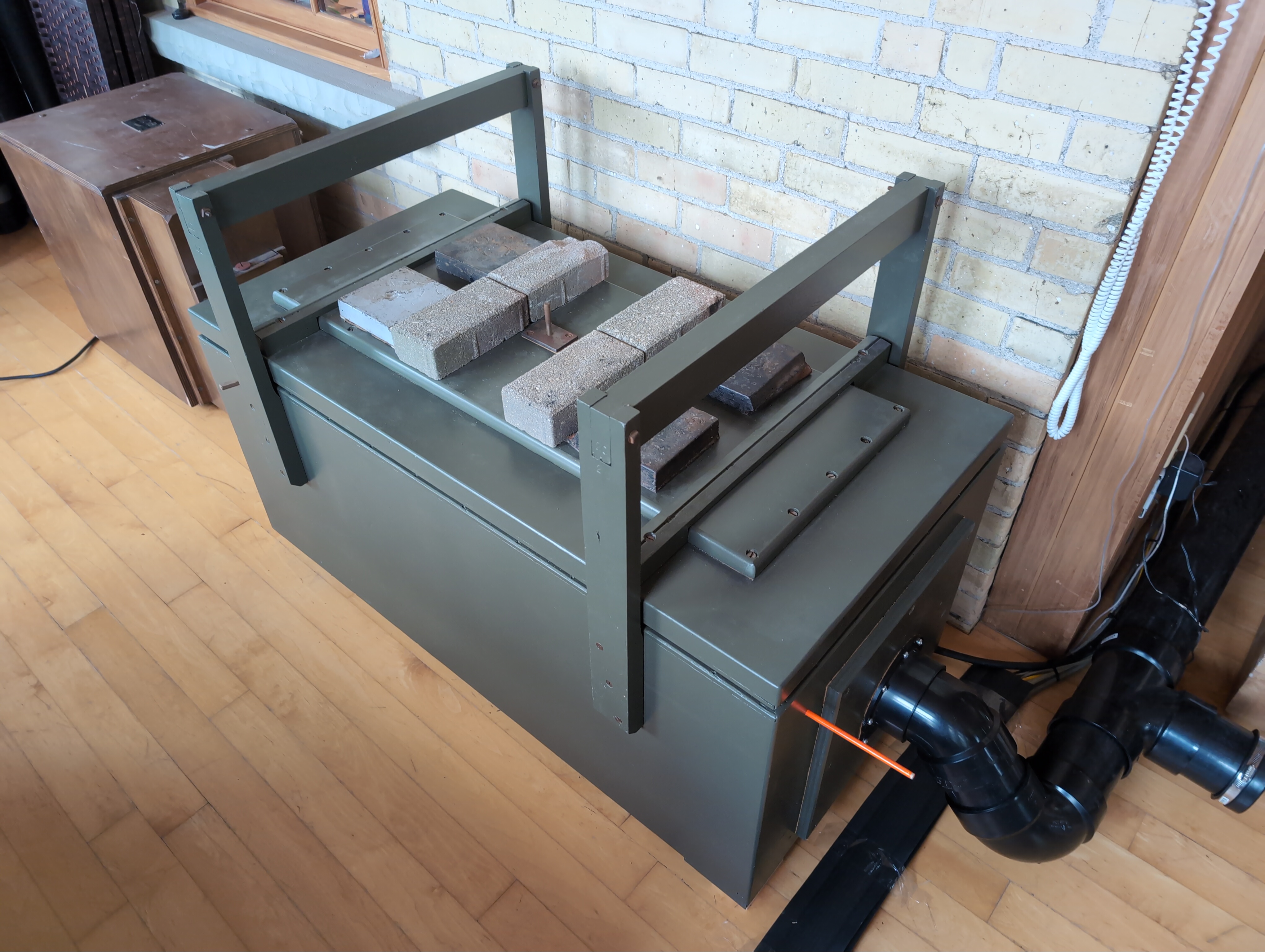
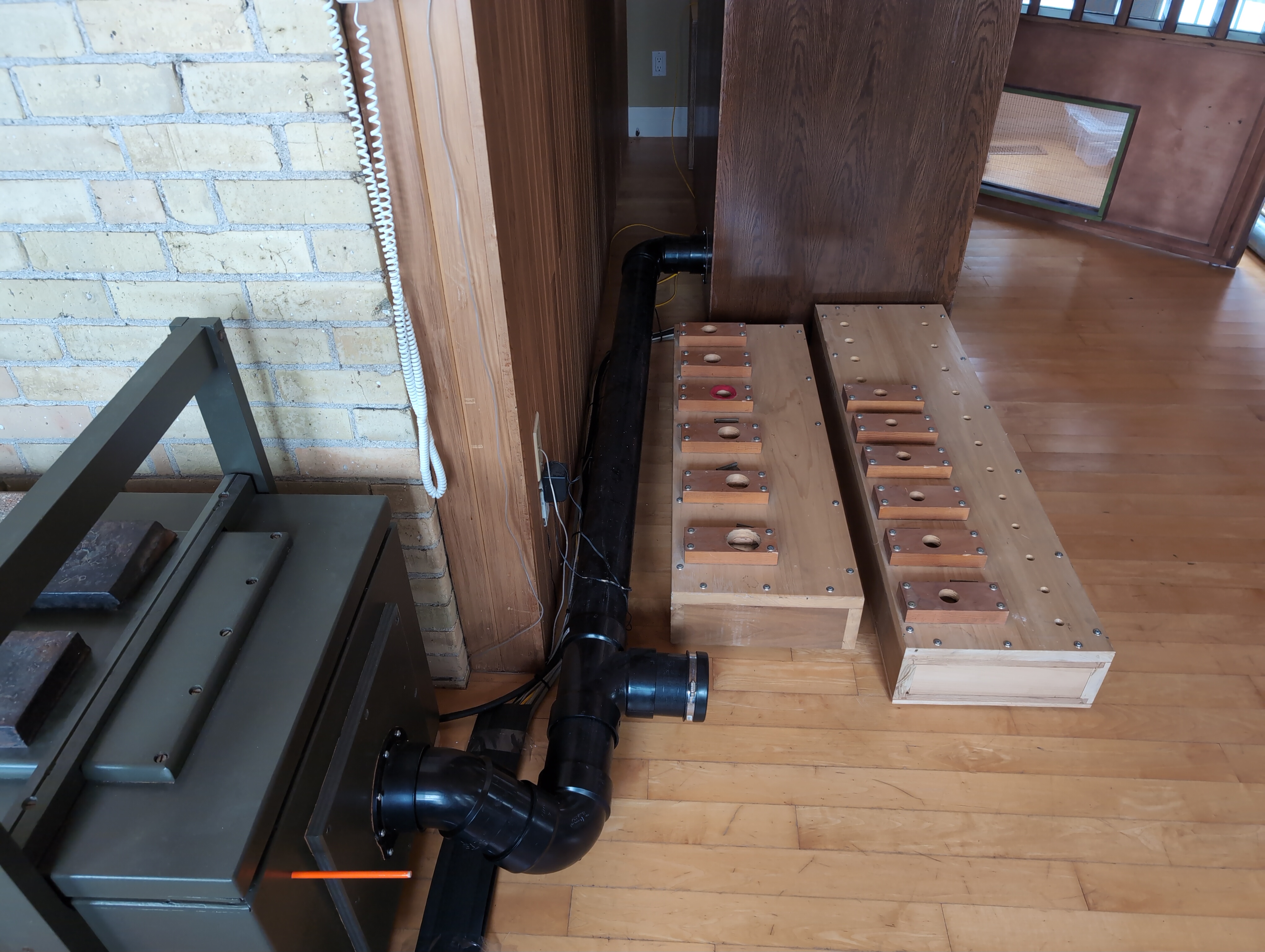
This small unit organ is opus 1, of the Hallman organ company, built in 1961. In 2024 St Peter's church, of Gad's Hill (near Stradford), closed and my friend Matteo rescued it, and installed it in his parents home. Matteo is an engineering student who worked with me as an organbuilder during his Covid hiatus.
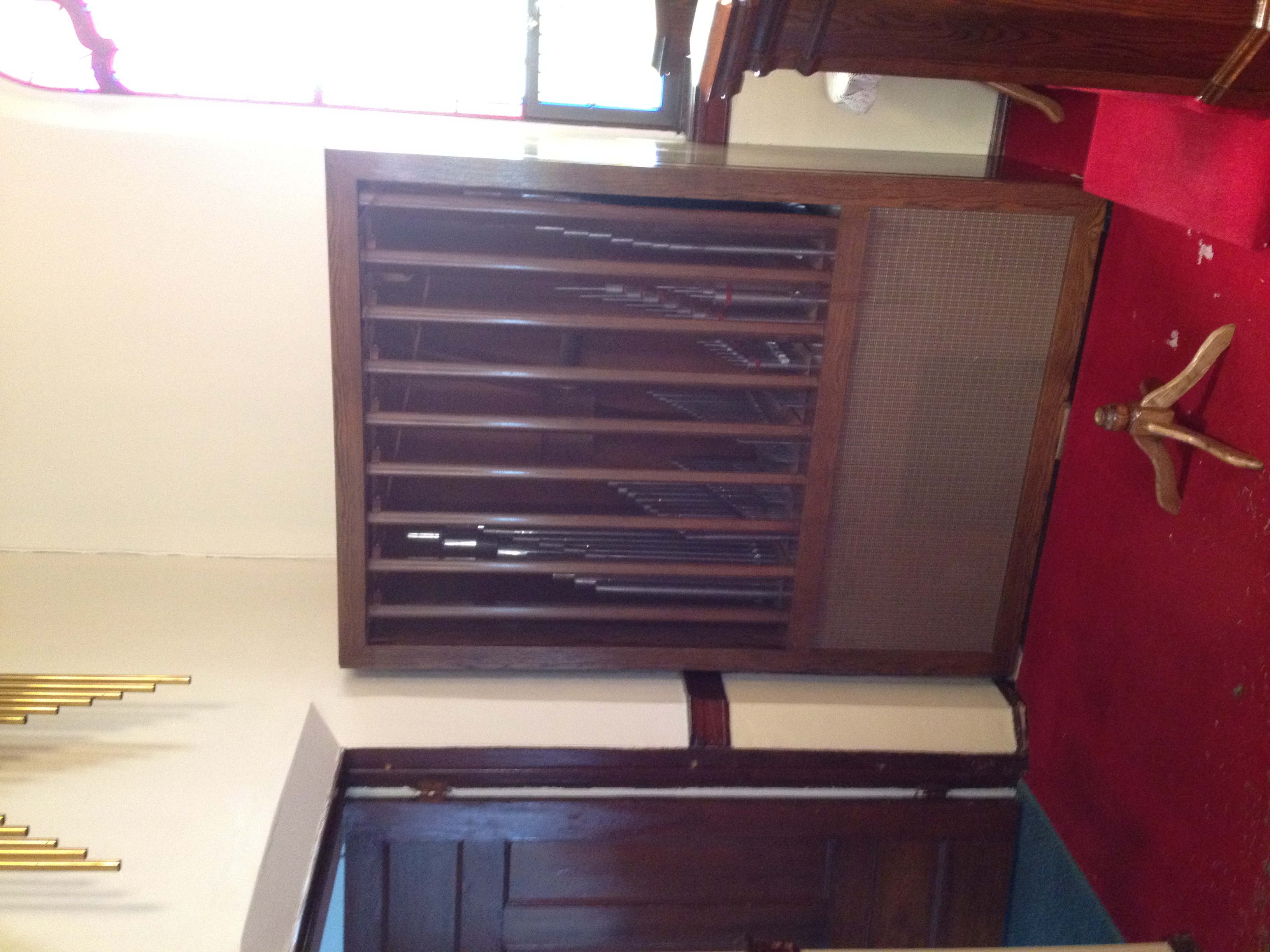
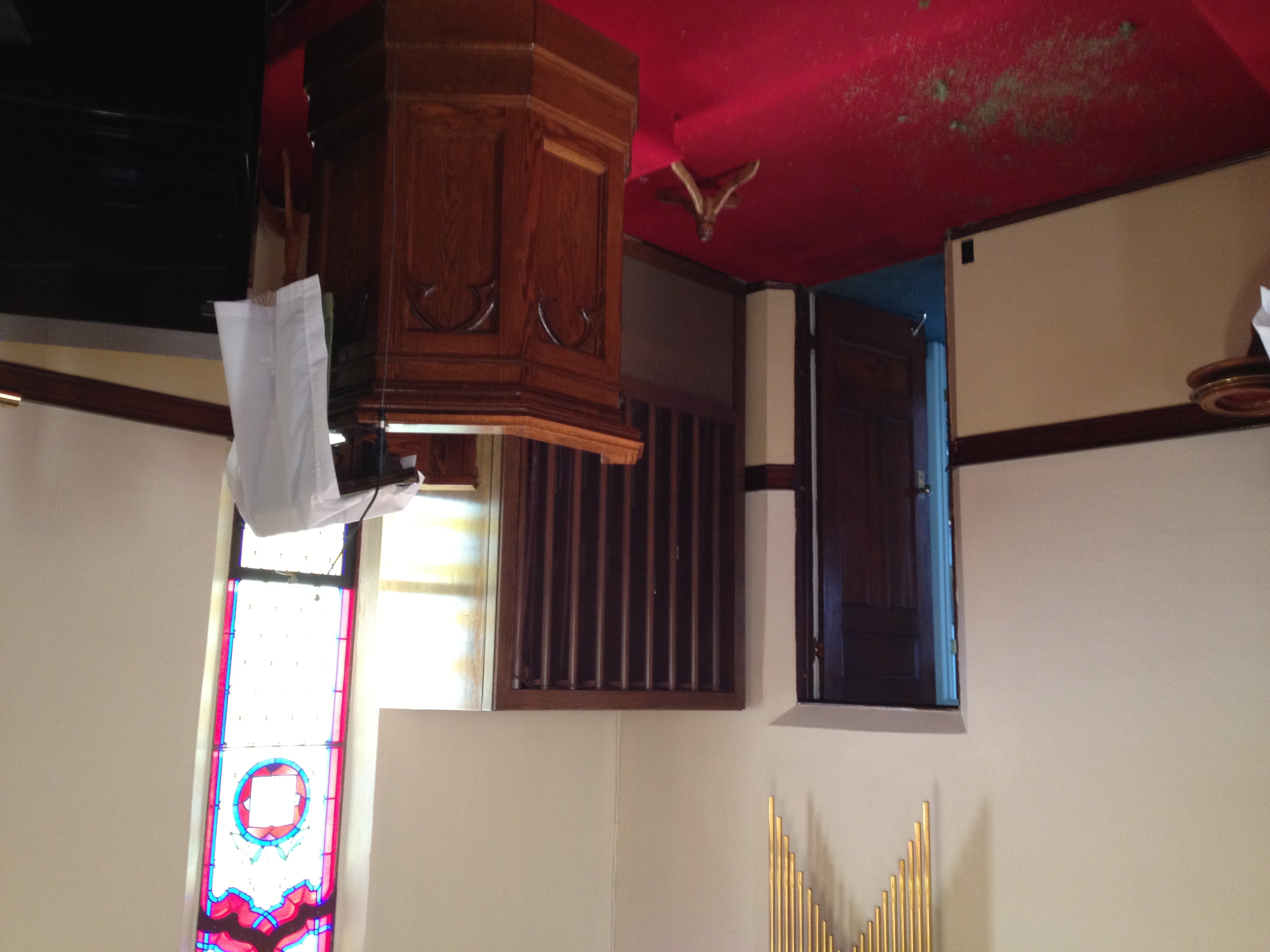
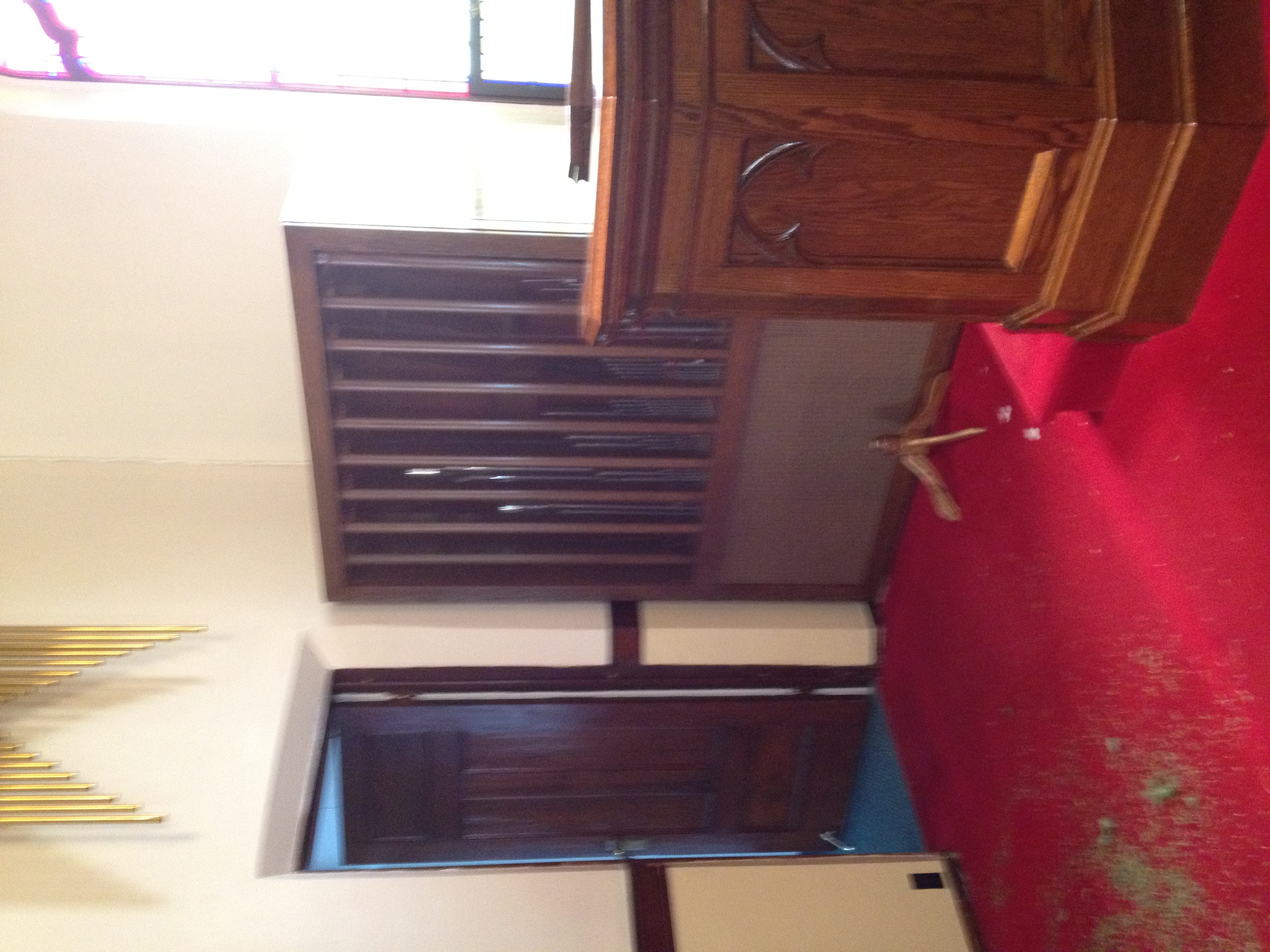
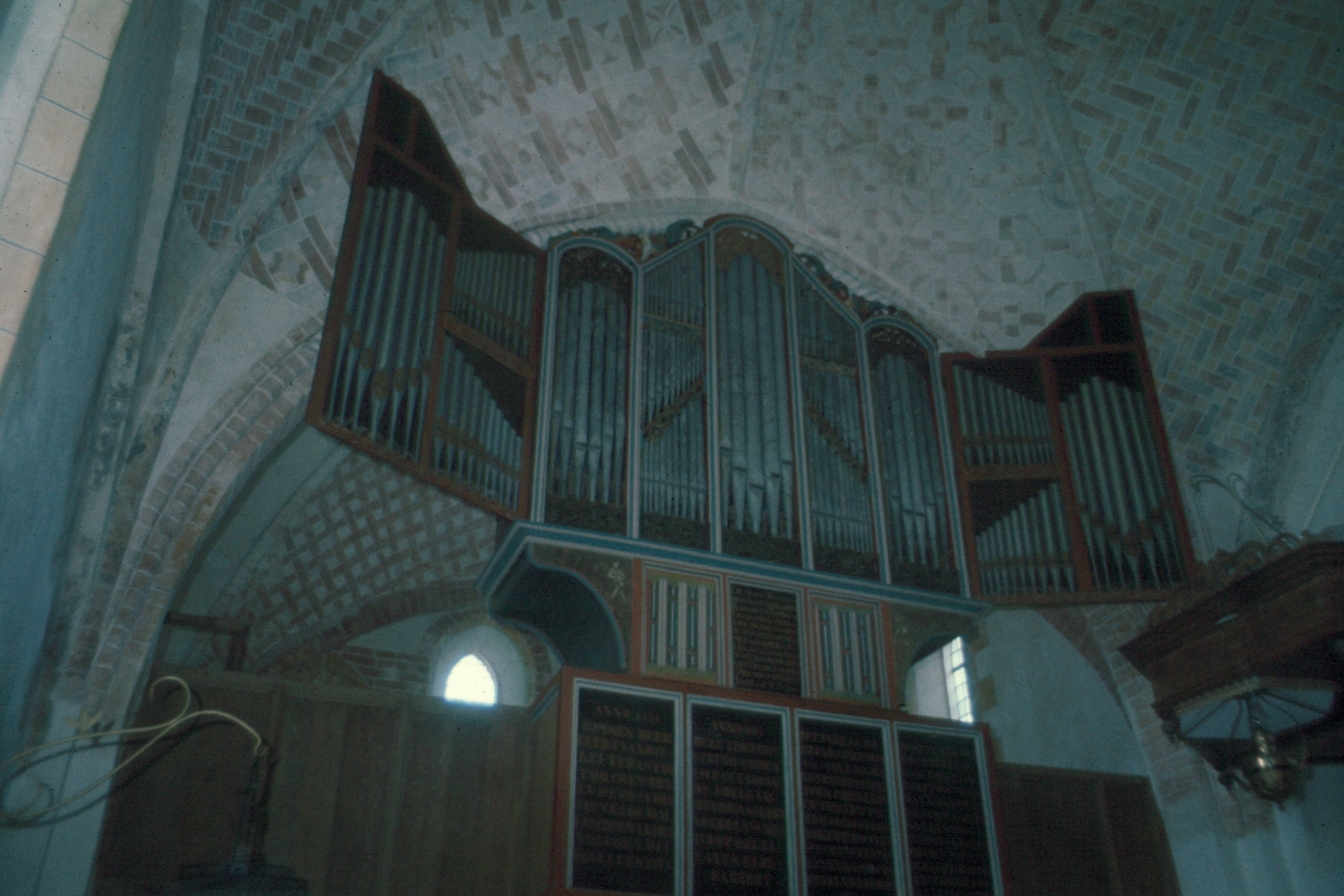
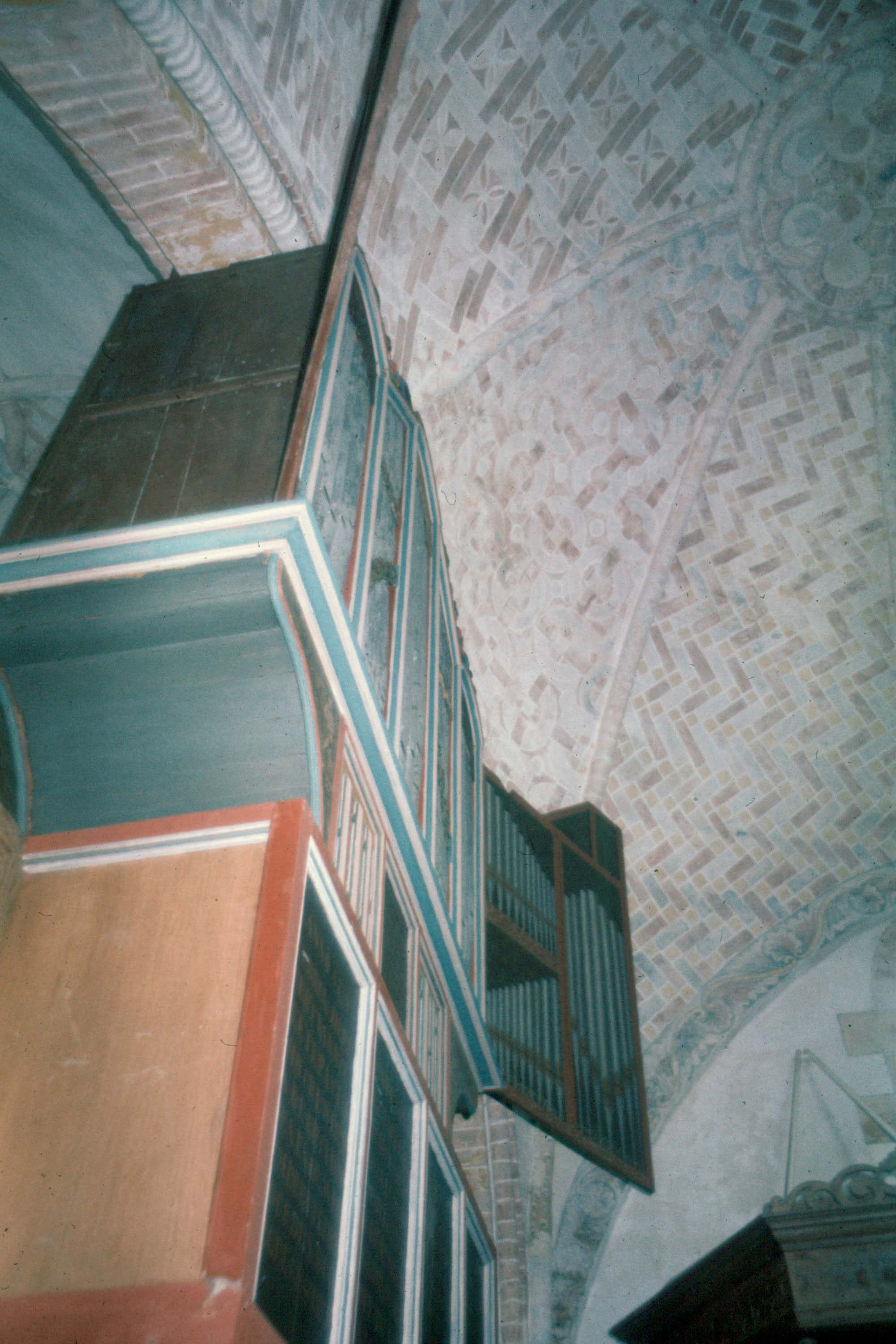
1531 Renaissance Organ, Kreward
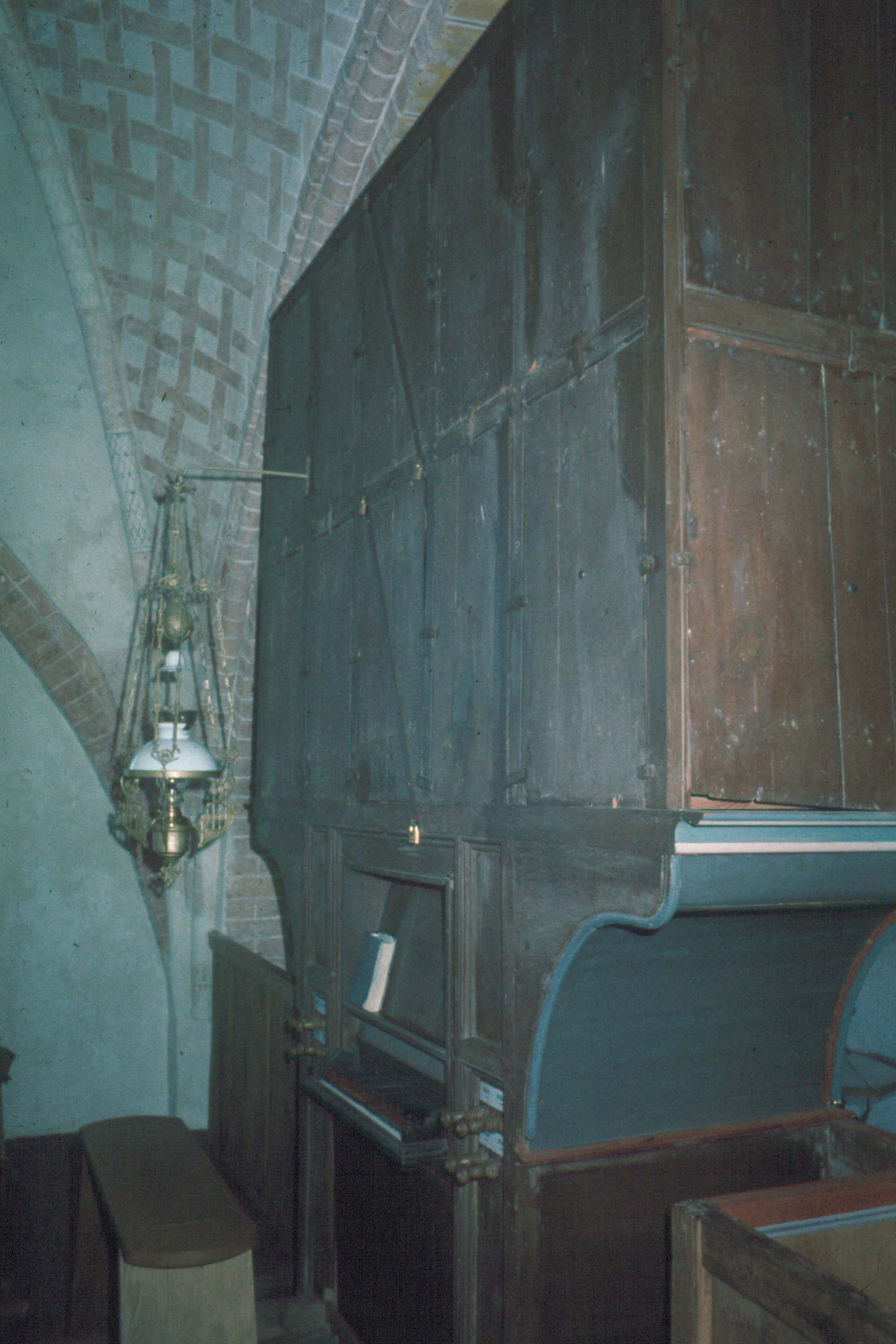
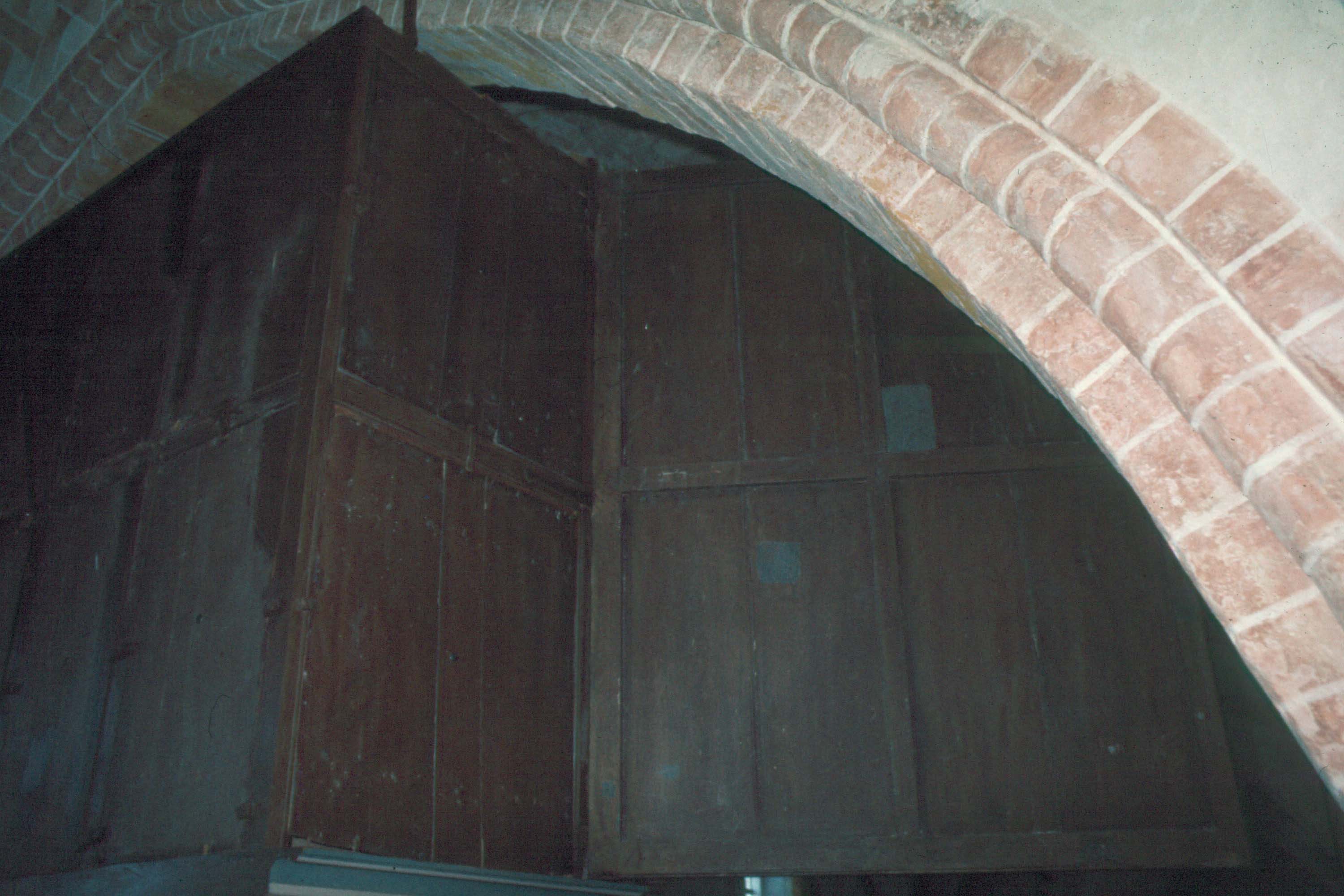
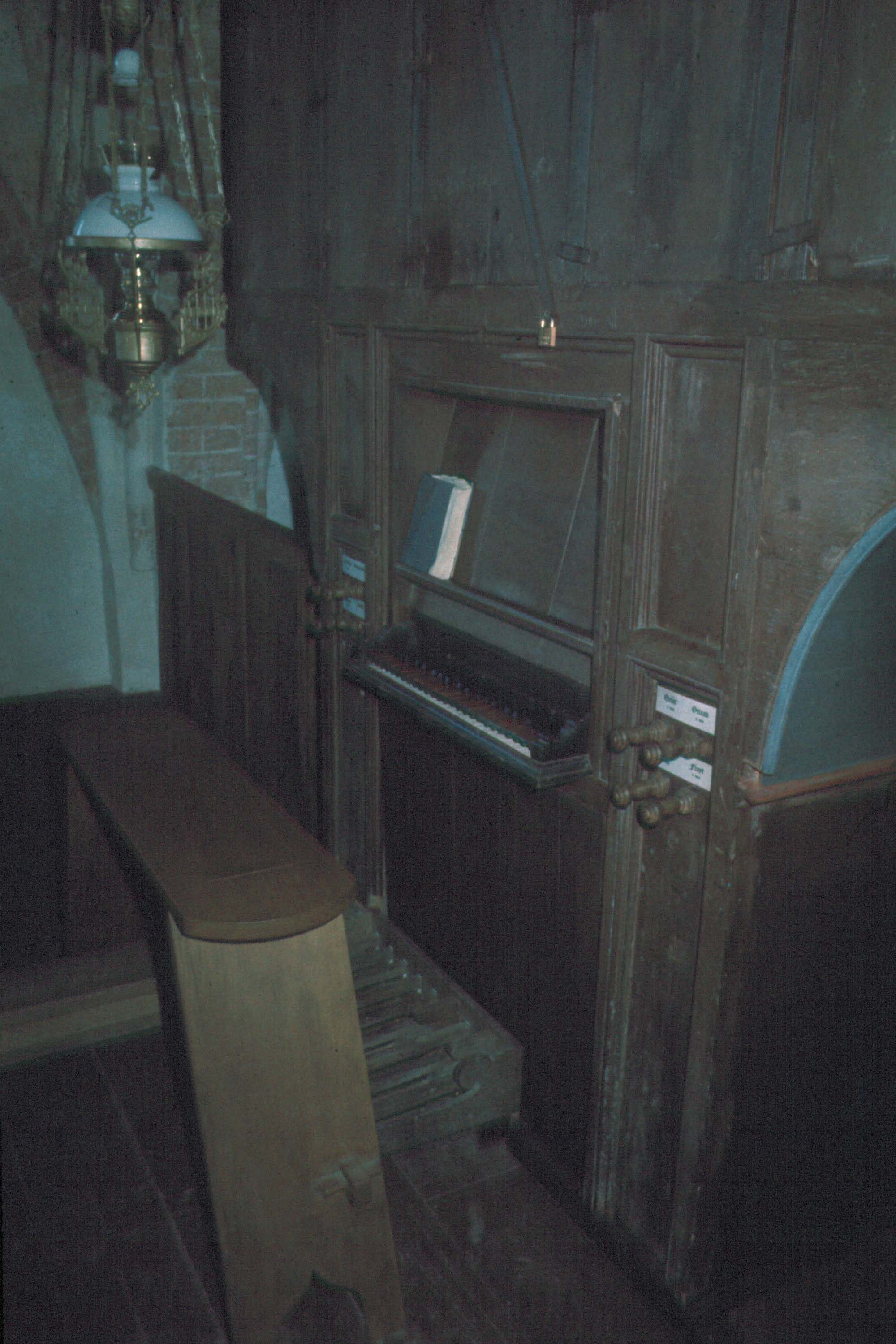
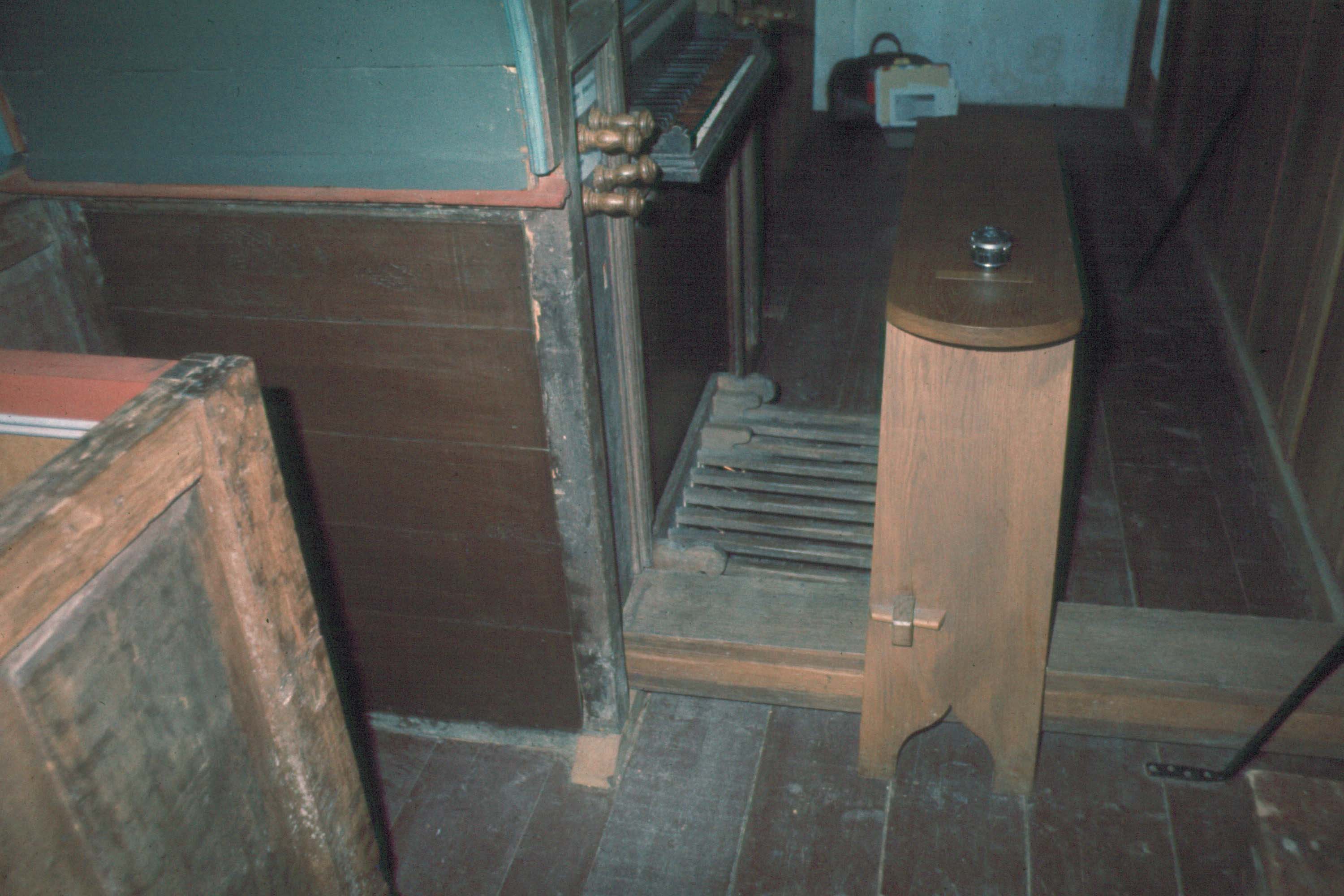
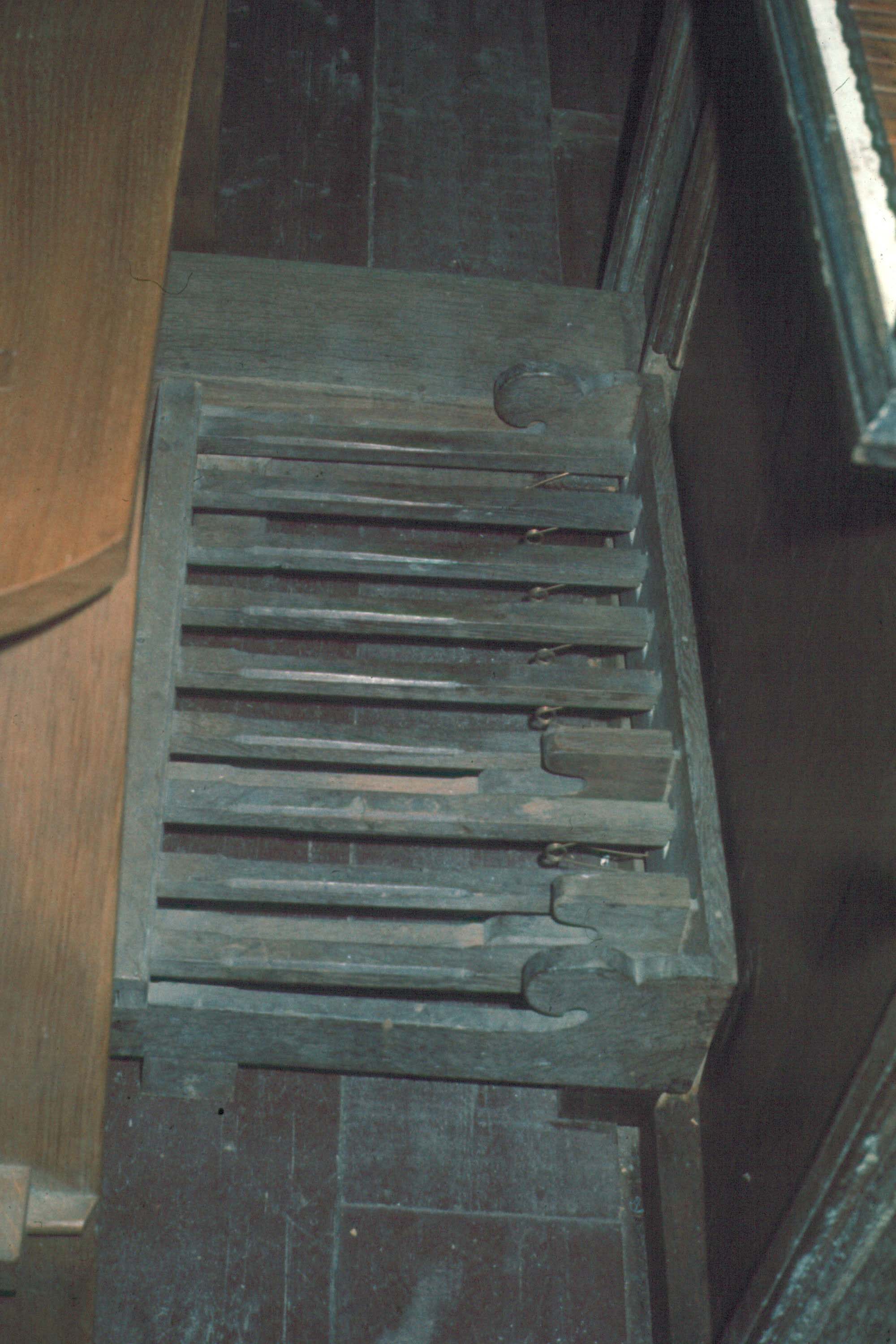
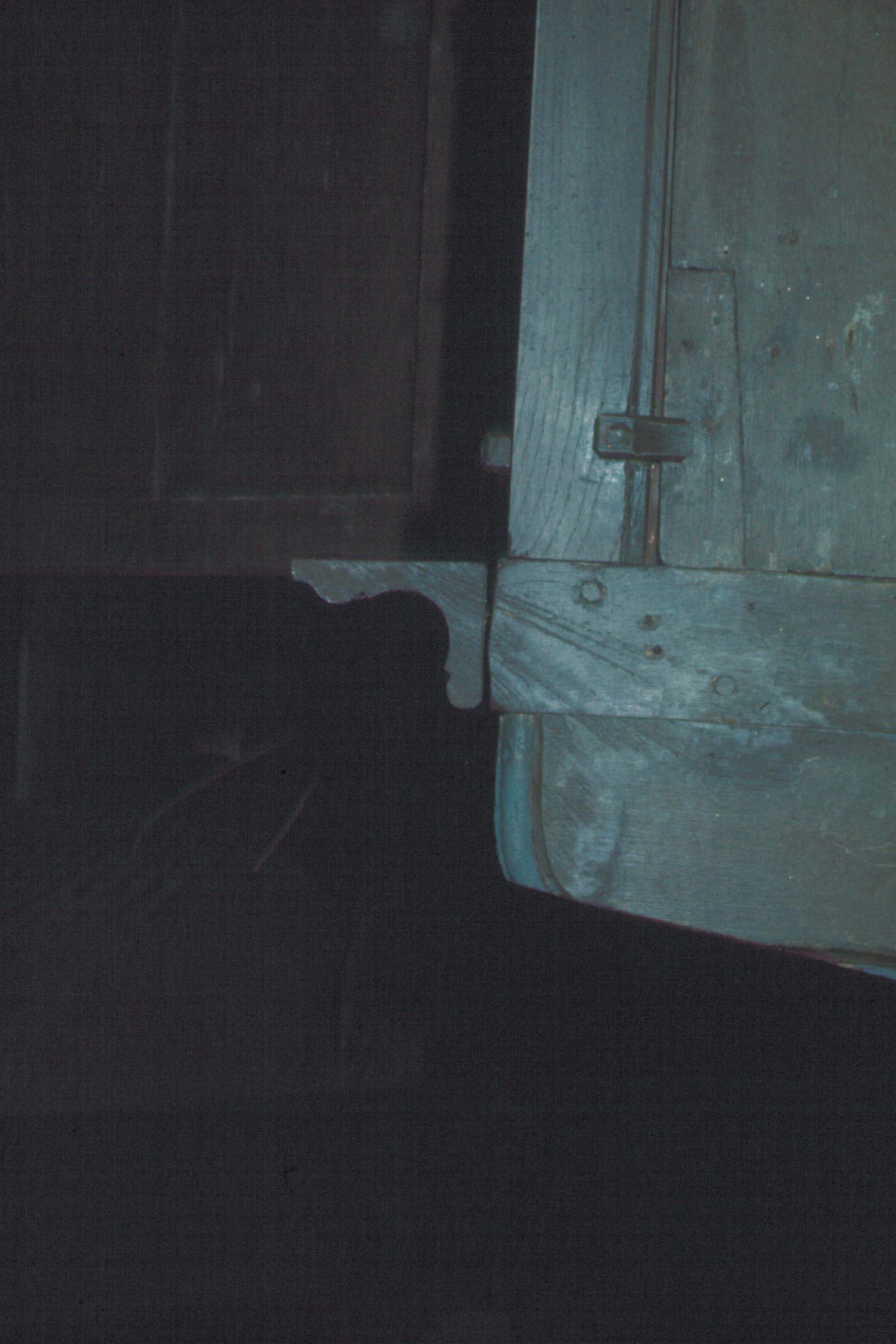
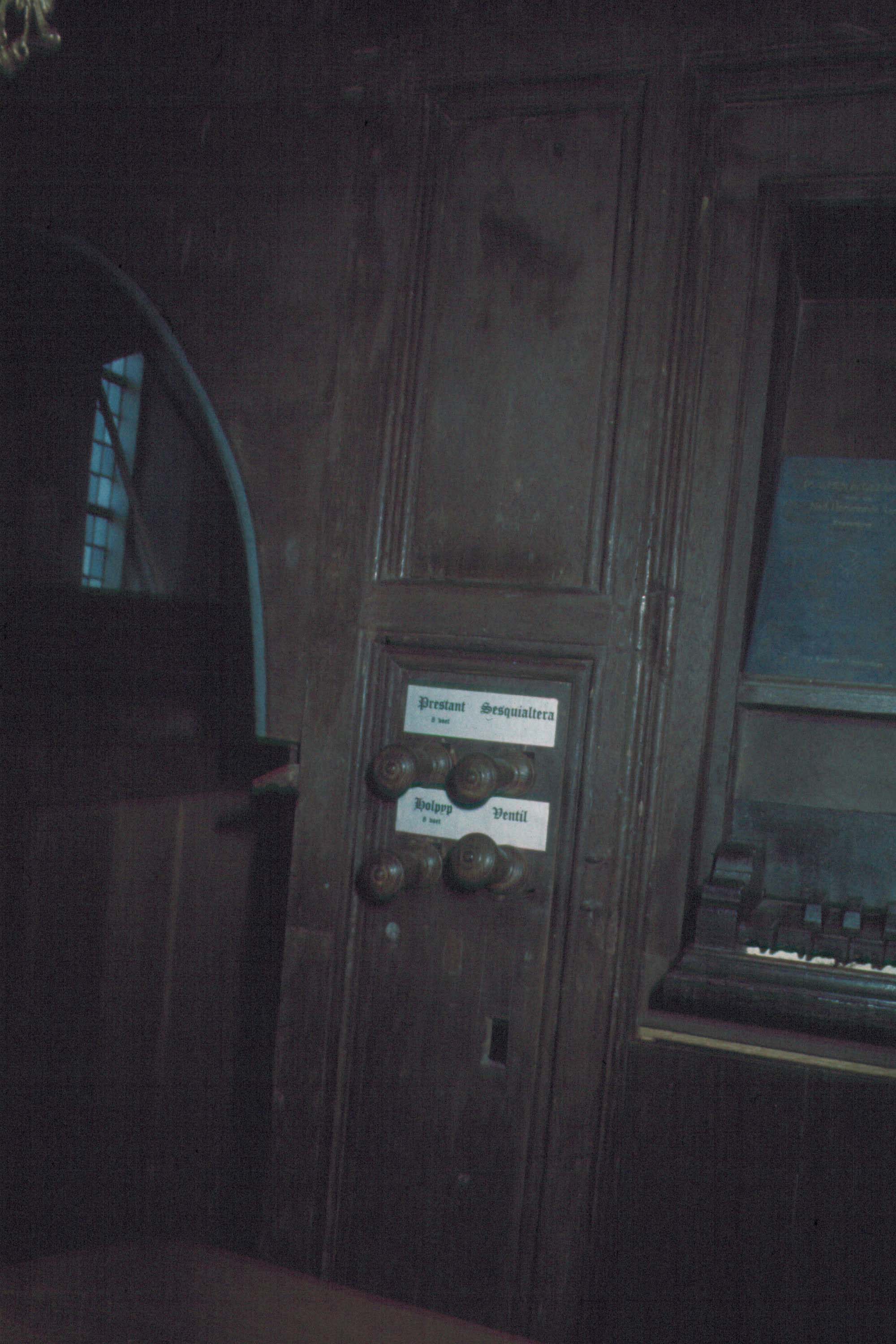
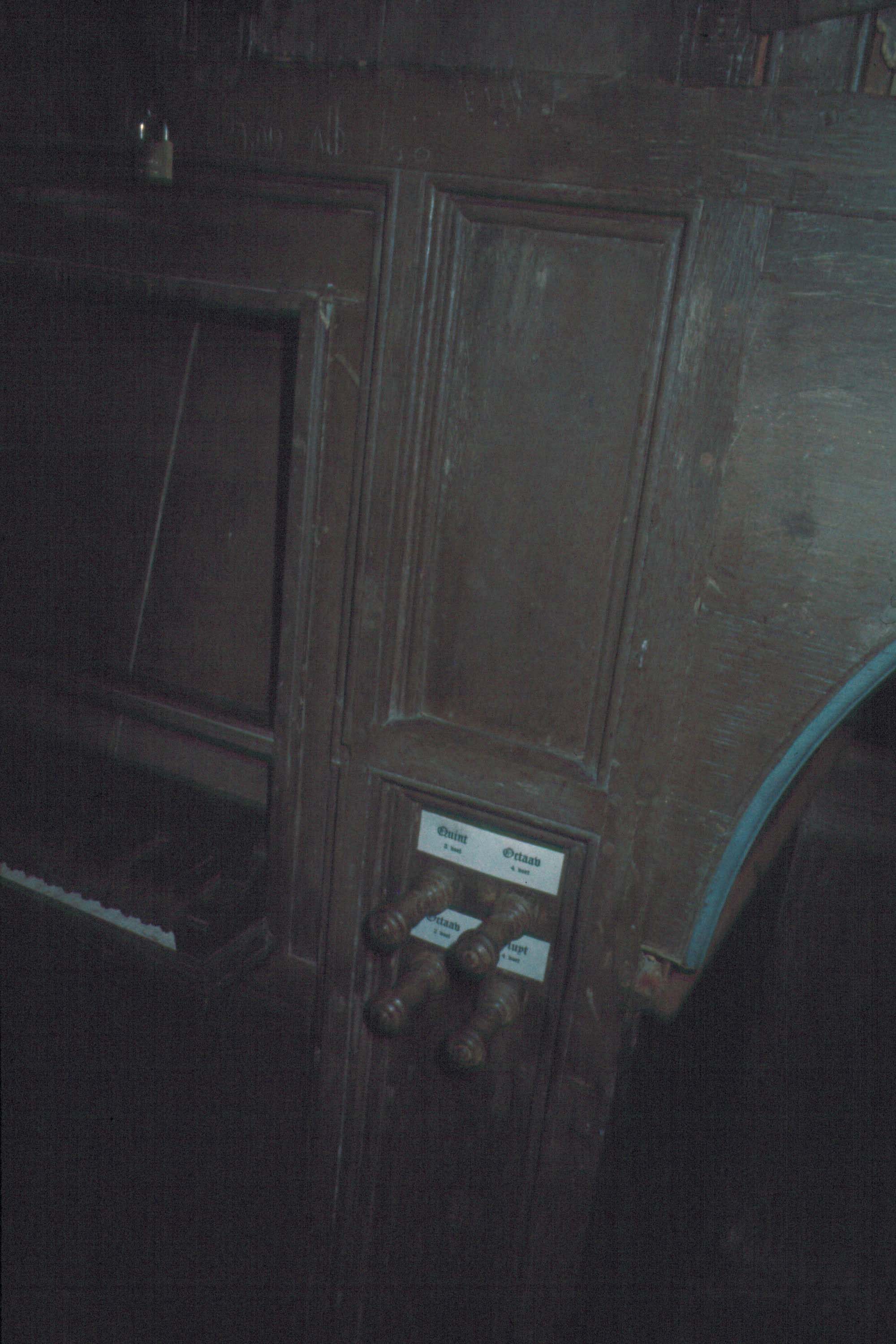
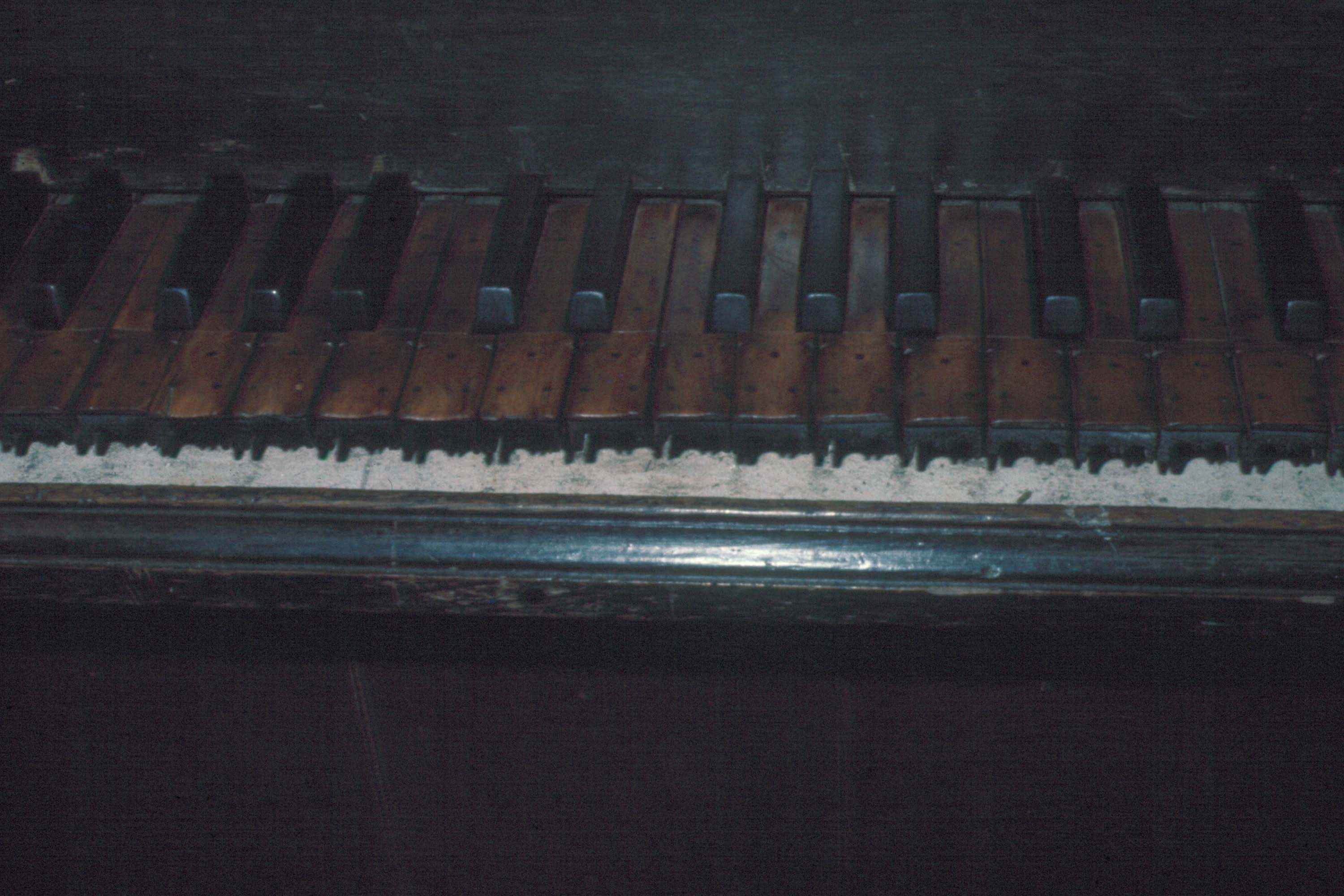
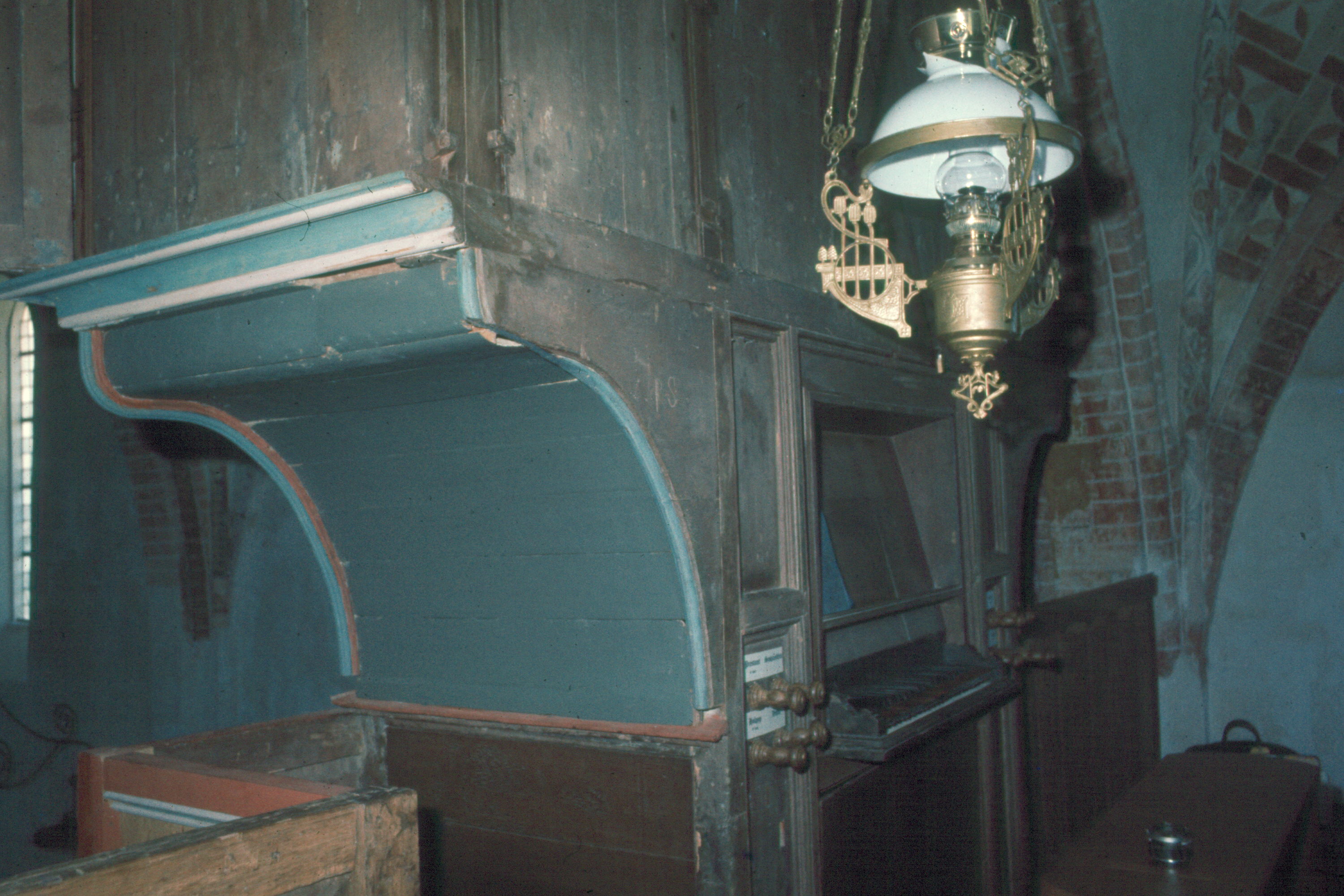
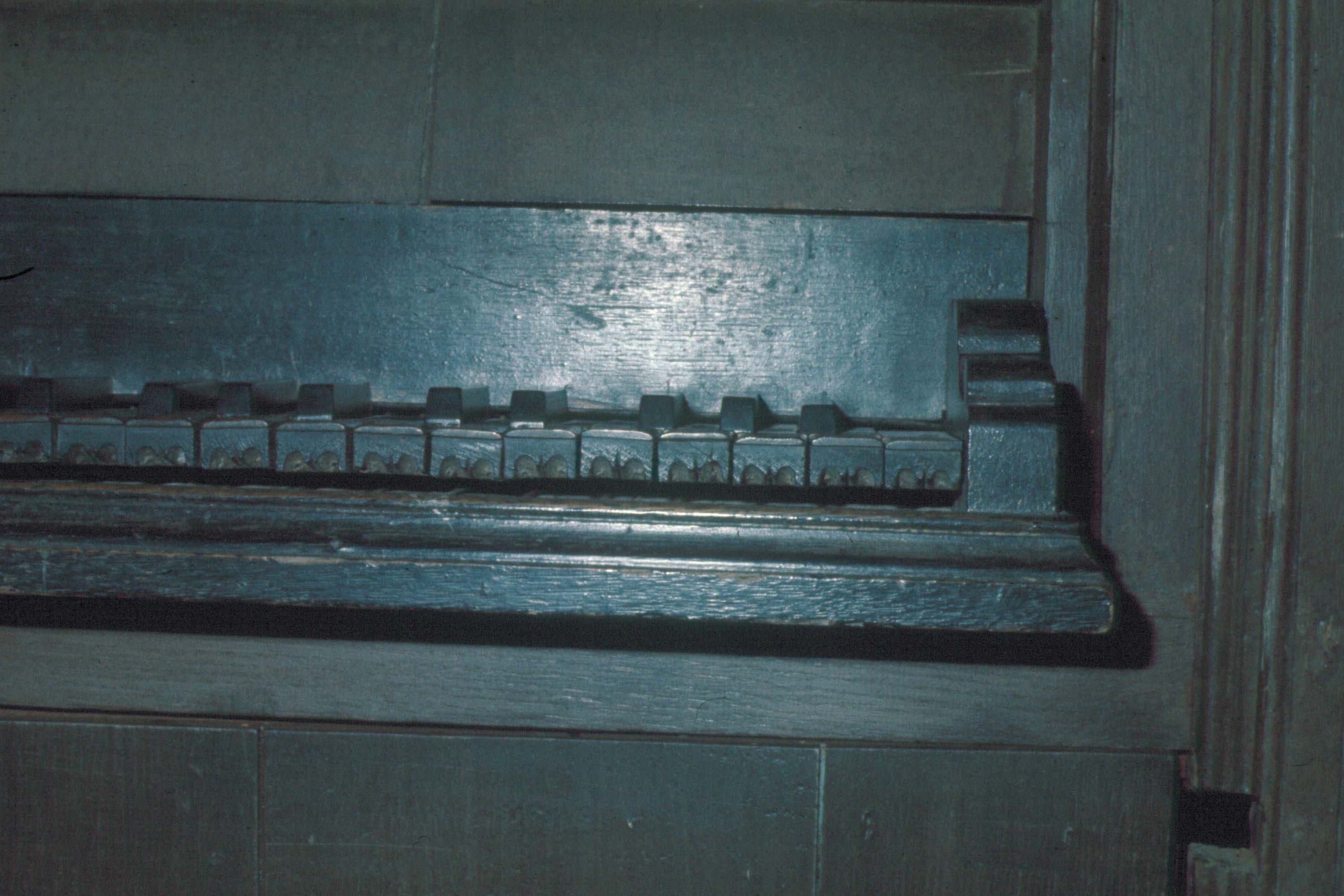
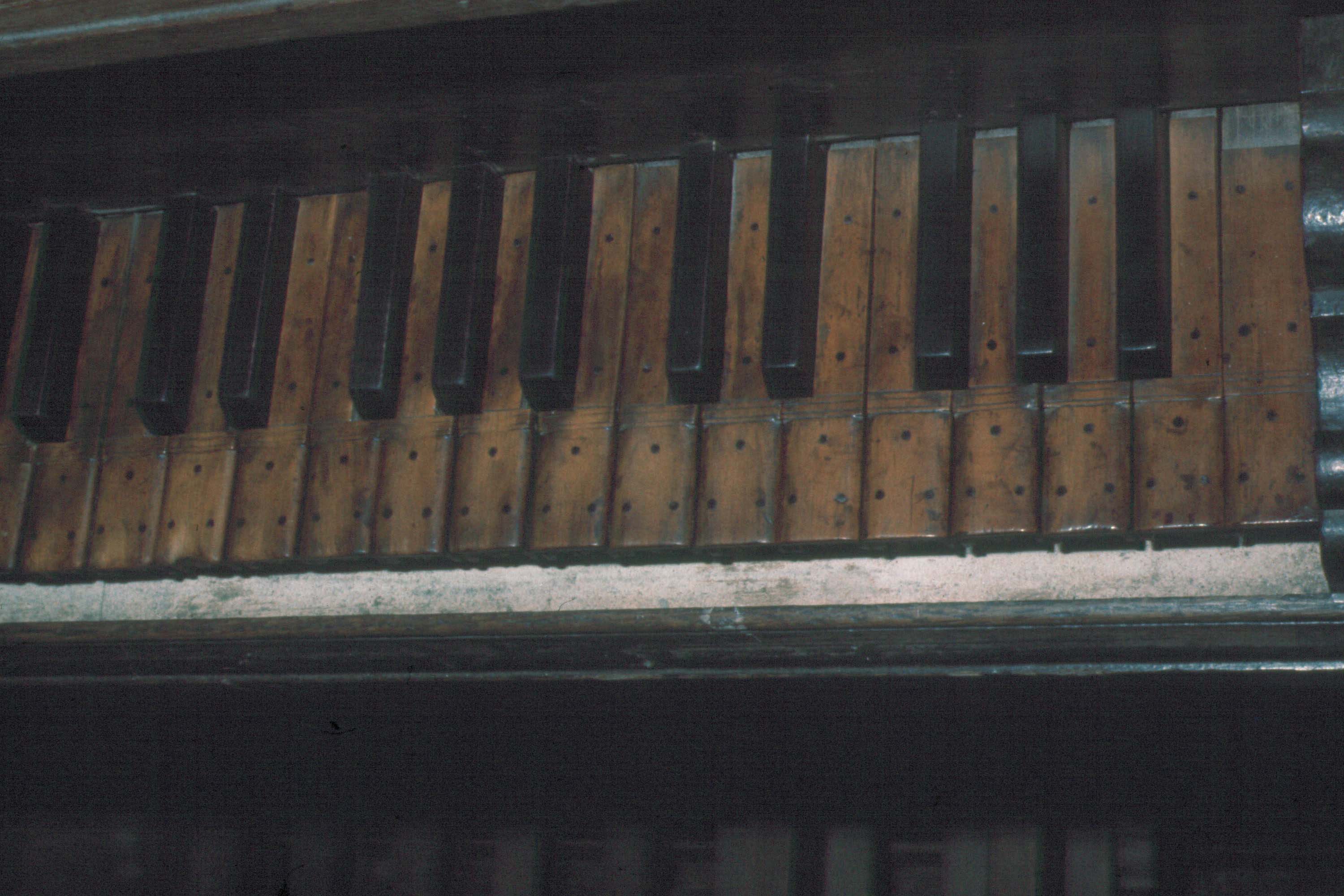
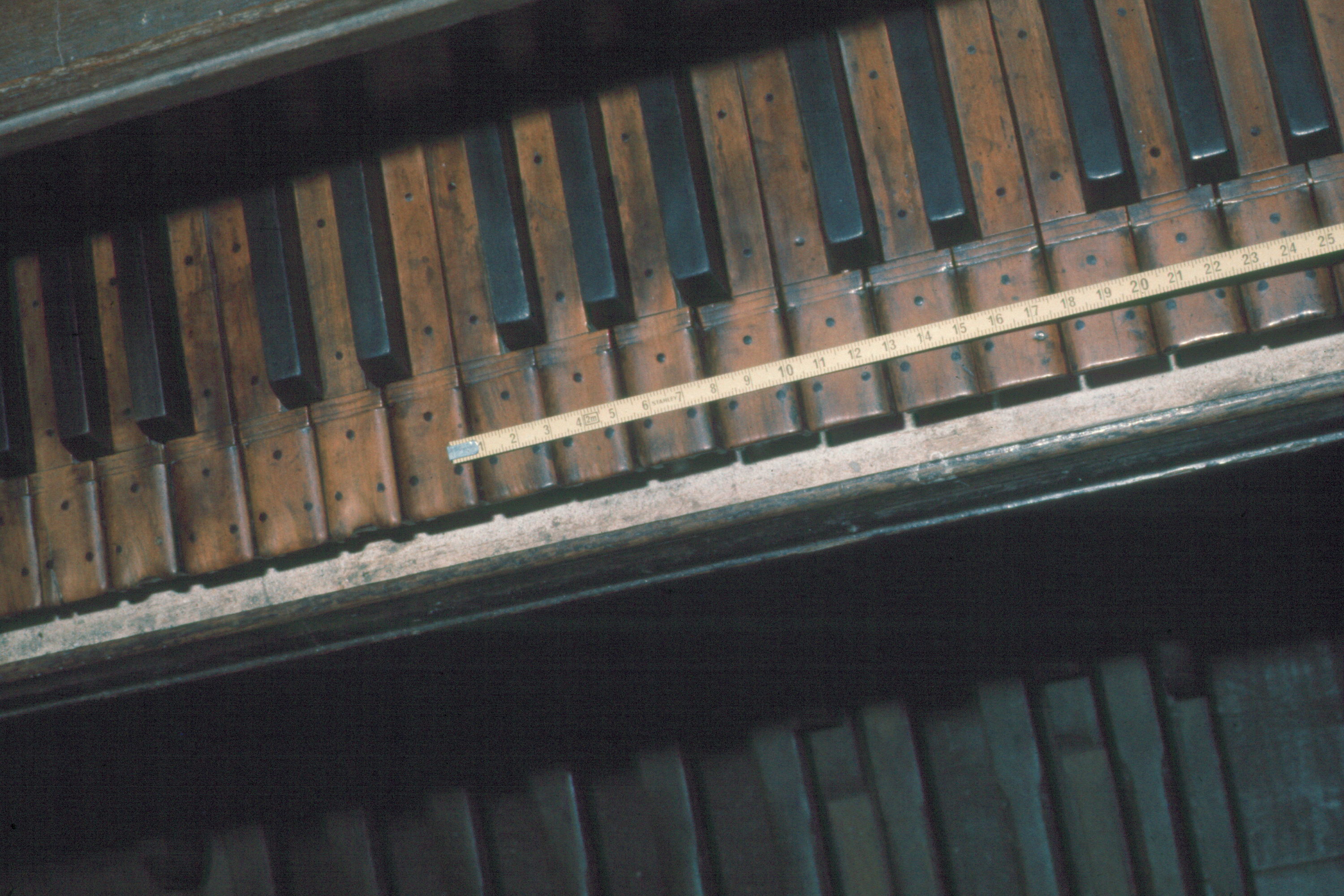
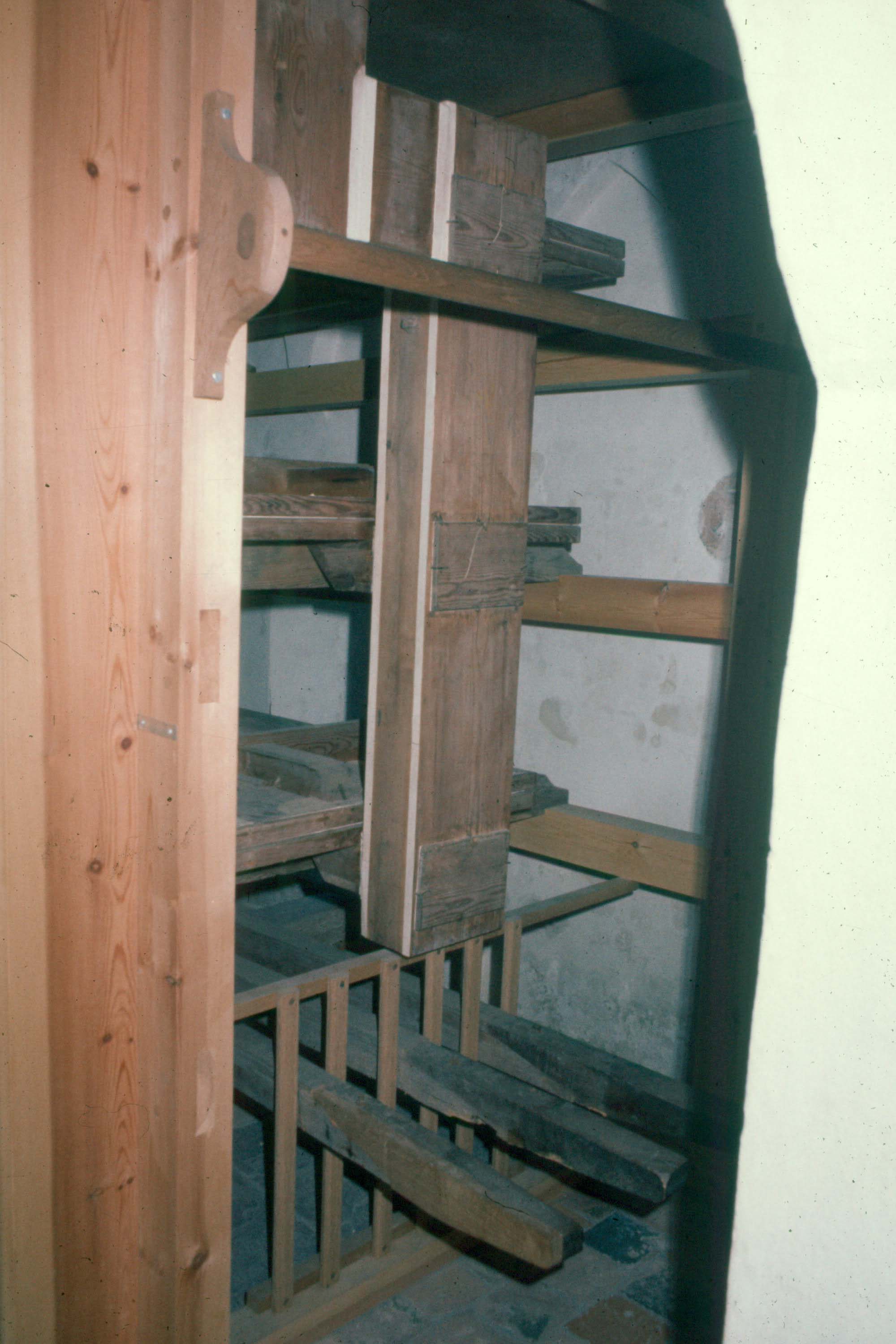
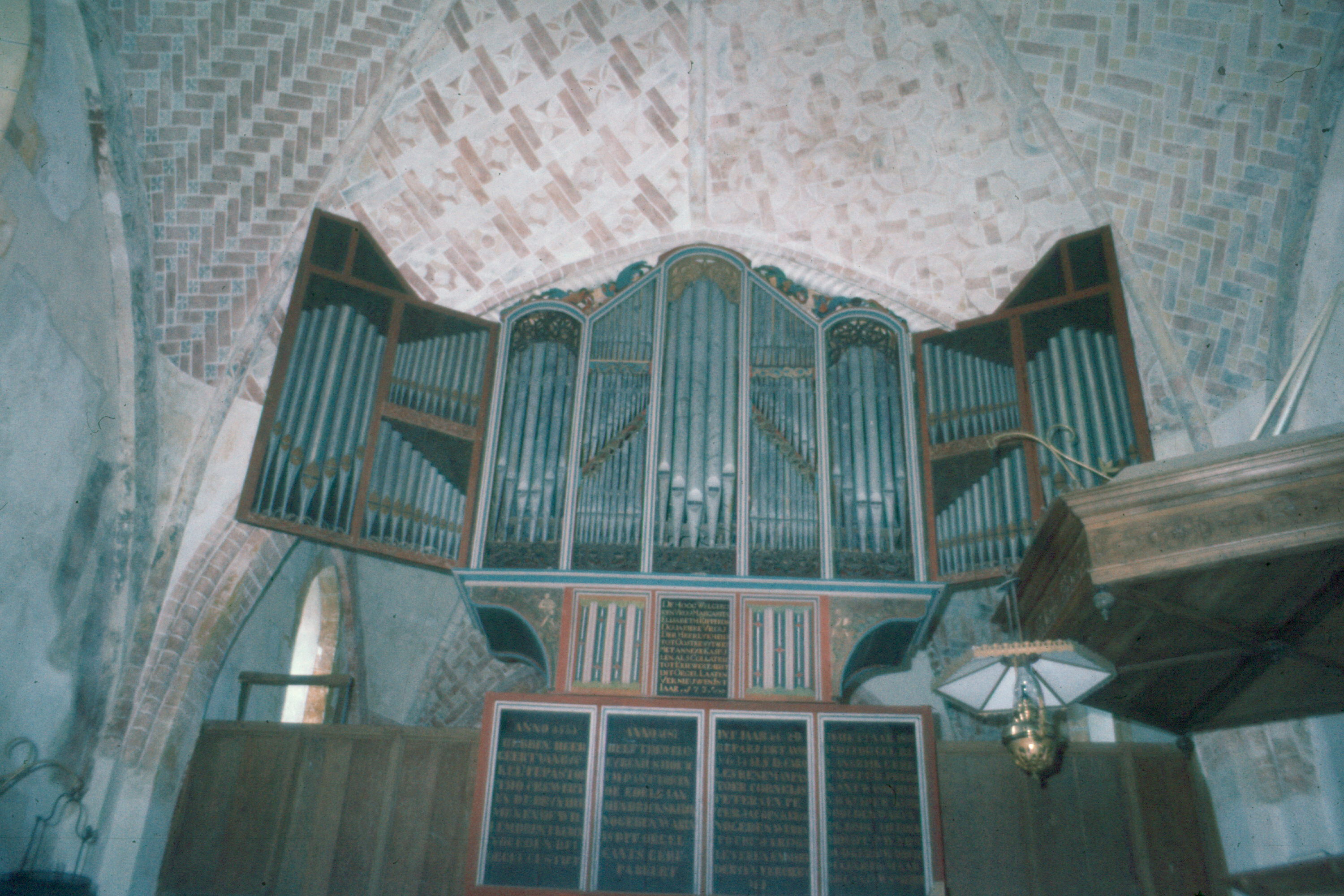
These are my photos of the 1531 Renaissance Organ in Kreward, Groningen, which I took during a visit in 1977. The church was a small building in the countryside. The upper casework with the pipes was padlocked. Click on a photo for full size view.
Built in 1531 by an unknown builder. It is the second-oldest playable pipe organ in the entire Netherlands (the oldest is from 1511 in Alkmaar). It is housed in the Mariakerk (Mary's Church), a medieval village church in Krewerd, a small village in the municipality of Eemsdelta with a population of around 75.