Pipe Making Tour
Below is a photographic tour of our pipeshop, showing how we make new pipes, repair old pipes and rebuild them. As I find interesting photos of different kinds of projects, I'll put them up on the web site.
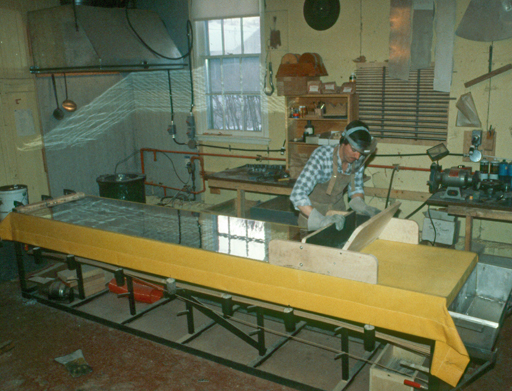
Pipemaking casting table
The molten metal is poured into a bottomless sled, at the left of the table. The sled is slid down the table, and the metal flows out a slit in the back-bottom of the sled, leaving a sheet of metal. In the photo, you see the sled two-thirds down the table. That metal is about 700 degrees Fahrenheit.
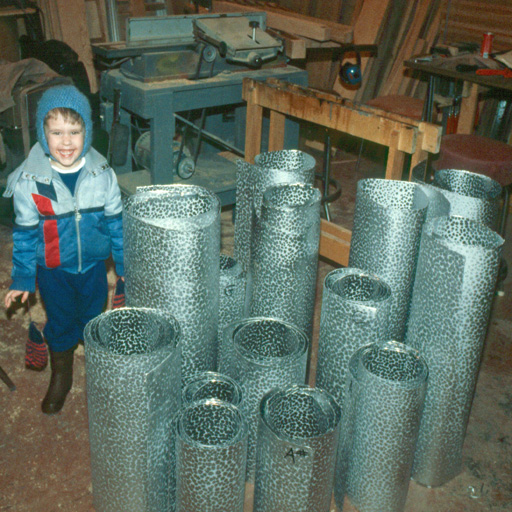
Pipeshop rolls of pipe metal
These are the sheets of pipe metal, rolled up and resting after casting.
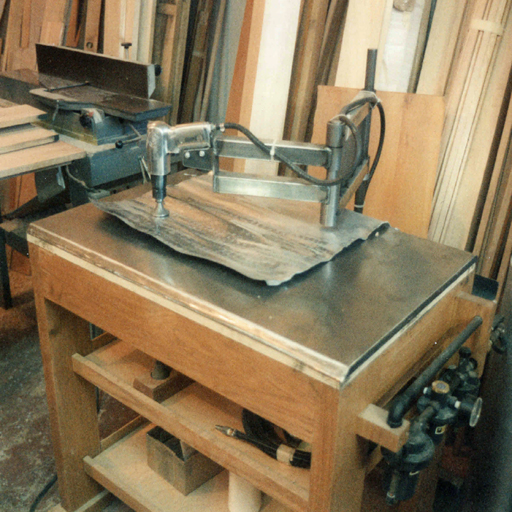
Pipeshop metal hammering machine
There is a long tradition of hammering pipe metal after it has been cast, but before rolling up into pipes. This is our hammering machine, which operates pneumatically; its very noisy...
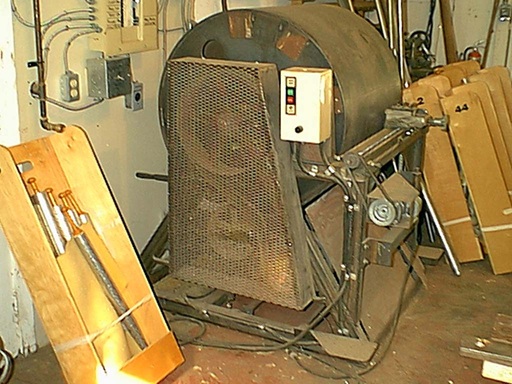
Pipemaking Lathe for planing pipe metal
We had a monster lathe for planing pipe metal to thickness. Though it worked well, we rarely used it. We preferred hammering the lead alloy pipes, and hand scraped the inside surface of spotted metal.
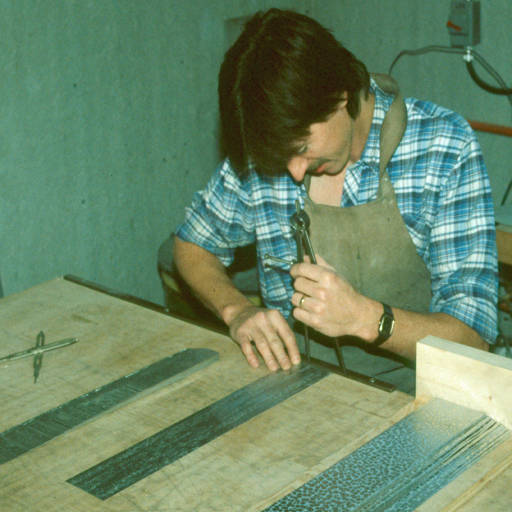
Pipemaking cutting in mouths
You can see a stack of pipe bodies, still flat. Using porportional dividers and scribers, we mark the correct sized mouth onto the body, and scribe it in.
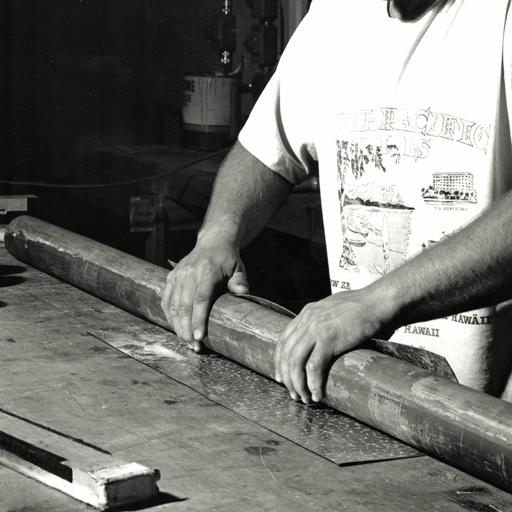
Pipemaking rolling bodies
Each pipe is rolled around a mandrel and rounded with the wooden beater. Then the join is soldered forming the tube of the resonator.
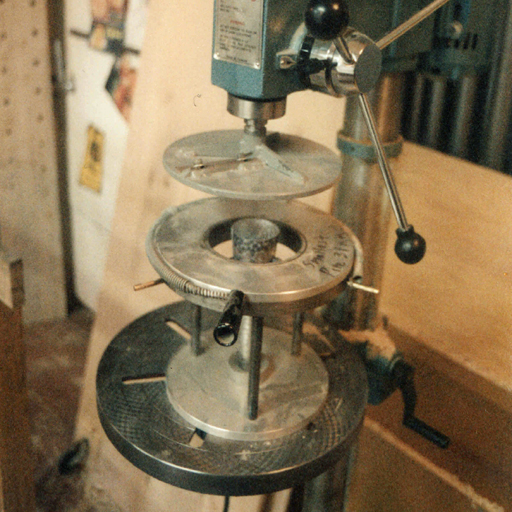
Pipework Foot squaring machine
After the pipe foot has been rolled and soldered, rounded, the tip formed and the lower lip flatted, thwe foot is held in this machine and a spinning lathe squares the upper edge. That gives straight standing pipes!
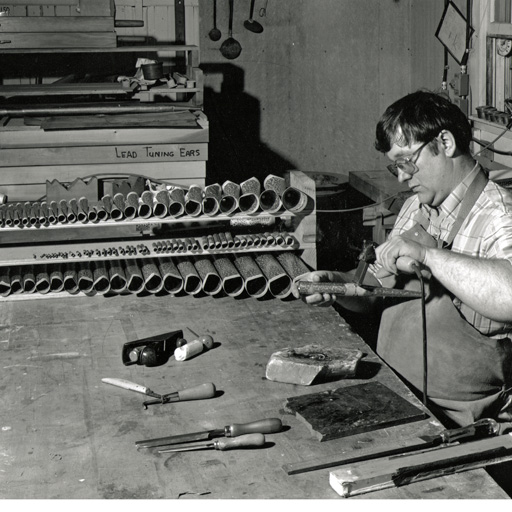
Pipemaking attaching bodies to feet
Once the foot and body has been made they have to be attached. This photo shows Blair soldering the foot to the body. all the pipes needs now are ears soldered on and voicing.
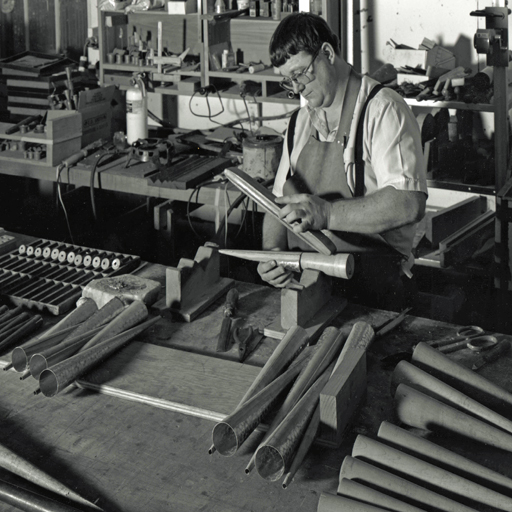
Pipemaking reed resonators
You can see the Trumpet resonators, already rolled up and soldered. Here you can see the resonator being beaten round on a wooden tapered mandrel. You can see the mandrels to the right.
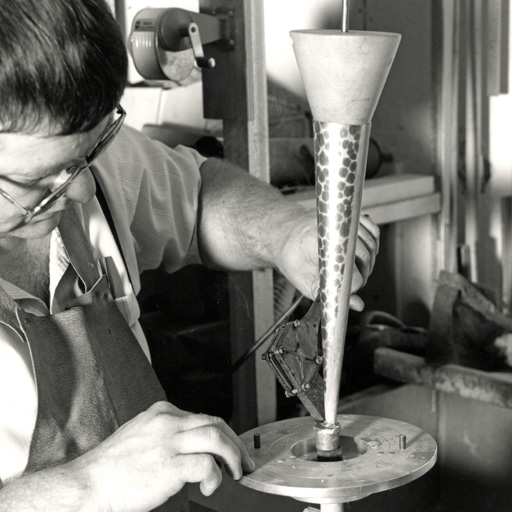
Pipemaking blocking reeds
We use this rotating platform to hold the resonator in the exact location, perpendicular to the block, so we can solder it together.
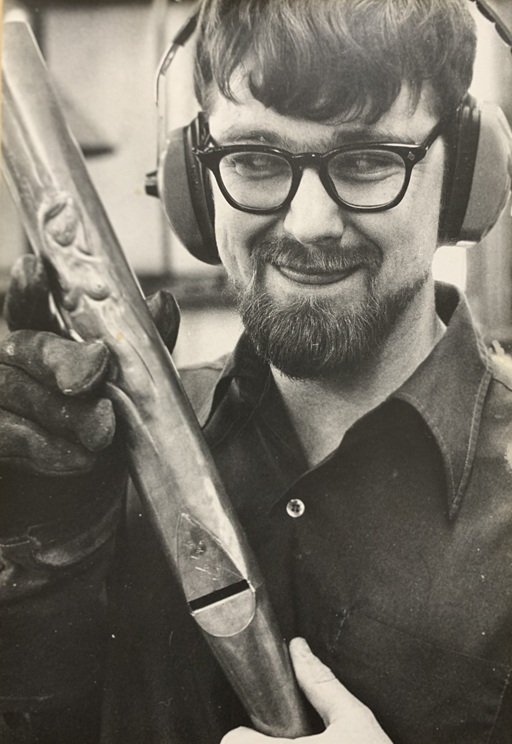
Pipeshop embossed pipe
Front pipes are sometimes embossed with patterns as decoration. Someone once challenged me to emboss a pipe..."
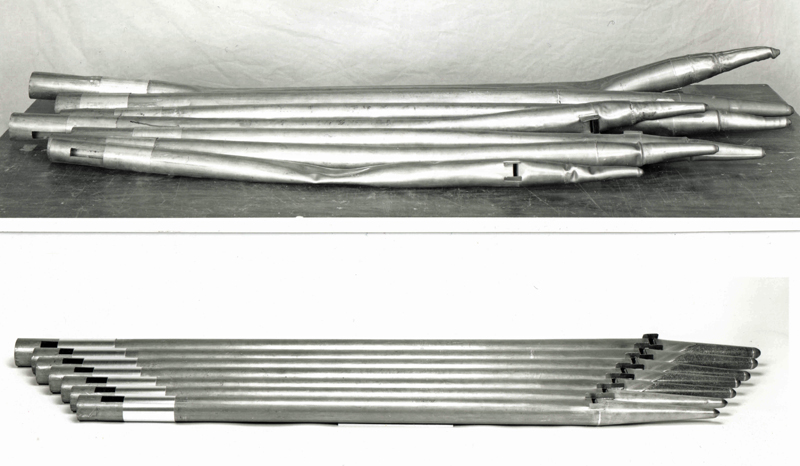
Organ pipes repaired
Our pipe shop frequently is asked to repair or restore damaged pipes, as seen in the before and after photos. As pipe makers and voicers, this is quite easy for us to do.
The foot metal was too thin to support the weight of the body. The pipes collapsed under their own weight badly damaging them. We made new feet of zinc (which is much stronger), rounded out the pipes, and put them back on speech.
Pipemaking Instruction & Plans
Pipemaking Files- How to make aluminum pipe sleeves
- How to miter a pipe
- How to miter a reed
- Pipemetal thickness by pipe diameter and % of tin
- Structural stability of lead-tin alloys used in pipemaking - Greunke
- OSI How to make pipe size
- How to Clean and Restore Reeds
- These foot lengths are quite elegant, and give the mouth line a graceful curve. Ideal with exposed pipework, as in a Holtkamp style facade.