Organbuilding: An Assortment of Projects
These projects are in no particular order. As I find interesting photos of different kinds of projects, I'll put them up on the web site. You can get more information about some of them by clicking the "View Details" button.
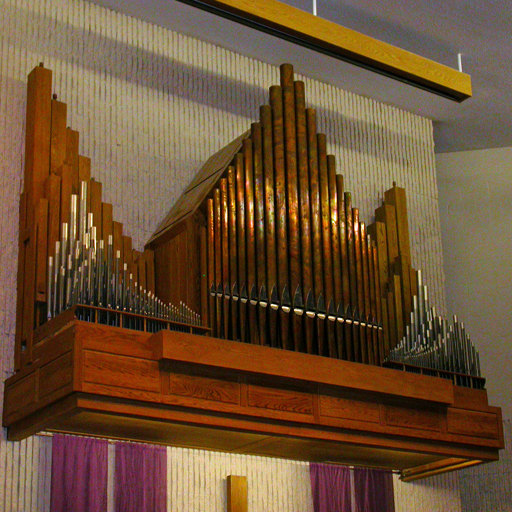
New Organ Christian Reformed, Waterdown, ON.
This two manual organ has direct electric action. We built the chests, casework pipes (except the copper facade), console, keyboards and pedalboard and bellows; almost everything. It has some judicous unification.
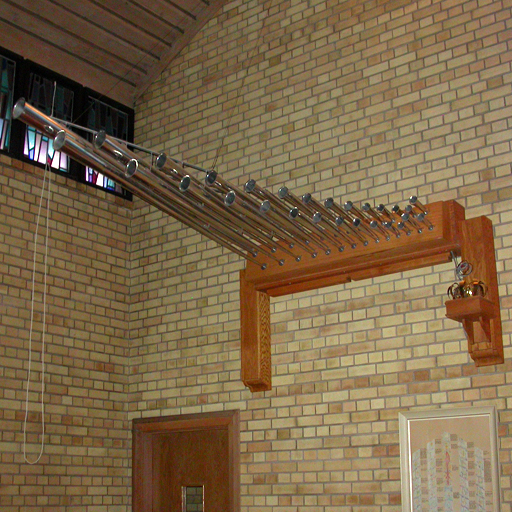
Trompette en Chamade Faith Lutheran, Hamilton
We bought the tin trumpets from Giesecke in Germany. But we built the chests, mounting log for the reed blocks, bellows and blower box. Note the cymbelstern on the right. the "legs" hanging down the left and right sides of the chest are to hide the windline. Visible are only half the trumpets on the left side of the back wall; the other half mirror on the right side of the back wall.
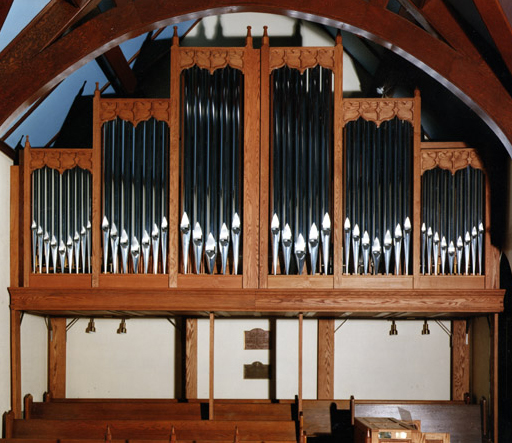
New Organ St Pauls, Hamilton (Westdale)
We built a new organ, with slider chests and electric action. We revoiced some pipes from the previous Keates organ, but most pipes we newly made. We built a English style drawknob console for it.
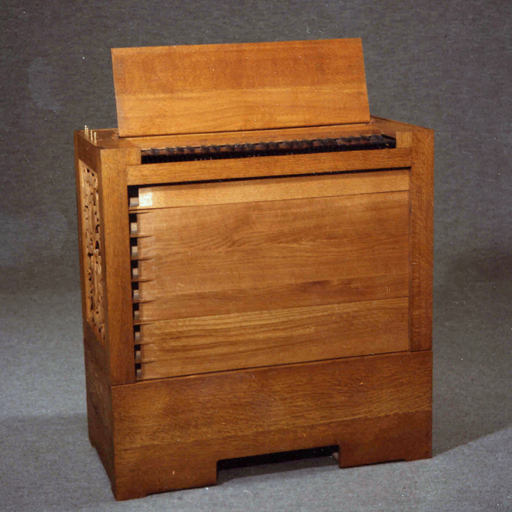
New Box Organ Private sale
We built this for a private customer in Aylmer, ON. We made everything: metal and wood pipes, keyboard, oak frame and panel case. It is truly portable; it could be moved in a large car, and doesn't need tuning after moving.
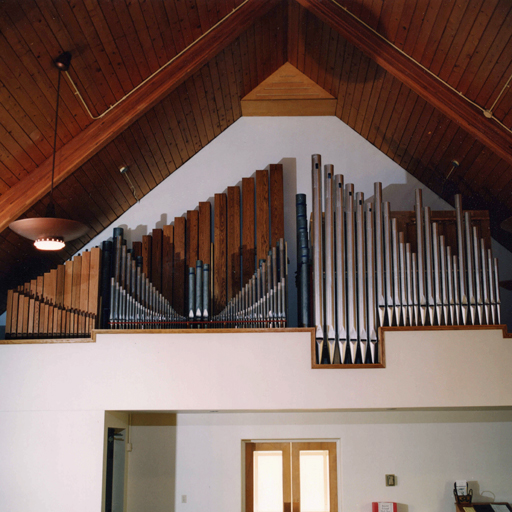
Rebuilt Kney Organ Brantford, Harmony Church
We moved this early Kney and Bright to a much larger building. We built new chests, rebuilt the console, added several new ranks ( including a new oak 16' Pedal Bourdon, and a Great 8' Open), and revoiced everything to suit the larger space.
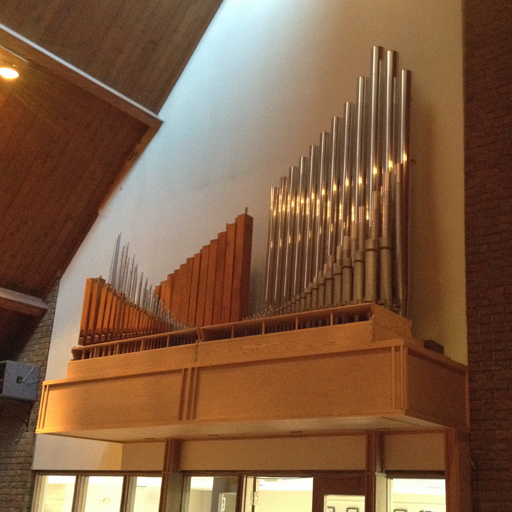
New Organ London, Redeemer Lutheran
We built this modest 4 rank unit organ, mounting in in the accoustically ideal location high on the back wall. Used wood pipes, rebuilt and revoiced by us. The choir and console are also at the back. Console by Rogers.
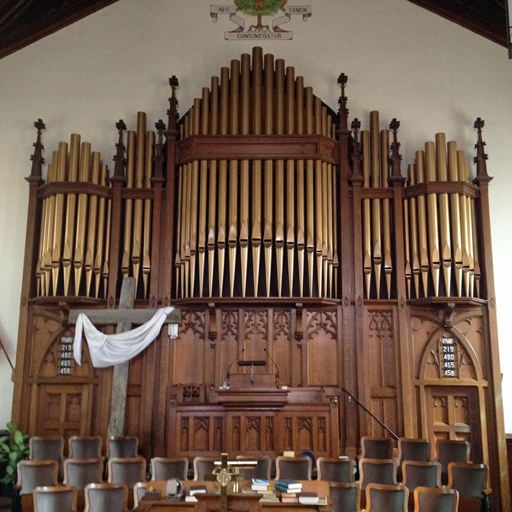
Rebuilt Woodstock organ Simcoe, St Pauls, Presbyterian
We rebuilt this large, 3 manual 1927 Woodstock pipe organ. This included releathering the chests and bellows, and rebuilding the console. We use special techniques to rebuild the chests that dramatically improve their response.
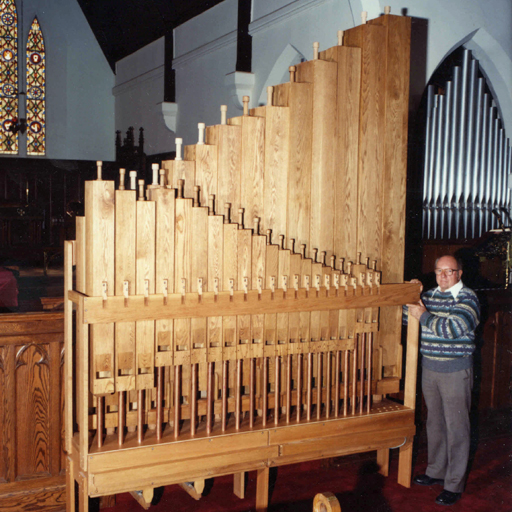
Bourdon 16' Wood pipes
Wooden pipes excel at making powerful stops, as used in the pedal. Wood pipes can also make delicate, beautiful stops; like Stopped Diapasons. Good pipes must be made of the best materials, by skilled wood pipemakers. This 16' Pedal Bourdon we built of oak; we also made the feet, stoppers, windchest, built-in wind regulator and high rack. These are big pipes, note the person in the photo.
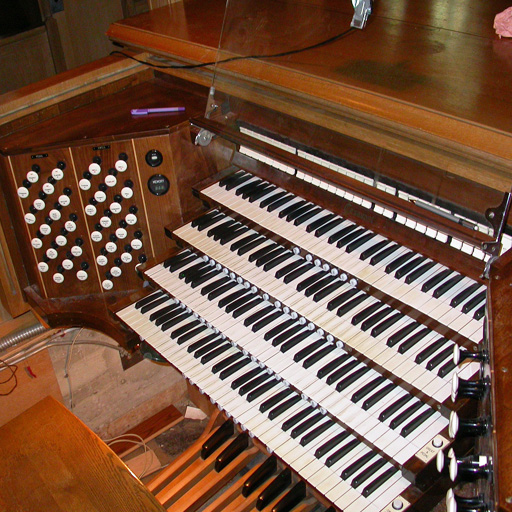
Rebuilt Casavant organ Toronto, Bloor St United
We rebuilt this large, 4 manual 1951 Casavant pipe organ. This included rebuilding and releathering the chests and bellows, rebuilding the console, revoicing the swell reeds with new tongues and Hill shallots, two new and two rebuilt mixtures and several new, rebuilt or revoiced ranks of pipes.
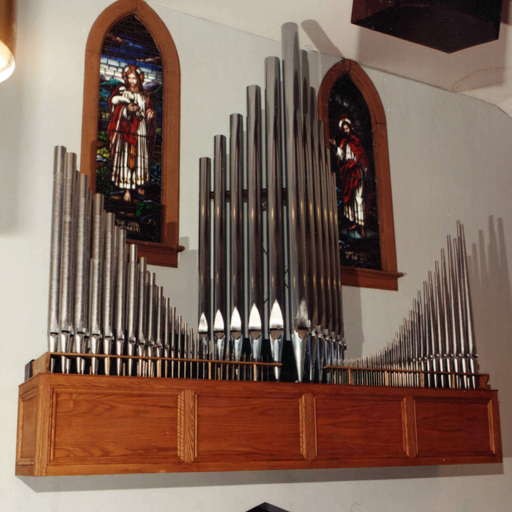
New organ Kitchener, Bethany Missionary
A modest unit organ. We built the chests, case, schwimmers and wind system and pipes (except for the 12 big zinc pipes). Console by Rogers.
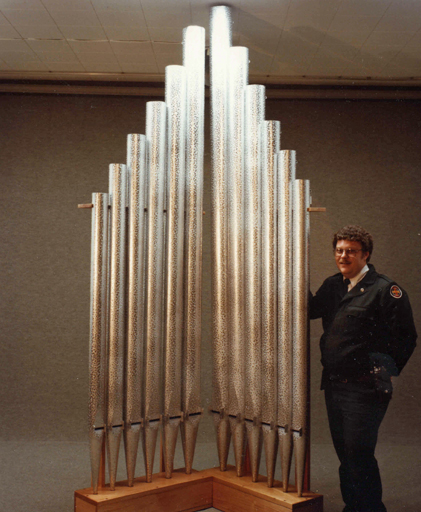
Facade Pipes 8' Principal
These pipes are made of spotted metal, and where used as speaking pipes in the facade. For strength, the feet are double walled; the inner foot of copper bears the weight. my brother, John Batty, shown shown in his nursing uniform.
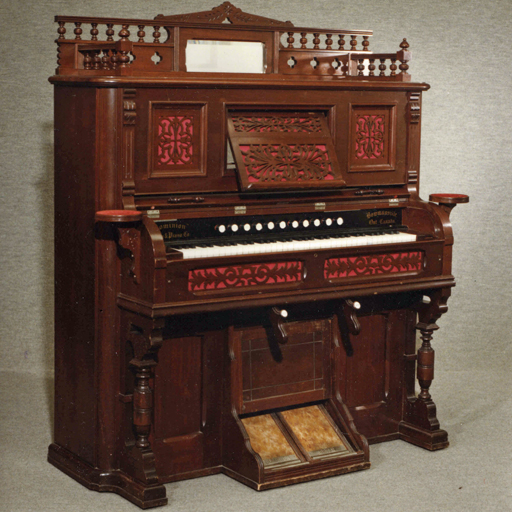
Dominion Reed Organ Antique home organ
We restored this antique reed organ, unsing original materials and methods. We restored the cracked cell block in the windchest, rebushed the action, releathered the bellows, and tuned and regulated the reeds.
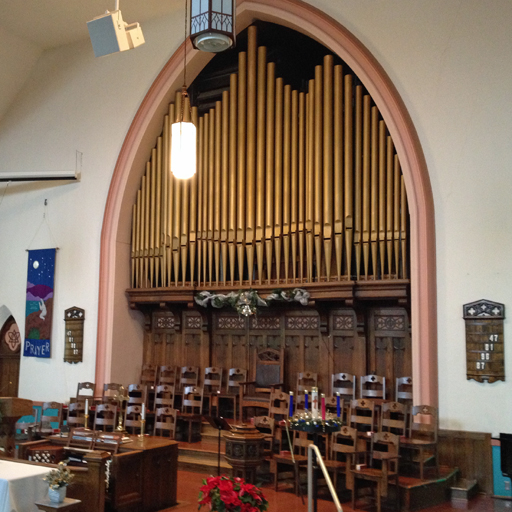
Rebuilt Casavant organ Simcoe, St James United
We rebuilt this large, 3 manual 1920 Casavant pipe organ. This included releathering the chests and bellows, rebuilding the console, and several new, rebuilt or revoiced ranks of pipes.
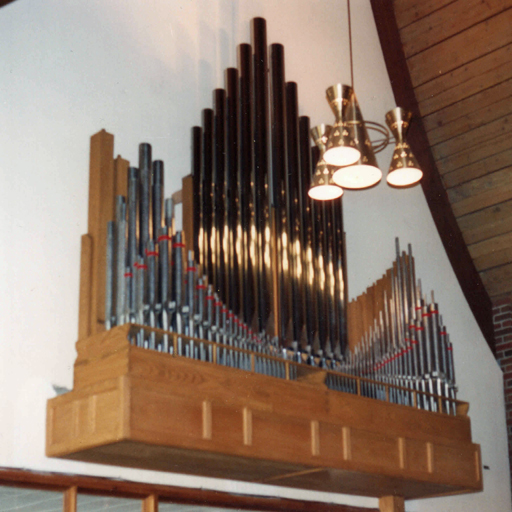
New organ Owen Sound, Our Saviour Lutheran
We built this organ, including the chests, wind supply. wood pipes, and most of the metal pipes. Console by Rogers.
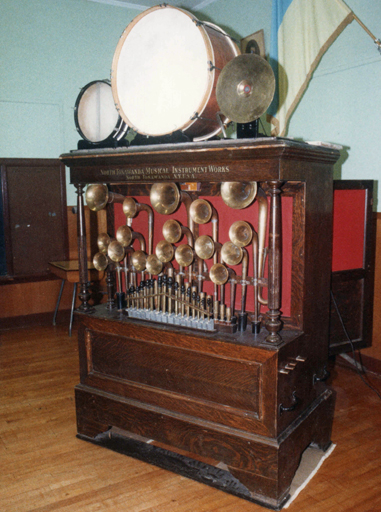
Wurlitzer Restoration Military Band Organ
We restored this historic mechanical player organ using original techniques and materials, repairing a cracked chest, restoring the pneumatics in the player action and releathering the feeder and static bellows.
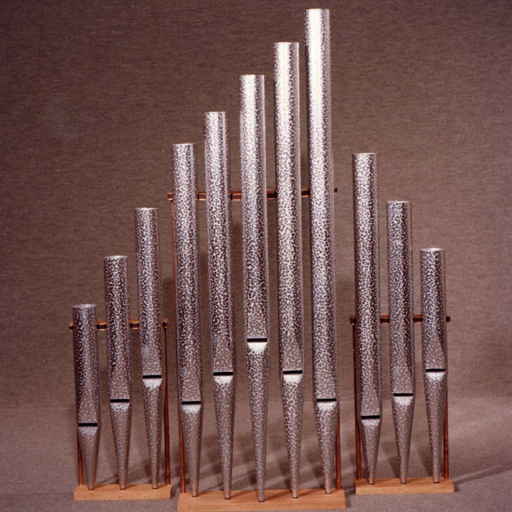
Facade Pipes hiding speakers!
We custom designed and built these mute pipes to stand in front of, and decorate, some electronic organ speakers.
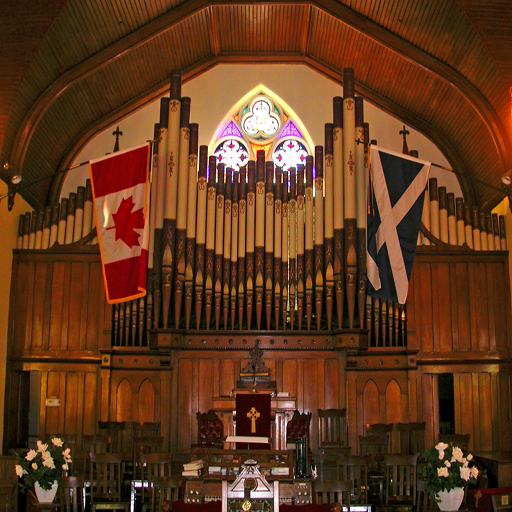
Breckles & Matthews Historic organ restored
We restored this historic 1906 Breckles & Matthews tubular pneumatic pipe organ, using original materials and techniques. The pipework was restored, organ cleaned, and pneumatic action repaired. Worn maple pedal playing surfaces were replaced with copies.